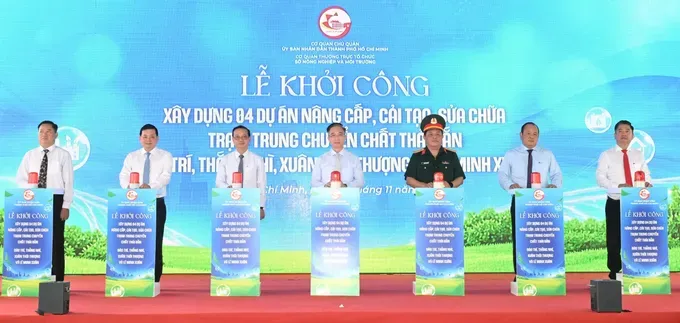
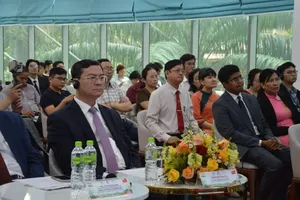
The Ho Chi Minh City People’s Committee on the morning of November 27 held a groundbreaking ceremony for four projects to upgrade, renovate, and repair Dao Tri, Thang Nhi, Xuan Thoi Thuong, and Le Minh Xuan solid waste transfer stations, with a total investment of approximately VND1.806 billion (US$69.9 million).
Attending the ceremony were Vice Secretary of the Ho Chi Minh City Party Committee Dang Minh Thong, Vice Chairman of the Ho Chi Minh City People's Committee Bui Minh Thanh, and representatives of municipal departments and agencies.
The four projects are being implemented by the Ho Chi Minh City Management Board for Solid Waste Treatment Complexes (MBS), which serves as the investor. They aim to upgrade existing facilities with advanced technologies for waste reception, transfer, and environmental treatment, while improving the surrounding landscape and meeting the requirements of the city's waste transfer station network.
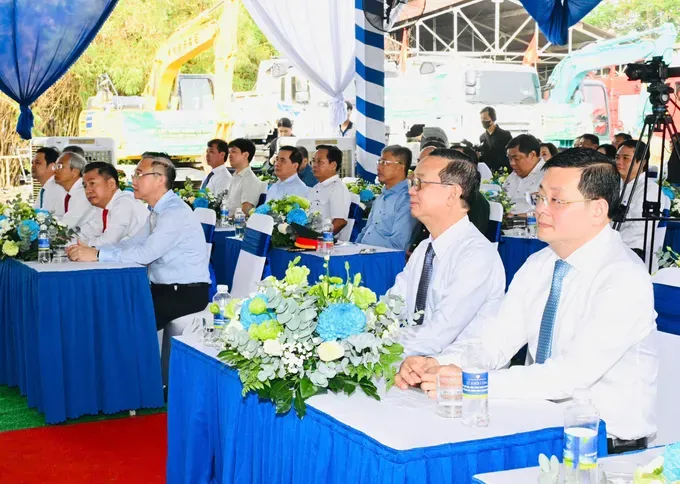
At the ceremony, Nguyen Toan Thang, Director of the Ho Chi Minh City Department of Agriculture and Environment, said the city currently has 39 waste transfer stations, including 27 in Area 1, four in Area 2, and eight in Area 3.
Under the city's development orientation toward 2050, Ho Chi Minh City plans to expand its network of waste transfer stations to 86 facilities. Area 1 is expected to have 48 stations, retaining 18 existing facilities; Area 2 will have 21 stations, retaining four existing facilities; and Area 3 will have 17 stations, retaining seven existing facilities.
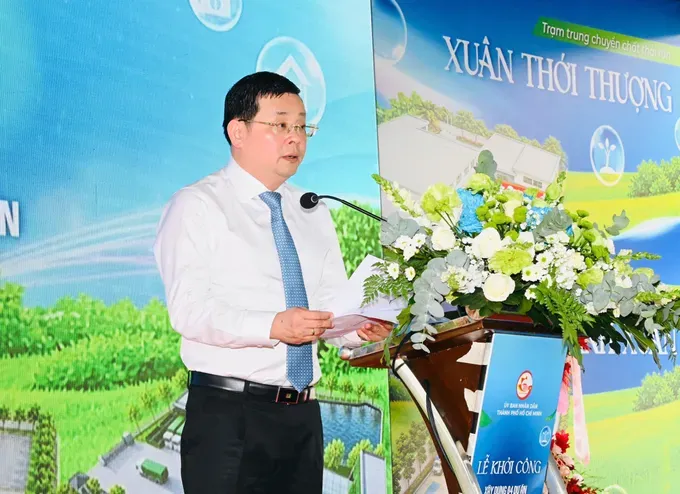
According to Mr. Nguyen Toan Thang, the Department of Agriculture and Environment has coordinated with relevant agencies and organizations to identify priority projects for investment while assigning the Ho Chi Minh City Management Board for Solid Waste Treatment Complexes (MBS) to serve as the investor for the waste transfer station projects.
In 2026, the city plans to break ground on 12 waste transfer stations with a total investment of approximately VND2.924 billion. Of these, eight stations will undergo upgrades, and two will be repaired in November, while investment in four additional stations is scheduled to begin in December.
During the 2027-2030 period, the city plans to invest in 50 waste transfer stations at an estimated cost of VND16,870 billion, with investment policy proposals currently being prepared. From 2030 to 2050, the city will continue investing in the remaining facilities to complete the planned network of 86 waste transfer stations.
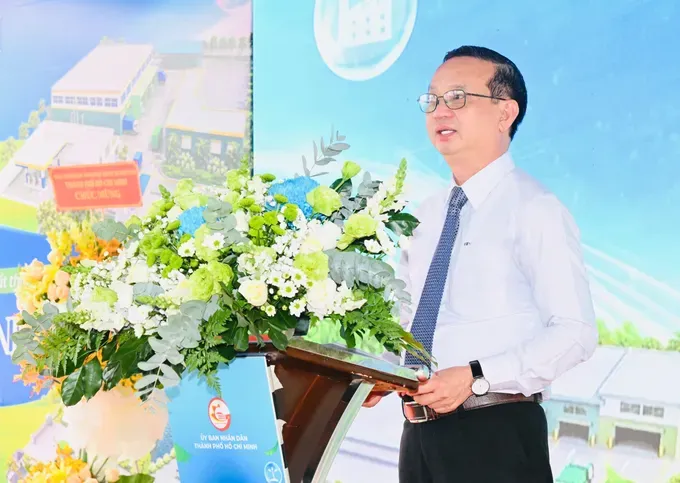
Vice Chairman of the Ho Chi Minh City People's Committee, Bui Minh Thanh, said that with approximately 14,000 tons of domestic solid waste generated each day, the coordinated investment in and modernization of waste collection, transfer, transportation, and treatment systems is an urgent requirement and a strategic task in the city's green transition and sustainable development.
According to Mr. Bui Minh Thanh, Ho Chi Minh City will gradually shift from traditional waste management to modern waste governance based on science, technology, innovation, and digital transformation, with the circular economy as its guiding principle, environmentally friendly technologies as its foundation, and people's quality of life as its ultimate goal.
The city aims to develop waste transfer stations based on enclosed systems, with greater automation, energy efficiency, and emissions reduction, while applying digital technologies to monitoring, management, and operations. These facilities will also be designed to harmonize with the urban landscape and residents' living environment.
This is not merely an upgrade of four environmental infrastructure facilities but also the starting point of a roadmap to develop a network of 86 solid waste transfer stations by 2050. Each transfer station must become a link in the circular economy, and each environmental infrastructure project must deliver tangible benefits to the community rather than become a burden on the environment and people's lives, the Vice Chairman of the city added.
Details of the four solid waste transfer station projects
The Dao Tri Solid Waste Transfer Station project in Phu Thuan Ward will be built on a site covering approximately 8,881.8 square meters, with a total investment of around VND489.4 billion. The station will have a capacity of 480 tons per day and use an above-ground horizontal enclosed waste compaction system with four hydraulic presses, each capable of processing 120 tons per day. Major components include a building for waste compaction equipment, an operations building, wastewater and exhaust treatment systems, odor control facilities, and auxiliary infrastructure.
The Thang Nhi Solid Waste Transfer Station project located at Alley 413, Tran Phu Street, Vung Tau Ward, has a total investment of approximately VND441.2 billion, covering a land area of around 5,658.5 square meters, with a capacity of 360 tons per day. The station will be equipped with three enclosed hydraulic waste presses, each with a capacity of 120 tons per day, along with sealed containers and specialized transportation vehicles.
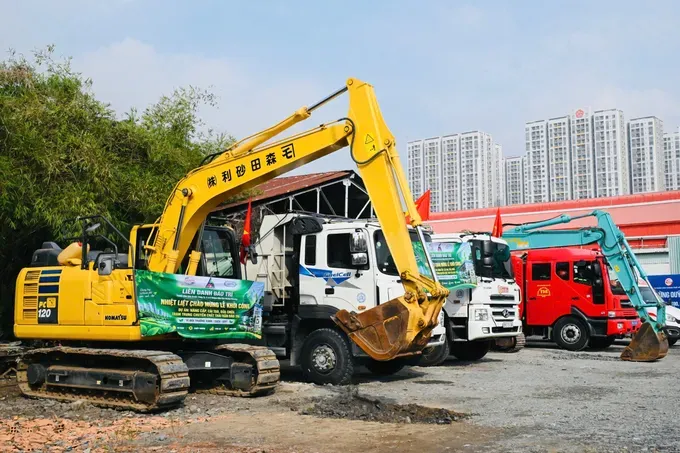
The Xuan Thoi Thuong Solid Waste Transfer Station project located on Dang Cong Binh Street, Ba Diem Commune, has a total investment of approximately VND491.1 billion. The site will be expanded from 989.7 square meters to 3,360 square meters, including an additional 2,370.3 square meters. Upon completion, the station will have a capacity of 480 tons per day, with four enclosed hydraulic waste presses. The project will also include a facility for shredding bulky waste and environmental treatment infrastructure.
The Le Minh Xuan Solid Waste Transfer Station project located on Binh Minh Street, Binh Loi Commune, has an approved total investment of approximately VND384.3 billion and covers around 3,030.73 square meters. The station will have a capacity of 360 tons per day and be equipped with three enclosed hydraulic waste presses. Its integrated facilities will include a waste compaction equipment building, a two-story operations building, a wastewater treatment plant, internal roads and paved areas, and auxiliary infrastructure.


)
)