The risk of water shortages is looming not only during the 2026-2027 dry season but also poses a long-term challenge to water security. Addressing it will require a range of measures, from coordinating water resources among provinces and controlling wastewater discharges to developing contingency plans for different risk levels, investing in backup water supplies and connecting water distribution networks.
Water from reservoirs continues to flow downstream, but El Niño is quietly making the dry season more severe, posing a challenge to the ability of many localities, particularly Ho Chi Minh City, to ensure water security.
Reservoir levels continue to fall
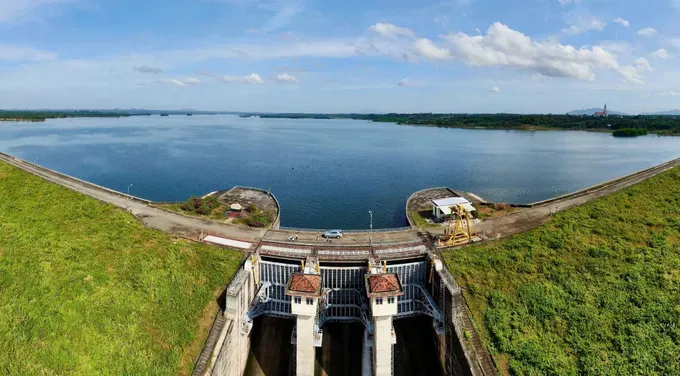
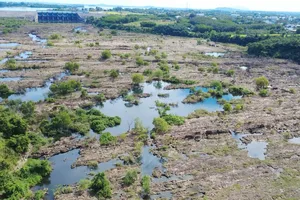
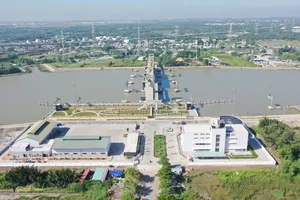
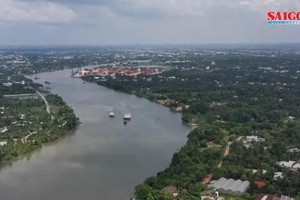
In mid-November 2026, water was still being released downstream from the Song Ray Reservoir headworks in Hoa Hoi Commune, Ho Chi Minh City. However, with El Niño forecast to remain at very strong intensity through the first months of 2027, storing and regulating water supplies and ensuring adequate water for downstream areas have become increasingly urgent priorities.
Song Ray Reservoir is one of the key irrigation works in eastern Ho Chi Minh City. It is designed to supplement water supplies for Da Den Reservoir and the domestic water supply system. Of concern, despite the recent end of the rainy season, the reservoir’s water volume stood at just 195.03 million cubic meters, down 16.81 million cubic meters from the same period in 2025.
In the Dong Nai River basin, some areas have experienced rain and flooding since September 2026. Major hydropower reservoirs, including Dong Nai 2, Dak R'Tih, Ham Thuan, Tri An, and Thac Mo, have reached 83–97 percent of their designed storage capacity. Meanwhile, 48 of the 71 irrigation reservoirs with capacities of at least 3 million cubic meters have stored more than 70 percent of their designed capacity.
However, authorities have cautioned that relatively high storage levels at reservoirs do not necessarily eliminate the risk of water shortages. From July to September 2026, flows in most rivers and streams across the basin remained 8.4–50 percent below the multi-year average.
The rainy season is forecast to end earlier than usual this year, with rainfall declining in both volume and coverage from late October 2026. River flows are also expected to fall to 15–30 percent below the multi-year average. These factors are increasing pressure on water supplies during the 2026–2027 dry season.
According to Chau Tran Vinh, Director General of the Department of Water Resources Management under the Ministry of Agriculture and Environment, several river basins are entering the transition from the flood season to the dry season. Actual water releases downstream are far exceeding both demand and the volume needed to replenish reservoirs. At Song Ray Reservoir alone, storage is declining by 1–1.5 million cubic meters per day. If water is released in excess of demand, reservoirs could face shortages in supplying downstream areas during the peak of the 2027 dry season, when prolonged hot weather is expected to drive up water consumption.
Tackling pollution and saltwater intrusion
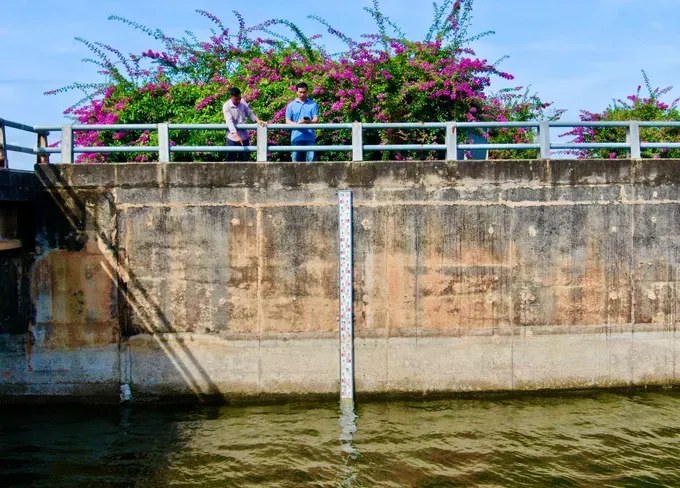
Along the flow of the Ray River downstream toward the Da Den reservoir, the discharge of wastewater from pig-farming operations by local residents into a canal leading to Nhac Stream in Ngai Giao Commune, Ho Chi Minh City was observed.
According to Do Quoc Thang, head of Residential Group 1 in Suoi Lup Hamlet, Ngai Giao Commune, the area currently has 12 pig-farming households. While most have taken steps to treat their waste, several cases of untreated discharge persist.
Meanwhile, Bui Thanh Giang, General Director of Saigon Water Corporation (SAWACO), stated that one of the top challenges today is finding solutions to address pollution and saltwater intrusion on the Saigon River to secure 1 million cubic meters of raw water for the Tan Hiep water plant cluster.
Forecasts for the 2026–2030 period—and particularly the 2027 dry season—indicate that El Niño could trigger saltwater intrusion directly affecting raw water intake zones for the Tan Hiep water plant cluster (Saigon River) and the Binh An water plant, while partially impacting the Thu Duc water plant cluster (Dong Nai River).
SAWACO currently receives treated water from eight major water plants with a combined designed capacity of approximately 2.4 million cubic meters per day and an effective capacity of around 2.11 million cubic meters per day.
The operating capacity of these plants could decline if saltwater intrusion occurs, leading to a risk of water shortages during the peak of the dry season, especially in early 2027. Meanwhile, new water plant projects—such as Thu Duc 4 and Tan Hiep 3—will not be completed in time to add capacity, and the Binh An water plant may not yet have resumed stable operations, Mr. Bui Thanh Giang.
Eastern Ho Chi Minh City is home to roughly 1.3 million residents alongside hundreds of industrial parks, industrial clusters, and tourist zones. Raw water used to produce supplies for domestic, commercial, industrial, and service activities is drawn primarily from the Song Ray and Da Den reservoirs.
Nguyen Luu Thuyen, Deputy Director of the Center for Rural Water Supply and Environmental Sanitation under the Department of Agriculture and Environment, noted that as of mid-November 2026, Song Ray reservoir held about 200 million cubic meters of water and Da Den reservoir held 30 million cubic meters. Under normal weather conditions, the current storage in these two reservoirs could meet domestic and production needs until the 2027 rainy season. However, given forecasts of a severe and prolonged El Niño, these reserves remain below safe thresholds.
According to warnings from the Department of Meteorology and Hydrology under the Ministry of Agriculture and Environment, El Niño is likely to maintain a very strong intensity from October to December 2026. Entering the first quarter of 2027, the phenomenon is forecast to remain strong—though gradually weakening—and will likely persist into the early summer months. Risks of drought and saltwater intrusion may not be confined to a few peak months, potentially spanning nearly the entire dry season from roughly November 2026 to September 2027, depending on the locality.
Data from the Department of Water Resources Management under the Ministry of Agriculture and Environment showed that from June to August 2026, water flows across most rivers and streams in 12 major river basins fell short of the multi-year average by 11 percent to 75 percent.
By September 2026, despite localized heavy rains and flooding in several basins, overall flow deficits showed no sign of improvement. At the height of the dry season, between 424,800 and 502,300 hectares of crops face the risk of being impacted by drought and saltwater intrusion.
These figures indicate that the 2026–2027 dry season could pose a severe test to agricultural production and water security across numerous localities.