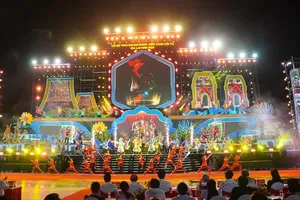
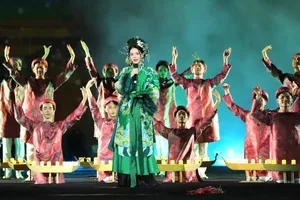
Both performances of the musical “Mai An Tiem - The Legend of the Watermelon” at the Ho Chi Minh City Opera House were packed with audiences. A compelling work rooted in Vietnamese cultural heritage, told through the language of modern musical theater, has demonstrated the genre’s potential to attract the public despite its reputation as a niche form of entertainment.
A mark of collaboration
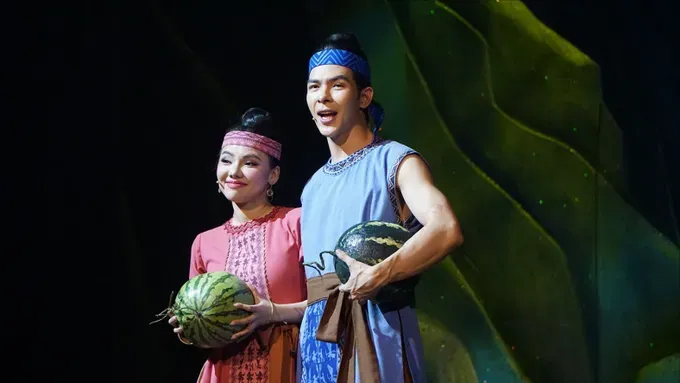
The performance of “Mai An Tiem - The Legend of the Watermelon”—was staged in the style of Broadway musical theater, with an international creative team working alongside Vietnamese artists. The production combines music, acting, choreography, and large-scale stagecraft, retelling a familiar story in a new format that has appealed to younger audiences.
According to information released by the organizers, tickets for the two performances ranged from VND700,000 (US$27) to VND2 million (US$77) and sold out before the curtain rose. This is a notable positive signal, but not enough to conclude that musical theater has established a stable market. The project has so far announced only two performances, with no information yet available on repeat performances, revenue, touring plans, or the transfer of technical expertise to Vietnamese artists and production teams.
For producers, the question is whether audiences in Ho Chi Minh City have genuinely returned to musical theater or simply attended the production as a special event and whether a show can sustain multiple seasons.
The success of the two performances is noteworthy, but whether it can develop into a regular audience habit requires more performances, audience data, and a clear plan for future stagings, said Meritorious Artist Ca Le Hong, a member of the Ho Chi Minh City Department of Culture and Sports’ Arts Council.
Compared with other performing arts, musical theater requires substantial resources on multiple fronts, including a script structured around music, original composition, and orchestration; performers capable of singing, acting, and movement; as well as coordinated orchestral, stage design, sound, lighting, and production capabilities. As a result, production costs are often high, while each performance requires a considerable workforce and technical resources.
From this perspective, the two sold-out performances were not only a success for the production but also a test of the viability of staging musical theater in Ho Chi Minh City’s performing arts market.
Most importantly, they showed a highly positive audience response to a familiar story from Vietnamese culture presented in a modern, internationally influenced musical theater style.
Developing domestic performing capabilities
Discussing the development of musical theater in Ho Chi Minh City, Meritorious Artist Cao Ngoc Anh, founder of CNA Creative Arts, an organization specializing in musical theater production, training and ecosystem development in Vietnam, said the city currently faces numerous challenges in developing the genre, from a lack of properly equipped performance venues to a shortage of highly skilled performers.
For a work to truly qualify as musical theater, music must be integrated into the characters’ psychological development and actions, helping drive the story forward. Performers must move seamlessly between dialogue, singing, and physical movement, while dialogue itself needs rhythm and melody to lead naturally into the songs, said Meritorious Artist Trinh Thanh Binh, an opera soloist and musical theater lecturer.
The challenge in building a pool of artists capable of meeting the demands of modern musical theater is that we cannot simply transplant overseas training models into Vietnam. Domestic artists have different physical conditions, physiques, and movement capabilities, so different training approaches are needed,” Meritorious Artist Cao Ngoc Anh said.
The musical Vet xuoc (The Scratch), produced by the Ho Chi Minh City Theater Association in collaboration with the Ho Chi Minh City Drama Theater and directed by young directors Pham Viet and Cao Du, with People's Artist Tran Ngoc Giau serving as artistic adviser, provides an example. The production premiered at the Ho Chi Minh City Drama Theater on October 7.
Premiering soon after the major success of Mai An Tiem—The Legend of the Watermelon, Vet xuoc (The Scratch) offers an opportunity to assess the creative and organizational capabilities of the city’s artists, particularly their capacity to work in musical theater today. Focusing on the school life of contemporary students, Vet xuoc (The Scratch) also points to a potential direction for musical theater by exploring relatable subjects closely connected to everyday life.
Commenting on this approach, composer Duong Cam (Do Ngoc Cam) said it is an advantage for Vietnamese musical theater. Through music and acting, the genre can both promote cultural values and preserve Vietnamese identity, while creating distinctive features that set domestic productions apart from works from abroad.
A musical may sell out because of its novelty, but for the genre to truly establish continuity, it needs more than just a few performances.