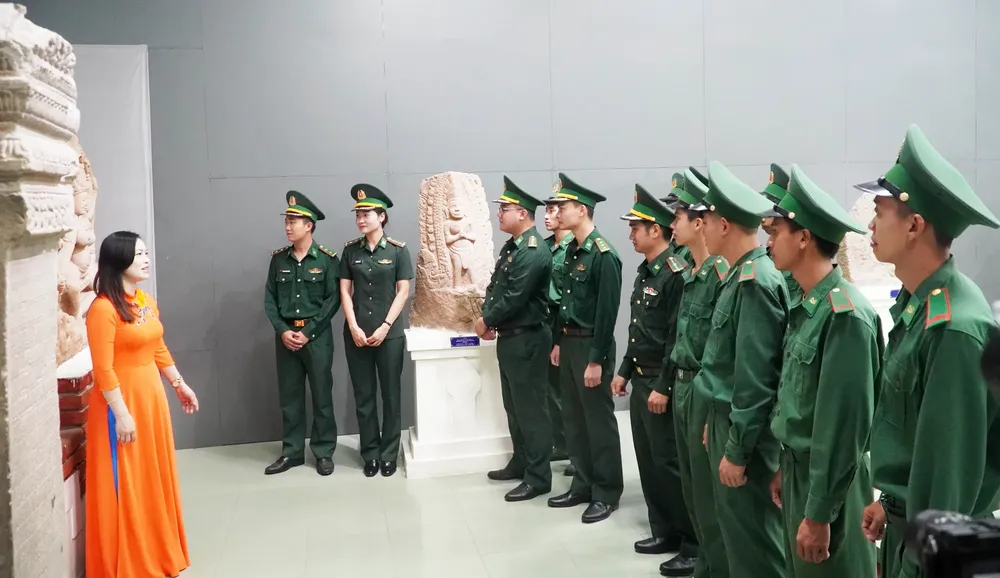
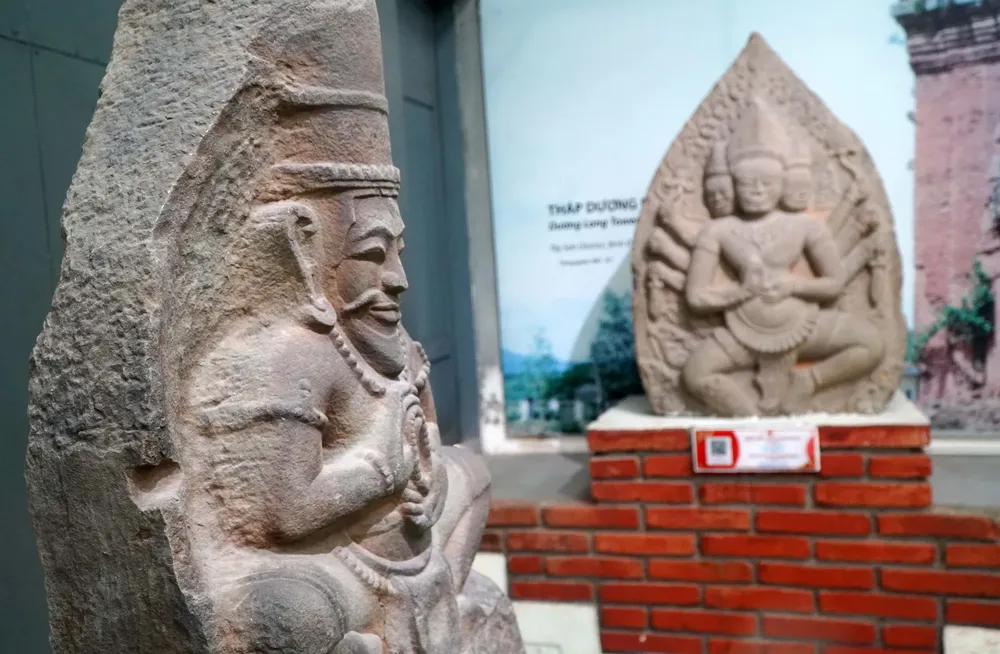
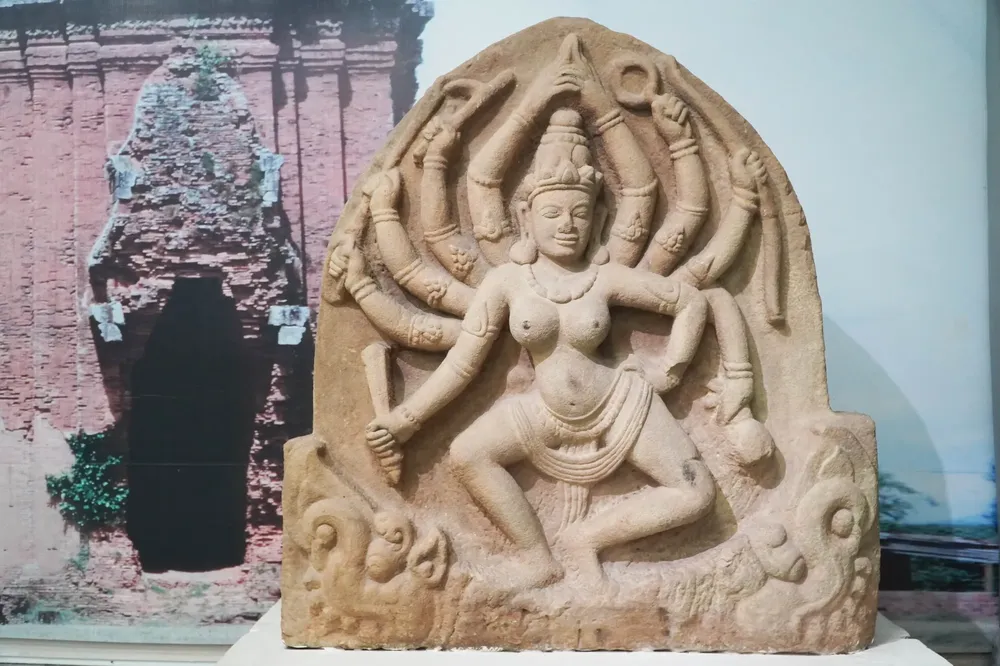
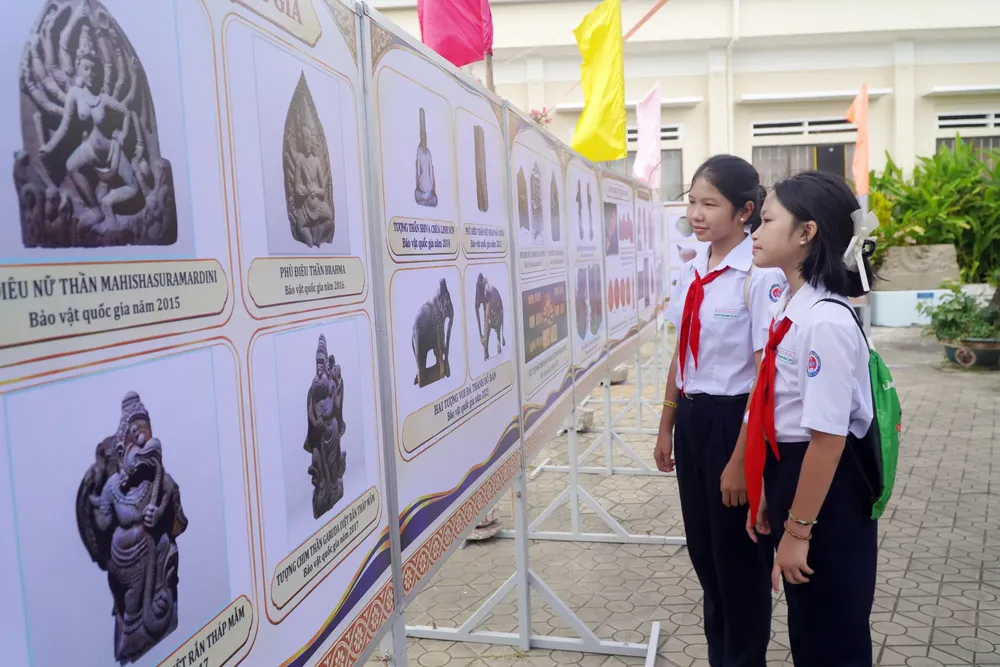
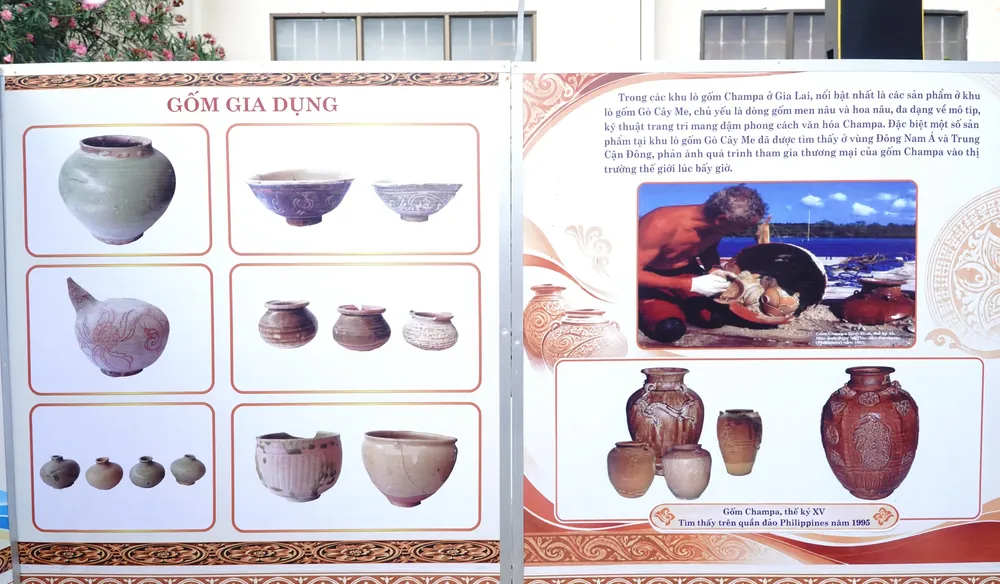
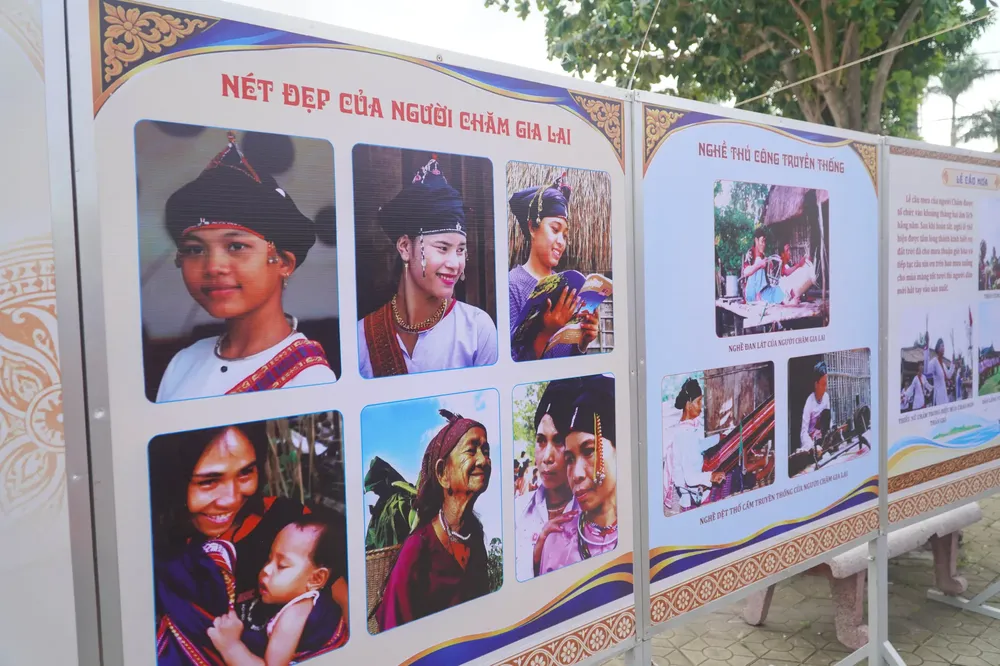
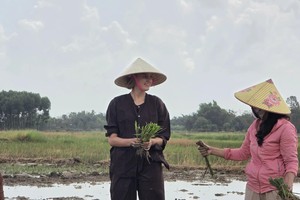
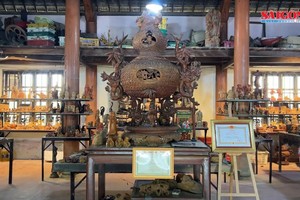
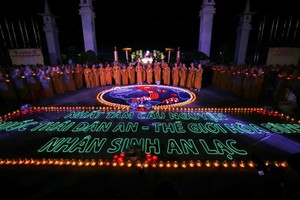
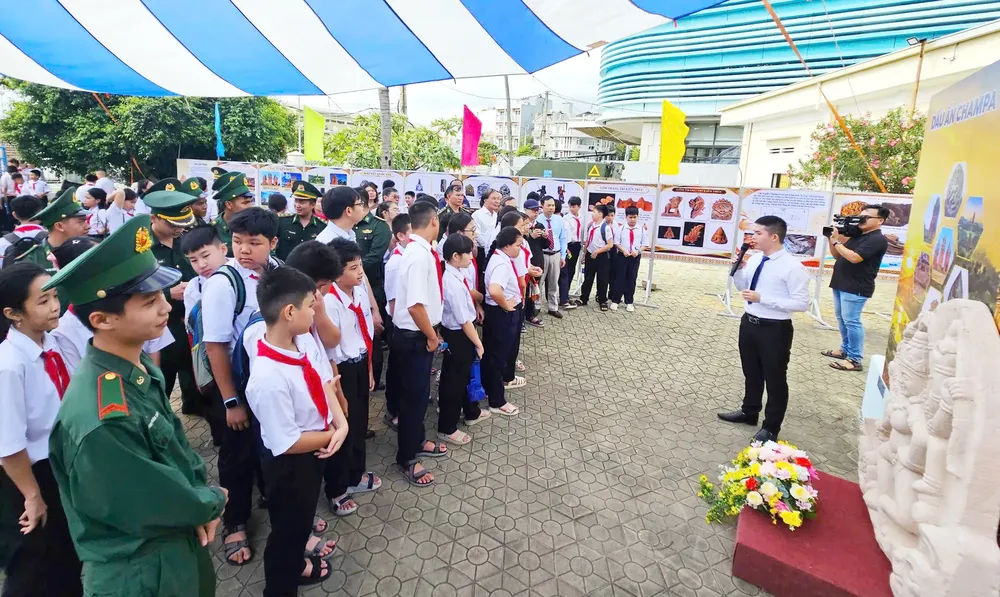
The exhibition at the Gia Lai Provincial Museum is showcasing the rich heritage of Cham culture, tracing its roots from the Champa civilization to the present-day traditions of the Cham H’roi community while promoting awareness of cultural preservation among younger generations.
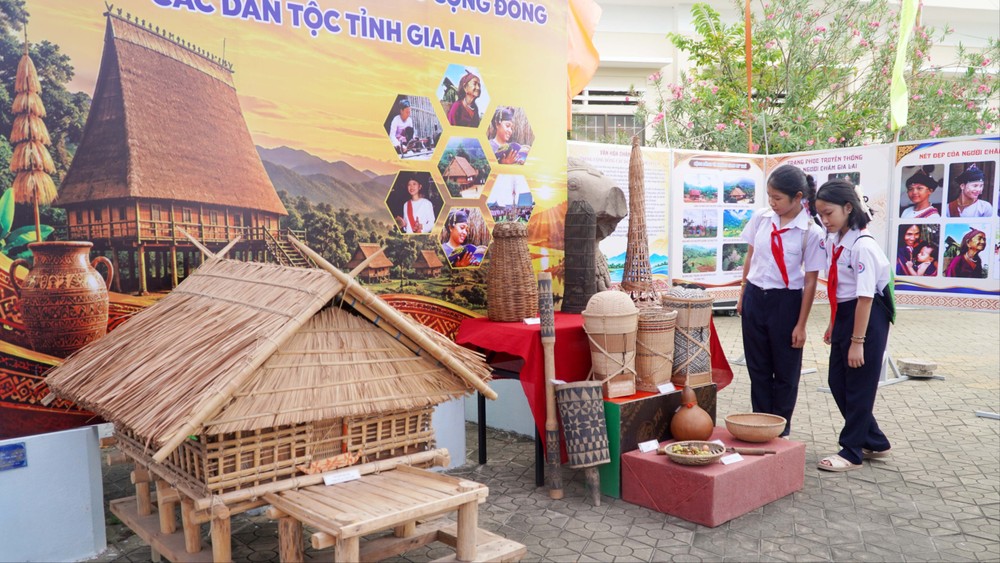
Spanning centuries of heritage, a new exhibition at the Gia Lai Provincial Museum with the title "Cham Culture in Gia Lai: Identity and Potential" examines the enduring cultural imprints of the Champa civilization, from the historic Vijaya period to the modern-day traditions of the Cham H’roi community.
The exhibition, running from November 19 to 25, is organized to commemorate Vietnam Cultural Heritage Day (November 23) and to mark Vietnam Cultural Day (November 24).
According to Nguyen Thi Anh Tuyet, Deputy Director of the Gia Lai Provincial Museum, Cham culture has left a profound mark on the land of Gia Lai, evidenced by its system of Cham towers, sculptural art, archaeological artifacts from the Champa era, and the cultural life of the Cham H’roi community.
"To this day, the Cham H’roi community continues to preserve and pass down its identity through its language, traditional attire, handicrafts, customs, festivals, music, and folk knowledge. This continuity between the Champa heritage and the life of the Cham H’roi people adds a rich depth to Cham culture in Gia Lai", the Deputy Director of the Gia Lai Provincial Museum said.
At the exhibition, Associate Professor Bui Chi Hoang, a member of the National Cultural Heritage Council, noted that Gia Lai is a region with a unique and diverse cultural landscape, notably characterized by a rich Champa heritage. The exhibition serves as an opportunity for the public, especially students and the younger generation to engage with this heritage, raise their awareness, and take an active role in preserving and promoting cultural values. A distinctive feature of the exhibition is how it connects Champa heritage with the contemporary life of the Cham H’roi community.
Following the region's integration, Gia Lai has come to encompass two distinct cultural spheres: one rooted in the extensive Champa heritage of neighboring Binh Dinh, and another defined by numerous prehistoric stone-working sites in the western part of the province. Among these, the An Khe archaeological complex dating back approximately 800,000 years stands out as one of the oldest examples of stone-tool manufacturing technology in the world.