From meetings, exchanges and efforts to build friendly relations, HCMC is looking toward a new step: turning its network of partners into a resource for development. At the 3rd Ho Chi Minh City Friendship Dialogue 2026 (FD 2026), international relations have opened up concrete connections in investment, trade, logistics, science and technology, innovation and sustainable development, creating additional momentum for the city's growth.
Expanding cooperation in strategic areas

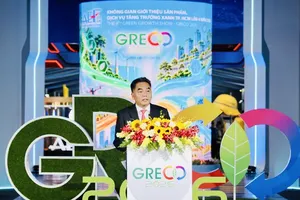
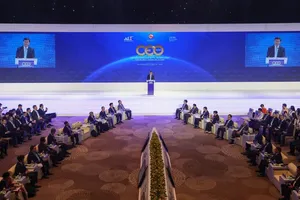
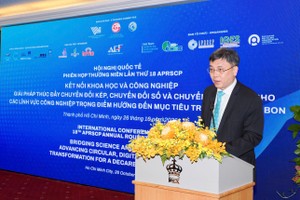
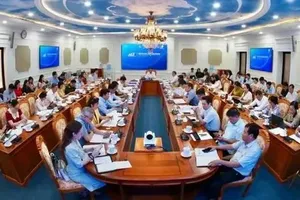
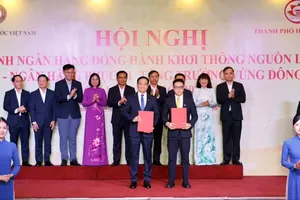
On the morning of September 11, the Mayors' Conference opened in Vung Tau Ward, HCMC, kicking off the FD 2026 program. The event was attended by 35 delegations, comprising 500 domestic and international delegates. Under the theme “Local diplomacy: Driving innovation and sustainable growth,” FD 2026 aims to translate friendly relations into cooperation in areas capable of creating value, including innovation, science and technology; trade and investment; seaports, logistics and supply chain connectivity; digital transformation, green growth and sustainable development.
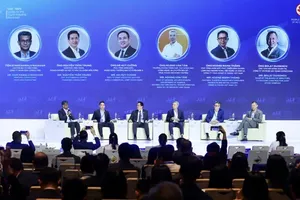
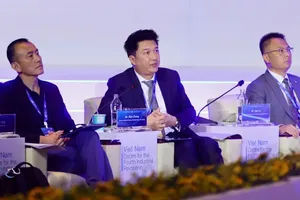
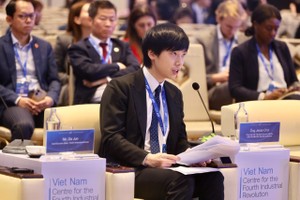
A highlight of FD 2026 was the Mayors' Conference and two thematic discussion sessions on innovation and seaports and logistics held on September 11. In innovation, the focus was on developing new technologies, shortening the gap between research and the market, and turning research results into products, services and economic value. In seaports and logistics, the discussion expanded from infrastructure to supply chains, from port operation capacity to green and sustainability standards. These are issues that cannot be addressed individually but require coordination among governments, businesses and international partners.
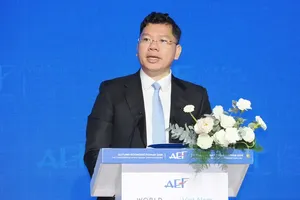
Speaking at the conference, Deputy Minister of Foreign Affairs Nguyen Hoang Long highly valued the theme of FD 2026, saying it reflects HCMC's pioneering, proactive and positive spirit, as well as its responsiveness to developments in the international and regional landscape. The theme also demonstrates HCMC's goal of addressing the challenges facing local diplomacy and international integration in the new context, namely transforming its extensive network of friendly partners and international connections into concrete resources, opportunities and drivers for development.
Ho Chi Minh City stands ready to pilot new foreign cooperation models
For years, Ho Chi Minh City has served as one of Vietnam’s foremost pioneers in foreign affairs and international integration, consistently pursuing effective avenues to translate global partnerships into tangible development resources. Today, this effort unfolds on a significantly larger scale. Following administrative boundary expansions, the city’s geographic footprint, economic output, and overall potential have grown substantially, setting the stage for more ambitious long-term goals. The metropolis now unites three of the country's most dynamic growth engines: a core urban hub for finance, trade, services, science, technology, and innovation; high-tech manufacturing ecosystems supported by deep supply chains in Binh Duong; and deep-water port systems, maritime economic zones, energy hubs, and strategic coastal tourism in Vung Tau.
The national legal framework, which is strengthened by the newly passed Urban Development Law, the Politburo's Resolution 09-NQ/TW on developing the city in the new era, and an existing global network spanning 88 foreign localities and nearly 20 international organizations, provides a solid foundation for Ho Chi Minh City to expand its external reach. By deepening connections with strategic partners, the city aims to integrate further into global innovation and development networks. Positioned at the forefront of national progress, Ho Chi Minh City remains eager to serve as a testing ground for groundbreaking initiatives, concepts, and foreign cooperation models, utilizing its local achievements to refine and bolster Vietnam's comprehensive diplomatic strategy.
Global leaders partner with HCMC on port network initiative
The conference heard 11 presentations, remarks and congratulatory messages from leaders of localities, delivered in recorded form, including the Liverpool City Region (UK), Leipzig (Germany), Aichi Prefecture (Japan) and San Francisco (United States). Drawing on their governance experience, the localities proposed various areas of cooperation with HCMC, including infrastructure development, agriculture, border trade, tourism, healthcare, biotechnology, green transition, climate change response, education, science and technology, investment and trade.
Ricardo Concepción Rodríguez, Governor of Artemisa Province, Cuba, said that as it pursues a transition toward a sustainable and innovative economy, Artemisa wants to strengthen cooperation with HCMC, which has been implementing a dual transformation strategy that is green and digital transformation, to increase the share of high-tech industries in its GRDP. “We strongly believe that international cooperation, the sharing of experience in public policy making and public-private partnership (PPP) models are key factors in ensuring that this transition is successful and inclusive,” Ricardo Concepción Rodríguez said.

Meanwhile, Tomohide Sato, Vice Governor of the Tokyo Metropolitan Government, Japan, highlighted the growing role of cities in addressing global challenges such as climate change, natural disasters, transportation, energy and artificial intelligence. Tokyo therefore wants to promote intercity cooperation, viewing the sharing of experience and strengths and jointly developing solutions as a way to improve quality of life, strengthen resilience and pursue sustainable urban development.
Based on these proposals and experiences, the issue for HCMC is to promote an open spirit of dialogue and friendly relations and local-level cooperation, while transforming external relations and international connections into concrete cooperation programs and projects that deliver practical benefits to all parties.
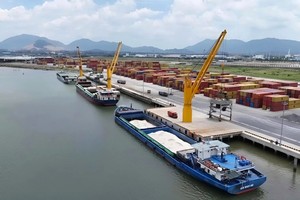
One of the notable outcomes of the Mayors' Conference was the parties' agreement to support an initiative to study a multilateral cooperation mechanism among port cities in the Friendship Cities network — a concrete demonstration of how local diplomacy is directly contributing to national development goals. Once established, the mechanism will serve as a regular forum for member port cities to exchange experience, share data, expand linkages and coordination, and work toward meeting new-generation sustainability standards.
Ho Chi Minh City views participation in international urban networks such as C40, Metropolis, UCLG, CityNet, and the World Cities Culture Forum as a crucial method to advance city diplomacy and directly foster development. First and foremost, the city will continue to play a proactive role in these networks, strengthening connections, sharing experiences, and adopting effective development models, while simultaneously leveraging resources for investment, advanced technology, management expertise, and human resource development. Through these efforts, HCMC aims to enhance the effectiveness of its global integration and affirm its status as a hub for economics, science, technology, and innovation.
Pham Dut Diem, Director of the Ho Chi Minh City Department of External Relations
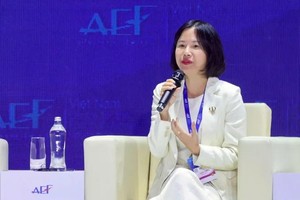
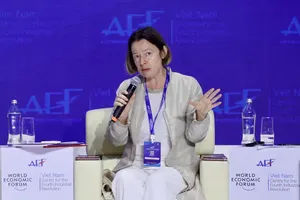
Singapore and Ho Chi Minh City possess immense potential for enhanced logistics cooperation, particularly as global supply chains diversify and Vietnam continues to upgrade its infrastructure and manufacturing capabilities. Singaporean enterprises can participate in developing new trade and logistics corridors and contribute their expertise in green and digital transformation. We see great potential for strengthening logistics cooperation between Singapore and Ho Chi Minh City. With the trend toward global supply chain diversification and Vietnam’s ongoing development of infrastructure and production capacity, Singaporean businesses have increased opportunities to participate in and co-develop new trade and logistics corridors.
Tan Shu Yee, Director of International Business at the Singapore Business Federation
We aim to work with Vietnam to develop a safe, efficient, and sustainable transport corridor while enhancing connectivity with logistics hubs, seaports, railways, and waterways, integrated with digital traffic management solutions. Regarding smart city development, Phnom Penh could deploy AI-integrated cameras to enhance security, monitor traffic, and manage incidents, while also developing a data- and AI-driven bus tracking system to optimize routes, operations, and passenger service. Ho Chi Minh City serves as a key partner for Phnom Penh in exchanging experiences, sharing knowledge, and implementing pilot projects.
Seng Vannak, Deputy Governor of Phnom Penh (Cambodia)