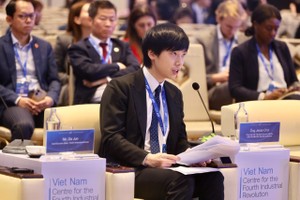
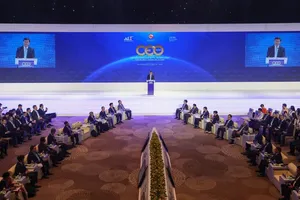
The conference aims to clarify the proactive role of local governments in implementing the national foreign policy, while promoting cooperation models tailored to the needs and strengths of each locality.

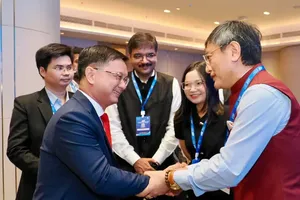
Attending the event were Deputy Foreign Minister Nguyen Hoang Long; Deputy Minister of Finance Le Tan Can and Standing Vice Chairman of the Ho Chi Minh City People's Committee Nguyen Loc Ha.
Also attending were representatives from Cambodia, China, Cuba, the United Kingdom, Hungary, Japan, Laos, New Zealand, Russia, Singapore and South Korea, as well as diplomatic missions and international organizations in Ho Chi Minh City.
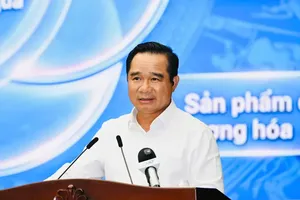
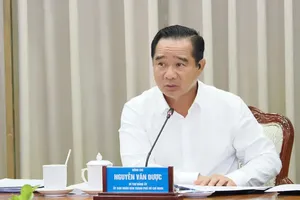
In his opening remarks, Standing Vice Chairman of the Ho Chi Minh City People's Committee Nguyen Loc Ha said foreign affairs and international integration today go beyond maintaining friendly relations or expanding international exchanges, having become an important development tool for localities.
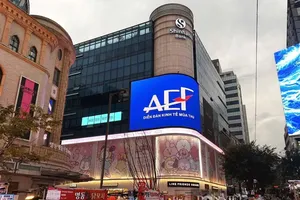
For many years, Ho Chi Minh City has been one of the country's leading localities in foreign affairs and international integration, constantly exploring effective ways and measures to turn international relations into tangible resources for development.

Following its merger with Binh Duong and Ba Ria - Vung Tau, Ho Chi Minh City now covers more than 6,770 square kilometers and has a population of more than 14 million, entering a new stage of development.
The city brings together three of Vietnam's leading dynamic growth poles such as a financial, commercial, services, science and technology, and innovation center in the core urban area; a high-tech industrial production space with an extensive business ecosystem and supply chains in Binh Duong (formerly); and a strategically positioned system of deep-water ports, marine economic zones, energy facilities and coastal tourism in Ba Ria - Vung Tau (formerly), the Standing Vice Chairman of the Ho Chi Minh City People's Committee said.

At the conference, Deputy Foreign Minister Nguyen Hoang Long praised the theme of FD 2026, “Local foreign affairs: A driver of innovation and sustainable growth”.

According to the Deputy Foreign Minister, the theme reflects Ho Chi Minh City's pioneering, proactive and positive spirit, as well as its sensitivity to developments in the international and regional landscape.
The theme also demonstrates the goal of addressing the challenges facing local foreign affairs and international integration in the new context. This means turning the extensive network of friendly partners and international connections into tangible resources, opportunities and drivers for development.
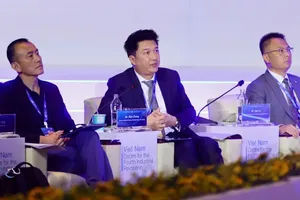
The conference featured 11 presentations alongside recorded congratulatory remarks from leaders representing several international localities, including the Liverpool City Region (United Kingdom), Leipzig (Germany), Aichi Prefecture (Japan), and San Francisco ( the United States).
Drawing from their governance experience, representatives from these regions and territories proposed a range of concrete cooperation initiatives with Ho Chi Minh City. These included strengthening collaboration in infrastructure development, agriculture, cross-border trade, tourism, and cultural exchange; expanding partnerships in healthcare, biotechnology, and agricultural innovation; and focusing on the exchange of expertise in modern urban management, green transition strategies, climate change adaptation, education and training, science and technology, as well as broadening opportunities for bilateral investment and trade.