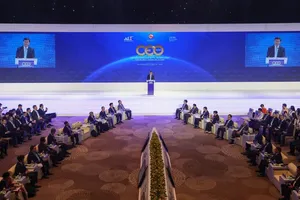
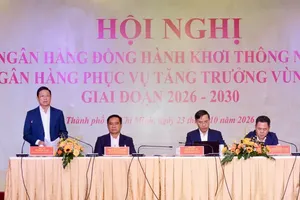
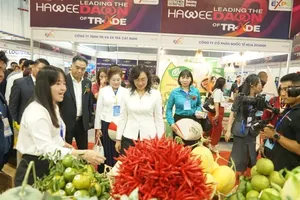
The conference was organized by the Ho Chi Minh City Trade and Investment Promotion Center (ITPC) in coordination with the Customs Sub-Department of Region II, with nearly 400 delegates attending.
At the conference, Le Anh Hoang, deputy director of ITPC, said that amid numerous changes to customs policies and laws, direct dialogue helps businesses promptly update their knowledge of regulations while raising difficulties they encounter for guidance and resolution.
The conference received nearly 100 questions and recommendations from businesses, focusing on areas that directly affect the time and cost of moving goods through border gates, including tax policies, tax refunds, temporary imports for re-export, specialized inspections, goods analysis and classification, customs valuation and cargo clearance.
Some businesses said they were facing difficulties obtaining tax refunds for imported goods used to produce products for on-the-spot export.
In specialized inspections, waiting times for inspection registration or sampling for analysis and classification can in some cases be lengthy, affecting declaration processing and the schedule for putting raw materials into production.

Businesses with export goods consigned overseas also face difficulties when the final selling price is determined only after several months, creating problems with customs valuation declarations.
Based on the recommendations, Nguyen Thanh Binh, deputy head of the Customs Sub-Department of Region II, asked relevant units to focus on classifying the issues into groups to provide guidance and resolve them.
He asked businesses with files awaiting specialized inspection to proactively notify customs authorities of their status so the two sides can coordinate to resolve them. Goods awaiting quality or food safety inspection results may be moved to storage facilities if the relevant conditions are met.
For exported goods for which the final selling price has not yet been determined, businesses were advised to consider declaring a provisional customs value, fulfill the corresponding tax obligations and submit supplementary declarations once the official price is available.
For difficulties involving tax refunds, transitional policies or cases governed by multiple regulations, customs authorities will continue to review them. Issues beyond their jurisdiction will be compiled and submitted to the competent authorities for consideration and resolution.
The dialogue to address difficulties comes as Law No. 11/2026/QH16, which amends and supplements a number of provisions of the Customs Law, is driving a major shift in the management approach. The changes include greater use of digital technology, big data and artificial intelligence. Businesses with good compliance records may be considered for preferential procedures, reduced inspection and supervision, and reduced post-clearance inspections.
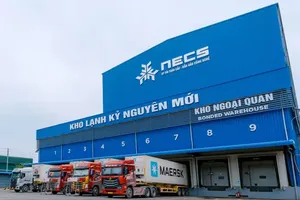
Management of imports and exports through e-commerce, electronic documents and certain bonded-warehouse procedures has also been added and simplified.
According to customs authorities, alongside implementation of the new regulations, issues within their jurisdiction will be addressed directly through guidance and resolution, while problems arising in practice will be reviewed for submission to the competent authorities.
The goal is to shift decisively from uniform management to risk- and compliance-based management, thereby reducing procedures, shortening customs clearance times and lowering costs for businesses.