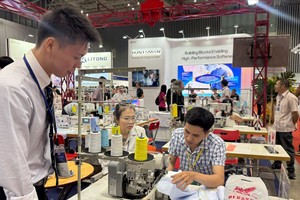
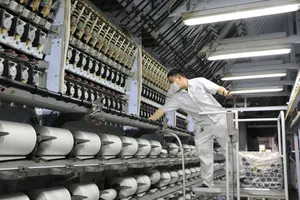
The issue was raised at a business networking event between the Ho Chi Minh City Association of Small and Medium Enterprises (HCM-SME) and the Vietnam Business Association in Japan (VJBA) on September 3.

Pham Van Triem, Chairman of HCM-SME, said that SMEs make up about 98 percent of businesses in Vietnam. Ho Chi Minh City has nearly 500,000 businesses across various sectors, contributing about 37 percent of the city’s GRDP and employing nearly 5 million workers.
SMEs make up the vast majority of businesses and are highly dynamic, with strong demand for market expansion, access to technology and management models, and investment partners.

Tong Thi Kim Giao, Chairwoman of the Vietnam Business Association in Japan, offered insights into Japan’s investment environment, highlighting the challenges facing the country’s SME sector.
She said that Japan has around 3.57 million SMEs, many of which are struggling to find successors. About 52 percent of business owners are over 60, while nearly half of SMEs have yet to identify successors as younger generations become increasingly reluctant to take over their family businesses.
Notably, although many of these businesses remain profitable, around 1,000 SMEs close each month, mainly in wholesale, retail, construction, manufacturing and services. This trend is creating a significant business succession gap while opening up opportunities for investors interested in M&A deals in Japan.

Vietnamese businesses could potentially gain access to both markets by investing in Japan. Japanese technology, management expertise and customer networks could serve as a foundation for expanding operations in Vietnam, while Vietnamese products and human resources could gain a foothold in the Japanese market.







)