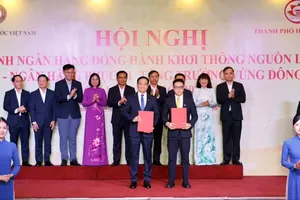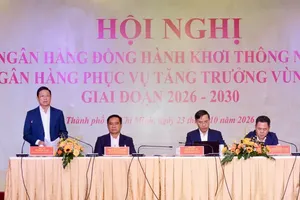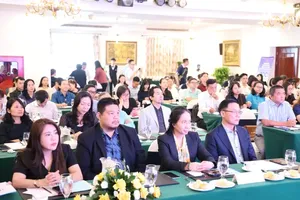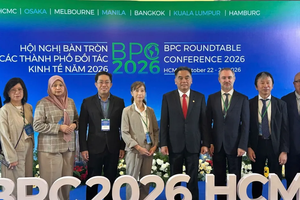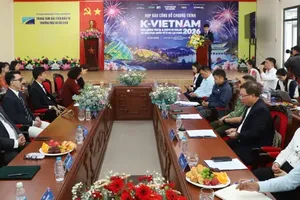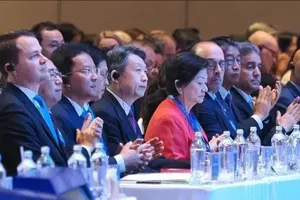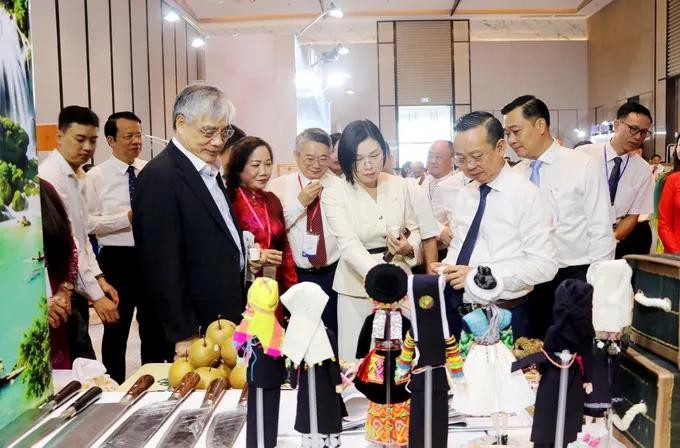
On September 9, Nghe An Province hosted a conference to review the implementation of the socioeconomic development cooperation agreement between Ho Chi Minh City and several Northern and North-Central localities for 2023-2025 and discuss cooperation directions for 2026-2030.
Attendees included Vo Trong Hai, Deputy Secretary of the Nghe An Provincial Party Committee and Chairman of the Nghe An People’s Committee, and Bui Minh Thanh, Vice Chairman of the HCMC People’s Committee.
Tourism and goods flows gain momentum
From the first months of 2026, cooperation between Ho Chi Minh City and Northern and North-Central localities recorded strong growth, creating a vibrant flow of tourism and trade.
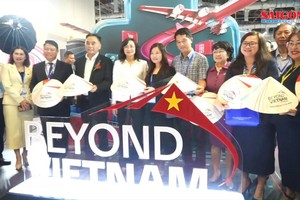
A survey by the HCMC Department of Tourism of 10 major travel companies showed that during the first eight months of the year, the companies brought nearly 350,000 visitors to the Northern and North-Central regions, generating estimated revenue of VND1.69 trillion (approximately US$65.24 million).
Deputy Director Le Truong Hien Hoa of the HCMC Department of Tourism said the linkage network had created genuine two-way value and enhanced the overall competitiveness of Vietnam’s tourism industry.
To tap into distinctive cultural features, Tran Thi My Hanh, Director of the Nghe An Department of Culture, Sports and Tourism, proposed developing signature tourism products such as “Journey from the city named after Uncle Ho to Uncle Ho’s hometown”, connecting HCMC with the Kim Lien Special National Relic Site, as well as developing an “Nghe An Cultural Space in HCMC.”
Representatives of the Cao Bang tourism sector also proposed a historical journey, “Kim Lien - Ben Nha Rong - Pac Bo,” linked with the Non Nuoc Cao Bang UNESCO Global Geopark and border tourism experiences.
The Ninh Binh Department of Tourism proposed connecting a chain of heritage, cultural and spiritual tours from the ancient capital of Hoa Lu, Trang An and Tam Chuc to vibrant ecological areas.
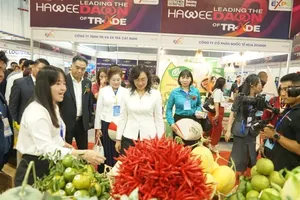
In trade, a business-matching program between HCMC and eight Northern and North-Central provinces and cities brought together 105 businesses and cooperatives, which met with six major distribution systems such as Saigon Co.op, Satra, Central Retail, Bach Hoa XANH, MM Mega Market and Lotte, through more than 390 B2B meetings.
A wide range of famous agricultural products and specialties, including Thai Nguyen tea, Thanh Hoa fermented pork rolls, Kim Lien lotus tea, Ha Tinh deer antler velvet, Hue cajeput oil, Ninh Binh scorched rice and Cao Bang shiitake mushrooms, have entered modern retail systems after meeting OCOP, HACCP, ISO, VietGAP and Halal standards.
Luong Thi Kieu Lan Chi, Northern Regional Director of Saigon Co.op, said the company had developed a network of about 60 outlets in the North, with 2025 sales exceeding VND1.5 trillion, more than 60 times the figure recorded in 2009.
During 2023-2025, Ho Chi Minh City and Northern and North-Central localities carried out 22 trade promotion activities, supported 500 businesses, signed 54 memorandums of understanding and introduced 249 OCOP products and specialties into major distribution systems.
In investment promotion, Ho Chi Minh City introduced 279 projects, while Nghe An Province attracted three industrial park infrastructure projects with total investment of VND6.926 trillion.
The healthcare sector recorded four in-depth cooperation programs, including the transfer of expertise in pediatrics, cardiology and oncology between Ho Chi Minh City and Nghe An.
HCMC and localities push to bridge institutional gaps
Ahead of the 2026-2030 cooperation period, managers, economic experts and local leaders frankly pointed out longstanding shortcomings while proposing breakthrough solutions.
Deputy Director Nguyen Nguyen Phuong of the HCMC Department of Industry and Trade said the business-linkage program had helped local enterprises understand the “codes” of requirements set by retail chains.
Going forward, a fundamental solution is to shift from small-scale trading to building stable supply-demand linkages while supporting quality standardization and digital transformation for cooperatives and small and medium-sized enterprises.
Assoc. Prof. Tran Dinh Thien, former Director of the Vietnam Institute of Economics, said Ho Chi Minh City had strengths in capital, technology and markets, while northern provinces had abundant land, human resources and space.
The major barriers now are an institutional gap and administrative boundaries, while cooperation has been evaluated more in terms of the number of events rather than productivity and job quality.
Citing China’s East-West assistance program launched in the 1990s, which paired developed eastern provinces with disadvantaged western areas to combine capital and technology with local resources, as well as a former one-way labor migration program from southern to northern Italy, Assoc. Prof. Tran Dinh Thien concluded that Ho Chi Minh City, Nghe An and other provinces and cities should move beyond the “workers leave - money is sent home” model.
Instead, they should promote the circulation of knowledge and expertise, improve enterprise capacity and develop local services to narrow productivity gaps.
Vo Trong Hai, Deputy Secretary of the Nghe An Provincial Party Committee and Chairman of the Nghe An People’s Committee, called on HCMC, Nghe An and other provinces to turn their commitments into specific projects and establish close coordination mechanisms.
Nghe An Province expects the new phase of cooperation to focus on expanding investment, transferring science and technology, applying innovation, training human resources and developing specialized healthcare, creating substantive changes that bring shared benefits to the region.
Vice Chairman Bui Minh Thanh of the Ho Chi Minh City People's Committee said that looking back at the 2023-2025 period, alongside the achieved results, it is necessary to frankly acknowledge that regional linkage still leans toward movement-style events, and follow-up monitoring after signings remains infrequent. Entering the 2026-2030 period, Ho Chi Minh City proposes elevating cooperation into a driving force for substantive development.
Accordingly, there should be a strong shift from general cooperation to specialized sectors tied to major value chains; expanding connections from regulatory agencies to the entire ecosystem (banks, hospitals, distributors) with enterprises at the center. Localities should select key annual programs and establish a semi-annual periodic evaluation mechanism.
Nguyen Xuan Minh, Deputy Director General of the Department of Local and Territorial Economy under the Ministry of Finance said that Inter-regional cooperation must stem from practical needs and mutually supportive benefits, with enterprises and the market at the center, while the government plays the role of creating a legal corridor. The gauges of cooperation effectiveness must be the number of contracts, revenue, visitor volume, investment capital, and jobs created.
Implementing Resolution No. 27-NQ/TW dated August 28, 2026, of the Politburo on regional development and the organization of national development space in the new period, the Ministry of Finance proposes three directions for the 2026-2030 period: selecting value chains with high spillover effects; unifying the list of priority projects tied to resources and leading units; and building a streamlined and effective coordination apparatus. The Ministry of Finance will proactively advise on refining mechanisms and policies to unlock inter-regional resources.
Cao Van Chong, General Director of Saigontourist Group said that Saigontourist Group proposes a strong transition from mere destination linkag to value chain linkage. The entity focuses on revitalizing Northern-Central-Southern inter-regional tourism products, harmoniously combining historical and cultural elements with eco-tourism, resorts, and MICE.
The Saigontourist travel network will serve as the focal point to enhance two-way visitor flows and attract international tourists.
Regarding promotion, traditional advertising methods need to be transformed by building a destination ecosystem on digital platforms, cooperating with KOLs and bloggers, and organizing quality Famtrip and Presstrip delegations. Simultaneously, through the Saigontourist Hospitality College, we are ready to accompany standard human resource training, turning Saigontourist accommodation facilities across localities into "anchor points" connecting sustainable development.