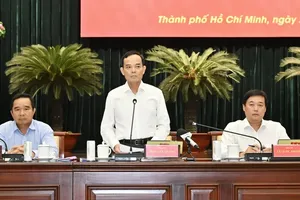
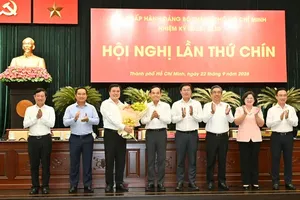
On September 22, the Executive Committee of the Ho Chi Minh City Party Committee for the 2025–2030 term at its ninth conference focused on solutions to achieve three key targets for 2026, including economic growth, state budget revenue, and public investment disbursement.
Ho Chi Minh City targets fourth-quarter growth of more than 13.5 percent
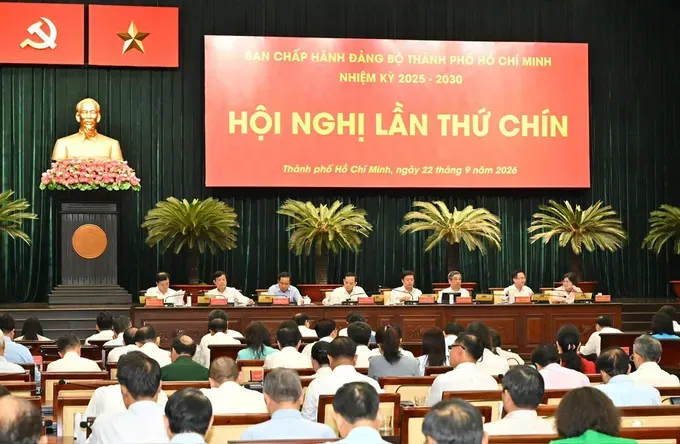
According to a proposal submitted by the Standing Committee of the Ho Chi Minh City Party Committee to the Executive Committee of the Ho Chi Minh City Party Committee, the city will focus on promoting socio-economic development in the final three months of 2026, targeting annual growth of 10.2 percent, mobilizing more than VND1.2 quadrillion (US$46.1 billion) for development investment, collecting more than VND1 quadrillion in state budget revenue, and achieving 100% disbursement of the 2026 public investment plan.
The city will focus on tapping additional revenue sources, particularly land-related revenues, while removing obstacles facing businesses and expediting procedures to launch and put into operation approved foreign direct investment (FDI) projects.
Director of the Ho Chi Minh City Department of Agriculture and Environment, Nguyen Toan Thang, said the city has set a 2026 target of collecting more than VND162 trillion from land resources. Of this, more than VND98 trillion is expected to come from specific land-price determination for over 129 projects, while land auctions are targeted to generate approximately VND62 trillion.
The city plans to auction part of its land fund by the end of September 2026 and continue auctioning the remaining parcels according to schedule. For build-operate-transfer (BT) projects, the revenue target is more than VND5.5 trillion. More than VND3.5 trillion has been identified to date, with the remainder being finalized.
Regarding compensation funding for project implementation, Nguyen Toan Thang said 148 projects had been allocated approximately VND60 trillion, of which VND56 trillion had been disbursed, equivalent to about 93 percent and exceeding the 80 percent target set for the end of August.
The Ho Chi Minh City Department of Agriculture and Environment will coordinate with other departments and agencies to disburse the remaining approximately VND4 trillion, as well as an additional VND10 trillion if allocated, with the aim of fulfilling the assigned target.
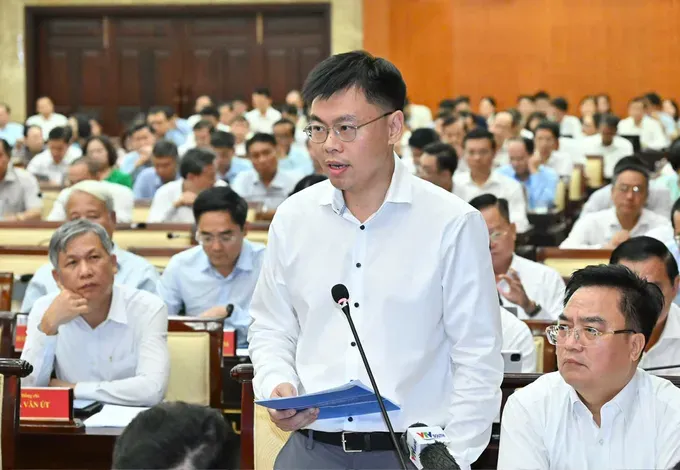
Dr. Truong Minh Huy Vu, Director of the Ho Chi Minh City Institute for Development Studies, said the city’s economic growth in the third quarter of 2026 is projected at approximately 8.9–9.5 percent, bringing nine-month growth to an estimated 8.7–8.9 percent. These are forecasts and have not yet been officially released by Ho Chi Minh City Statistics.
FDI attraction, logistics, and services have been bright spots, making positive contributions to overall growth. However, the target of double-digit annual growth will put considerable pressure on the city in the fourth quarter of 2026. Under the forecast scenario developed by the Ho Chi Minh City Institute for Development Studies and the Department of Finance, fourth-quarter growth must exceed 13.5 percent.
To achieve this level of growth, Dr. Truong Minh Huy Vu proposed focusing on mobilizing and effectively utilizing three sources of capital: public investment, private investment, and FDI. He also called for stronger efforts to stimulate consumption, tourism, and services through events, festivals, and preparations for the Lunar New Year.
Ho Chi Minh City focuses on removing bottlenecks
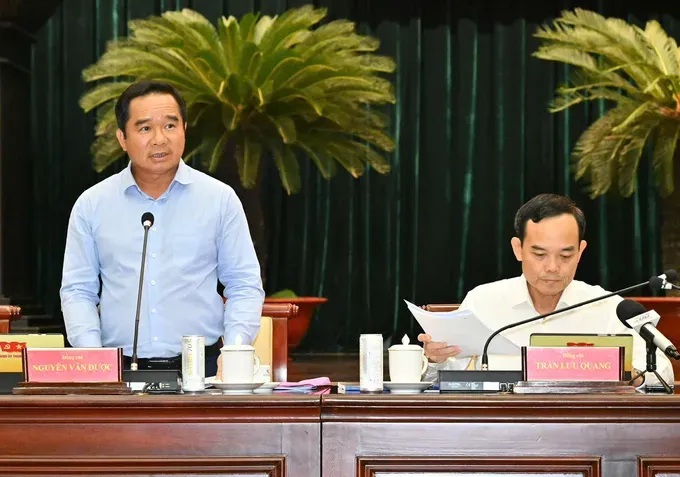
At the meeting, leaders of Ho Chi Minh City’s departments and agencies called for a focus on resolving obstacles related to land, investment procedures, and business support, while accelerating project implementation to achieve the city’s year-end growth targets.
Director of the Ho Chi Minh City Department of Agriculture and Environment, Nguyen Toan Thang, said the department was coordinating with other agencies to address obstacles facing 408 projects. To date, 68 projects have had their problems fully resolved, while solutions have been identified for 309 projects. The remaining 31 projects are being reviewed to determine the causes of the problems and appropriate solutions.
Director of the Ho Chi Minh City Department of Finance, Hoang Vu Thanh, said FDI attraction in the first nine months of 2026 had produced positive results in terms of registered capital. However, disbursed capital and the implementation of projects remained behind schedule compared with commitments. Major obstacles were related to site clearance, specific land-price determination, planning, and appraisal.
Meanwhile, the number of newly established businesses rose by just 0.28 percent year on year, while the number of businesses temporarily suspending operations for a specified period increased 15.2 percent. The number of businesses completing dissolution procedures surged by more than 130 percent.
These developments were attributed to high production and transportation costs and limited access to capital among small and medium-sized enterprises.
Director of the Ho Chi Minh City Department of Finance, Hoang Vu Thanh, proposed strengthening post-investment inspection and monitoring the progress of FDI projects, resolving financial and land-related obstacles, and developing financial instruments to support businesses. He also called for stronger linkages between FDI enterprises and domestic businesses, as well as a review and resolution of long-standing projects according to specific roadmaps.
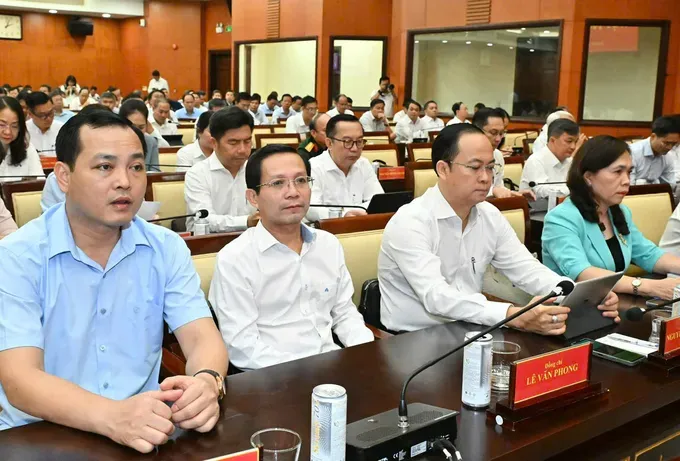
According to Mr. Truong Trung Kien, Director of the Ho Chi Minh City Department of Planning and Architecture, the Master Plan for Ho Chi Minh City for the 2025–2050 period, with a 100-year vision, envisions the city developing as a polycentric megacity featuring five growth poles, five satellite centers, five strategic connectivity systems, and 10 development governance zones.
To support the goal of achieving high growth over the long term, the plan proposes restructuring the socio-economic model, reorganizing development spaces, reforming governance, developing infrastructure, further decentralizing authority, and expanding mechanisms for greater autonomy.
Ho Chi Minh City will prioritize the development of a International Financial Center, a Free Trade Zone, a National Energy Center, high-tech parks, data centers, and innovation hubs. The plan also proposes studying the establishment of a Special Economic Zone after 2030, with preferential and breakthrough mechanisms to attract resources.
Mr. Bui Ta Hoang Vu, Director of the Ho Chi Minh City Department of Industry and Trade, said that in the final three months of the year, the department would advise the municipal People’s Committee to immediately roll out funding support packages recently approved by the Ho Chi Minh City People’s Council at its fifth session.
The department will also coordinate with the Ho Chi Minh City Export Processing and Industrial Zones Authority (HEPZA) to facilitate businesses’ access to land and production premises. It will strengthen linkages among trade, tourism, healthcare, and culture to stimulate consumer demand while working with the Ho Chi Minh City Trade and Investment Promotion Center and industry associations to seek and expand markets, helping offset difficulties in some existing markets.
According to Mr. Le Truong Hai Hieu, Secretary of the An Lac Ward Party Committee and Chairman of the Ward People’s Council, An Lac Ward was allocated a 2026 public investment plan totaling VND1.425 trillion. As of September 22, the ward had disbursed VND1.18 trillion and committed to completing 100 percent of the assigned plan before December 31.
Taking over the investment project management unit previously operated by the former Binh Tan District has enabled the ward to retain an experienced team familiar with project implementation procedures. The ward Party Committee’s Standing Committee directly oversees the progress of each project, monitors implementation on a weekly basis, develops specific disbursement plans, and promptly addresses obstacles.
The ward also regularly reviews funding needs and coordinates the allocation of funds in line with actual implementation progress. It proactively exercises the authority delegated and decentralized by the city while linking such authority to accountability for results.