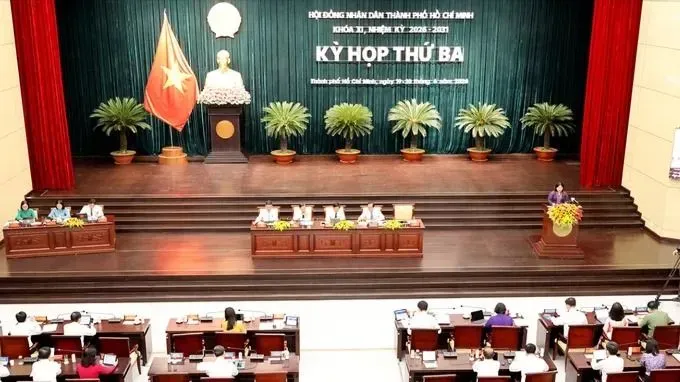
The session focuses on deliberating and passing measures to institutionalize the provisions of the Urban Development Law. These mechanisms and policies are tailored to the city’s operational realities and designed to align with regulatory frameworks across urban planning, investment, land management, construction, transport, and housing.
The 1.5-day session, taking place on September 21 and the morning of September 22, is expected to consider and discuss 38 submissions. The agenda includes matters related to the required documentation, cost norms, procedures for the formulation, appraisal, approval, and adjustment of the Ho Chi Minh City Master Plan; underground spatial planning; the management, exploitation, and use of underground space and the development of underground infrastructure; route plans and the locations of facilities along local railway lines; and the planning of transit-oriented development (TOD) areas.
The session will also consider regulations on the criteria, conditions, procedures, and process for implementing independent compensation, support, and resettlement projects before approval of investment policies; a policy to provide financial assistance for medical examination and treatment costs for children and disadvantaged people with chronic kidney disease, Phase 5; and health insurance contribution support for voluntary blood donors residing in the city, among other matters.









)