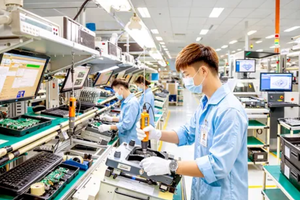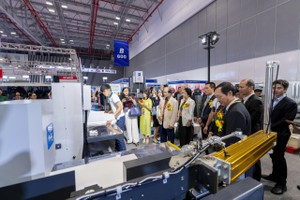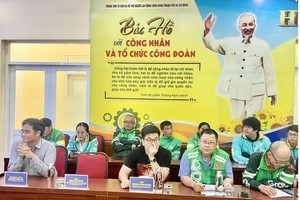
The third-quarter GRDP growth reportedly reached an estimated 8.9 to 9.5 percent, standing as the highest third-quarter performance recorded over recent years. Budget revenue impressively surpassed VND670. 6 trillion (US$25.8 billion). FDI capital has surged more than threefold compared to the same period last year. The machinery is undeniably hitting its stride.
Nevertheless, to successfully dock at the double-digit growth destination for 2026, the fourth quarter must relentlessly accelerate beyond the 13 percent threshold. The final three months of the year no longer represent a stretch for merely maintaining pace, but rather a critical runway for breaking away.
If the economy is a machine, public investment capital practically serves as the initial fuel poured directly into the combustion chamber. By the end of September, the city expects to disburse 70 percent of its capital plan.
To achieve at least 95 percent, over the next three months, the metropolis must strategically inject an additional VND37 trillion ($1.42 billion) into construction projects, averaging over VND12 trillion ($461 million) per month. Every single project desperately requires a “firekeeper” who assumes ultimate responsibility, adhering to strict weekly progress metrics.
Bottlenecks must be dismantled right on the spot, preventing them from morphing into “choke points” that suffocate the entire flow. Any capital that can’t be spent must be swiftly reallocated to areas currently thirsting for funds.
While public investment acts as the engine, private alongside foreign investments essentially constitute the sails. The engine successfully propels the ship from the harbor, but it’s the sails that truly enable it to voyage far.
The ambitious target of disbursing over VND140 trillion ($5.4 billion) in private investment capital explicitly demands the city to hoist the “anchors” currently holding projects back; these primarily involve legal, land, alongside urban planning entanglements.
Every lifted anchor translates to another vessel being unleashed out to sea. For the FDI sector, the committed capital of $17.2 billion is a highly favorable tailwind currently blowing toward the city. However, the wind only proves beneficial once the sails are fully unfurled. Commitments only metamorphose into tangible growth when they materialize into fully operational factories, machinery, alongside active assembly lines.
The municipality, thus, needs to steadfastly accompany every major investor, massively truncating all bureaucratic procedures, so that promises on paper can swiftly transform into concrete structures on the ground.
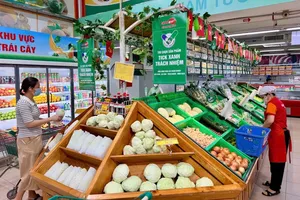
During these final months of the year, the city resembles a household eagerly preparing for the Lunar New Year. Lights are illuminated, doors are thrown wide open, and people are flocking in. It’s the definitive season where purchasing power seamlessly morphs into the economy’s heartbeat.
That specific heartbeat urgently needs to be nourished by a meticulously designed sequence of festivals, ranging from pedestrian streets, culinary carnivals, and concentrated promotional campaigns right through to vibrant nocturnal cultural spaces.
Concurrently, it’s absolutely vital to guarantee goods supply, stabilize prices, alongside maintaining uncompromised safety plus public order. A dazzling, secure, and hospitable metropolis will inevitably compel residents to spend more while persuading tourists to linger for just one more night.
Toss a stone onto a lake’s surface, and the subsequent ripples will continuously radiate outward. Certain economic sectors function exactly like that stone. Every single dollar invested into them generates escalating waves of value that reverberate across the entire economy. Double-digit growth must fundamentally commence from the heaviest stones available.
- Tourism inherently acts as an “on-the-spot export” industry. Every international tourist is practically an export shipment that doesn’t require a shipping container; they bring foreign currency straight to the source, seamlessly driving accommodation, dining, transportation, retail, alongside cultural engagements.
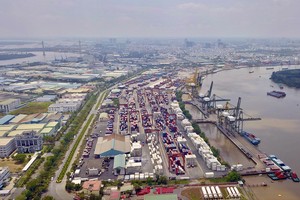
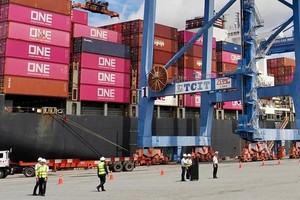
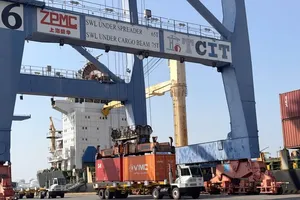
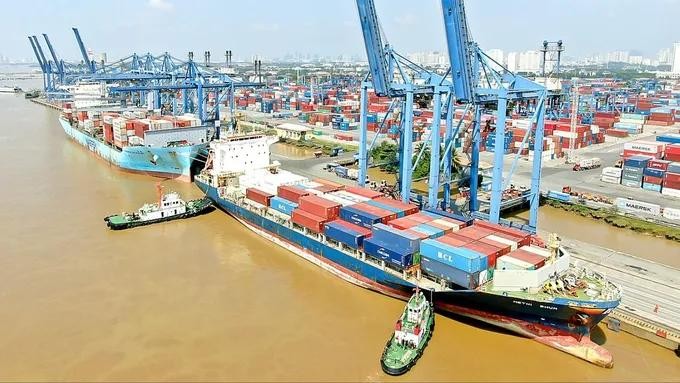
- Logistics serves as the circulatory system of any economic metropolis. The Cai Mep Ha free trade zone, the inland container depot network, plus e-commerce must be tightly stitched into a seamless blood vessel, allowing merchandise to circulate faster and cheaper, thereby establishing HCMC as the region’s premier transit heart.
- High technology alongside digital tech constitute the brain of the future economy, representing the exact domain where FDI capital is heavily cascading. The city desperately needs to catch this massive wave using robust data infrastructure, high-quality human resources, alongside highly flexible experimental mechanisms.
- International financial services represent the penthouse of this multi-tiered economic edifice. The Vietnam International Financial Center in HCMC will serve as a lighthouse attracting long-term capital flows, exponentially elevating the city’s stature on the regional map.
These aforementioned solutions aren’t isolated boats; rather, they’re the oars powering the exact same ship. Public investment actively paves the way for private capital. Robust investment directly forges capacity for expanding exports. Domestic consumption and tourism fundamentally generates massive demand. The spearhead industries ultimately dictate just how far this ship can travel. Should even a single oar fall out of sync, the vessel will inevitably decelerate.
Reaching the double-digit destination is undeniably a monumental challenge, yet it isn’t entirely beyond the grasp. Exactly what the municipality has accomplished over the past nine months firmly substantiates that very point. The final lap has just commenced, simultaneously unlocking myriad foundational pillars for subsequent years.