While many households are seeking ways to better protect themselves, authorities are stepping up inspections and enforcement efforts to ensure that the public has access to safe food.
Residents seek ways to protect themselves from unsafe food
In early 2026, the Ho Chi Minh City police uncovered a series of high-profile food safety violations that had shocked the public. The cases included hundreds of tonnes of fresh noodles found to contain borax, thousands of tonnes of apple snails soaked in so-called “liquid glass,” and a criminal ring producing fake beef from chemically treated pork.
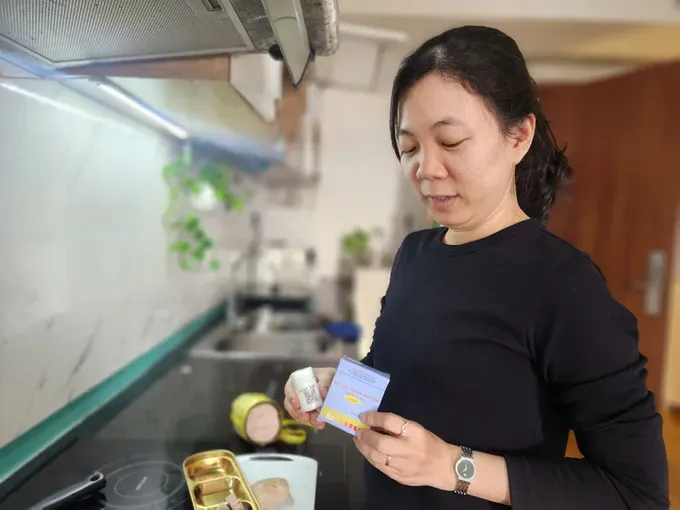
According to Ms. Tran Dieu Van, a 37-year-old resident of Phuoc Long Ward in Ho Chi Minh City, concerns over food safety as the Lunar New Year draws closer. To protect her family, Van has arranged for her mother to send homegrown vegetables and home-raised pork from Dong Nai Province on a weekly basis.
More recently, following the discovery that the Chau Phat facility in Ho Chi Minh City had produced hundreds of tonnes of noodles mixed with borax, Van said she decided to purchase chemical testing kits for household use.
Ms. Nguyen Thi Man, a 35-year-old resident of Tang Nhon Phu Ward in Ho Chi Minh City, said she has completely removed foods cited in the media for food safety violations from her family’s diet. After her son suffered a case of food poisoning, her family sharply reduced eating out and avoided canned and processed foods altogether. As for vegetables and fruit, she now relies exclusively on produce from a neighbor’s garden.
Associate Professor Dr. Nguyen Duy Thinh, a food safety expert and former lecturer at Hanoi University of Science and Technology, noted that consumers’ efforts to screen food on their own can only serve as a temporary and limited solution. The fundamental approach, he said, lies in effective prevention and in strengthening accountability among producers themselves—an issue that becomes all the more urgent as the Lunar New Year approaches and food consumption surges.
On January 29, several primary and secondary schools in Ho Chi Minh City, including Nguyen Van Huong Primary School in Phu Thuan Ward, Huynh Tan Phat Secondary School in Tan Thuan Ward, Tan Quy Primary School in Tan Hung Ward, Trung Son Secondary School and Le Quy Don Primary School in Binh Hung Commune, and Khanh Binh Secondary School in Chanh Hung Commune, temporarily suspended their school lunch services.
The move followed reports that the company supplying meals to these schools showed signs of failing to meet food safety and hygiene standards. According to notices issued by the schools, the suspension will remain in effect until authorities release inspection results or until the schools secure a new food service provider.
Ho Chi Minh City tightens food safety controls on Tet goods
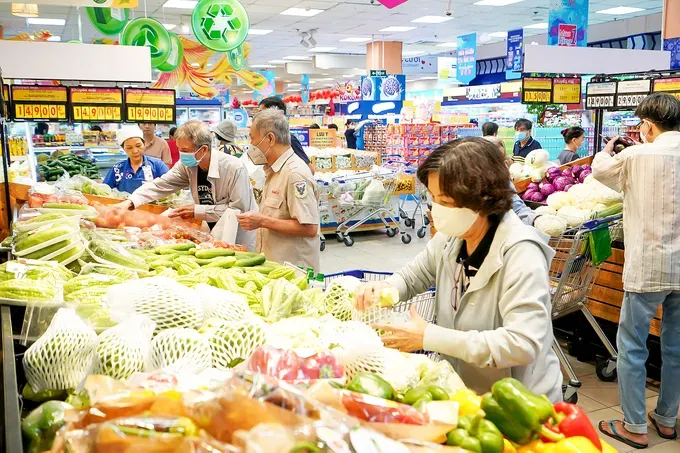
According to Pham Khanh Phong Lan, Director of the Ho Chi Minh City Food Safety Department, inspection and enforcement efforts are being carried out continuously before, during, and after the Lunar New Year, as well as throughout the 2026 Spring Festival season.
The inspections are focused primarily on products with high consumption during this period, including meat and meat products, beer, alcohol and alcoholic beverages, soft drinks, cakes, candied fruits, confectionery, vegetables, fruits, and food additives. Food service establishments are also being closely monitored in order to promptly detect, prevent, and address food safety violations, with the aim of preventing food poisoning incidents.
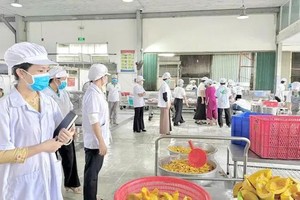
Authorities plan to inspect more than 1,300 food production, processing, trading, and import establishments, as well as food service providers, with inspections focusing on major distribution points such as supermarket chains, shopping malls, wholesale markets, traditional wet markets, and household businesses. Where signs of violations are detected, inspection teams will collect product samples for laboratory testing.
In addition, the Ho Chi Minh City Food Safety Department has called on local administrations in communes, wards, and special zones to step up inspections within their jurisdictions, while intensifying public outreach and food safety training for businesses serving the Lunar New Year.
In January 2026 alone, the department inspected 367 food production and trading establishments and food service providers across the city. As a result, inspection teams identified violations at seven establishments, imposing a total of more than VND79 million (US$3,053) in administrative fines. In addition, surprise inspections were conducted at 11 establishments, with only one violation recorded.
Regarding pork supplies entering Ho Chi Minh City, food-safety inspection teams traced the origin of 241,189 pigs at the Hoc Mon and Binh Dien wholesale agri-food markets over the past month, helping to ensure food safety for the city’s consumers.
In Ho Chi Minh City, food safety inspection and monitoring efforts ahead of the Lunar New Year have entered their peak phase. In Vung Tau Ward, inspection campaigns have been underway since December 30, 2025, and are scheduled to continue through March 20, 2026.
According to Ms. Tran Thi Bich Van, Vice Chairwoman of the Vung Tau Ward People’s Committee, in the pre-holiday period, local authorities deployed three inspection teams to examine more than 60 establishments, with a focus on products in high demand during the Tet holiday and on traditional food-processing villages.
Meanwhile, in Rach Dua Ward, home to more than 361 food service establishments and 406 street food vendors, food safety oversight is also being intensified. The ward has formed inspection teams to proactively prevent food poisoning incidents linked to street food at an early stage.




)