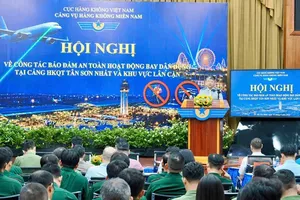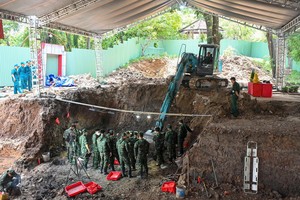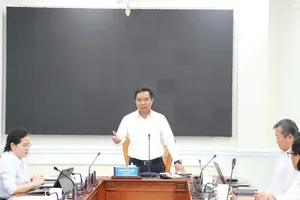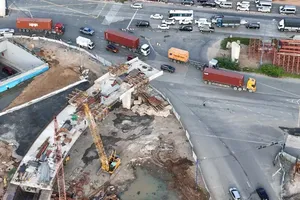
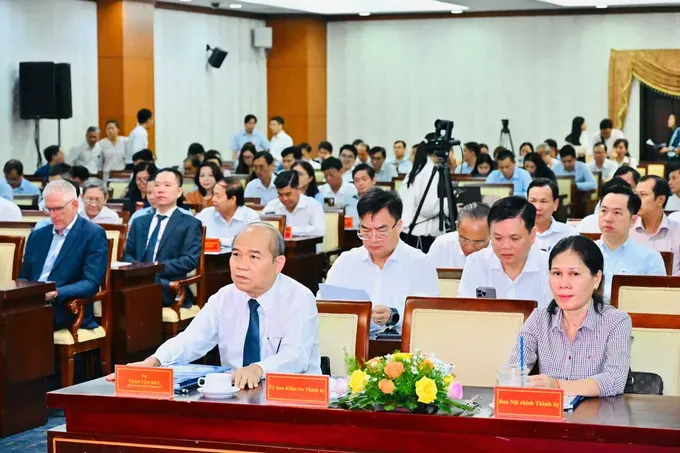
On June 2, the Ho Chi Minh City People's Committee held a conference to disseminate and implement Conclusion No. 24-KL/TW of the Politburo and Resolution No. 29/2026/QH16 of the National Assembly; review the implementation of Plan No. 34/KH-UBND; and launch Plan No. 243/KH-UBND aimed at further addressing bottlenecks affecting long-stalled projects and developments. The conference was chaired by Chairman of the Ho Chi Minh City People's Committee Nguyen Van Duoc.
According to Director of the Ho Chi Minh City Department of Finance Hoang Vu Thanh, Ho Chi Minh City identified the resolution of bottlenecks affecting long-stalled projects and developments as a key and ongoing political task, contributing to the achievement of the city's target of double-digit economic growth.
Under the plan, Ho Chi Minh City is making its utmost efforts and demonstrating the highest level of determination to achieve the goal of resolving difficulties and obstacles facing 100 percent of stalled projects and works across the city, enabling them to be promptly resumed, completed, and put into operation.
The city will focus on addressing bottlenecks related to planning, investment, land management, construction, financial obligations, inspections, audits, and other relevant legal procedures, thereby creating favorable conditions for businesses and investors to continue implementing their projects in accordance with regulations.

Regarding difficulties and obstacles encountered during the review and resolution process, Director of the Ho Chi Minh City Department of Finance Hoang Vu Thanh said that authorities would determine whether responsibility lies with state agencies or enterprises, and whether the issues stem from subjective or objective factors, as well as direct or indirect causes.
Based on this assessment, relevant agencies will examine the legal grounds, practical considerations, and specific historical context of each case to conduct a comprehensive evaluation from multiple perspectives. This approach aims to clearly identify the causes of prolonged delays and the responsibilities of each related organization and individual, thereby enabling the proposal and selection of the most appropriate, feasible, and lawful solutions in line with Party guidelines and state regulations.
The resolution process must be aligned with objective realities, balance the interests of the State with the legitimate rights and interests of all relevant stakeholders, and avoid waste, losses, or damage to the State budget.
At the same time, it must not legitimize violations, create new violations, and must include measures to remedy any losses or damages. Efforts should also be made to minimize disputes and litigation while strictly preventing the exploitation of policies designed to remove obstacles and difficulties for personal gain or vested interests.
Information on projects and constrctions facing prolonged difficulties and obstacles has been compiled from multiple sources, including 421 projects had a plan to address difficulties and obstacles, but the resolution process has not been completed according to the results of the summary of plan 34. The list has also been supplemented with newly reported projects and developments proposed by agencies, units, and organizations that were not previously consolidated or recorded under Plan No. 34.
In addition, the plan covers projects and works that require continued resolution following conclusions or decisions issued by inspection, audit, investigative, or judgment enforcement authorities, as well as cases in which competent authorities have issued conclusions requiring further handling. It also includes projects referred to Ho Chi Minh City by higher-level authorities for monitoring and resolution within the city's jurisdiction.
To streamline the resolution process, Ho Chi Minh City has classified the projects into three categories, including public investment projects, public-private partnership (PPP) projects, and private investment projects.
The city has also categorized outstanding issues into five key areas, such as land, planning, investment procedures, construction, and matters related to inspections, audits, investigations, and judgment enforcement.