With a total investment of more than VND10 trillion (US$387 million), the project is expected to control tidal flooding across approximately 570 square kilometers, benefiting around 6.5 million residents.
Roads stay dry as flooding eases
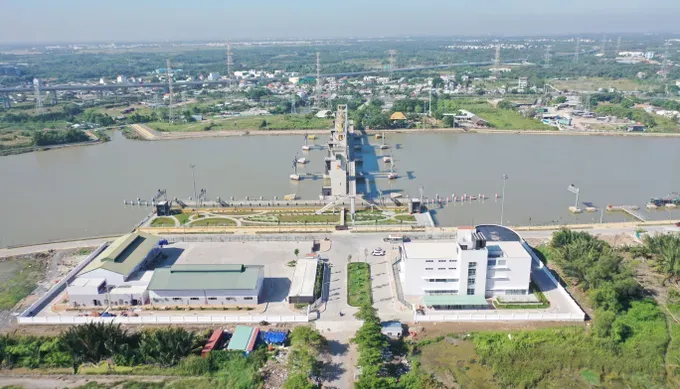
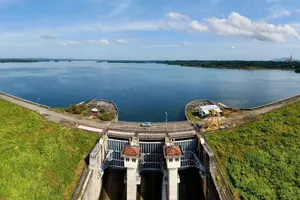
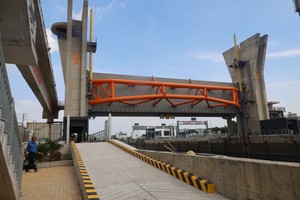
The project comprises eight major tidal control gates at Ben Nghe, Tan Thuan, Phu Xuan, Muong Chuoi, Cay Kho, Phu Dinh, Cau Kinh, and Ba Buom, along with 41 smaller gates, six kilometers of embankments, and a pumping system with a capacity of 120 cubic meters per second.
After nearly a decade of waiting, the project’s operation is expected to improve tidal flooding conditions in several heavily affected areas in central Ho Chi Minh City.
Nguyen Thi Nhung, who lives at No. 393 Nguyen Binh Street, Nha Be Commune, about 700 meters from the Muong Chuoi tidal control gate, expressed her excitement, saying that tidal flooding in the area had no longer occurred as frequently as before over the past two weeks since the gate began trial operations.
Previously, whenever high tides occurred, floodwater regularly entered homes, leaving Nguyen Binh Street and numerous alleys extensively inundated. At times, floodwater remained for prolonged periods, forcing residents to raise their belongings and use sandbags and wooden boards to prevent water from entering their houses.
However, over the past two weeks, she has no longer seen flooding like before. Water has not entered our home, and the roads have stayed much drier, making travel and daily activities considerably easier,” Nhung said, expressing hope that the gate's operation would help prevent rising tidal waters and give residents greater peace of mind.
In the Phu Dinh Street area of Phu Dinh Ward, Ms. Nguyen Thi Lan said tidal flooding had also eased since the Phu Dinh tidal control gate began trial operations. Roads have remained dry, making travel more convenient for residents, who no longer have to worry constantly about floodwater entering their homes.
Many residents living along Tran Xuan Soan Street in Tan Hung Ward and Ton That Thuyet Street in Xom Chieu Ward also expressed hope that the Tan Thuan tidal control gate system would soon deliver its intended results, helping address the persistent tidal flooding that has affected the areas for many years.
Nguyen Van Thanh, a resident of Ton That Thuyet Street, said the completion and operation of the project brought great joy to residents after nearly a decade of waiting. Residents hope the roads will remain free of flooding, allowing children and older people to travel more safely.
Six tidal control gates operate in coordination

To ensure effective tidal control across a wide area, all six gates are connected to the Muong Chuoi central control center, which uses Supervisory Control and Data Acquisition (SCADA) technology to monitor and manage the operations of each gate.
The system integrates data from 19 monitoring stations, continuously updating water levels, hydrological conditions, and operational parameters. This information serves as the basis for determining appropriate gate-opening and closing schedules.
Nguyen Tam Thinh, Chairman of the Board of Directors of Trung Nam Group, the project's investor, said the system operates based on differences in water levels inside and outside the gates.
When river water levels are within an appropriate range, the gates are opened to maintain natural water flows and ensure waterway traffic.
When high tides occur, the central control center directs the gates to close, preventing water from major rivers from entering the network of canals and waterways in the inner city.
As the tide recedes and the water level outside the gates falls below that inside, the gates are reopened, allowing water to flow naturally from the internal waterways into the rivers.
The opening and closing of the gates are coordinated across the entire system to regulate water levels throughout the area and prevent individual operations from undermining overall effectiveness.
When heavy rainfall coincides with high tides, the system must simultaneously prevent tidal water from entering and help drain rainwater from within the protected area.
At gates equipped with pumping stations, including Ben Nghe, Tan Thuan, and Phu Dinh, pumps are activated to discharge water from the internal canal system into major rivers. This helps lower water levels in canals and waterways, allowing rainwater to drain more quickly.
According to Thinh, when operated in coordination, the project can control tidal flooding across approximately 570 square kilometers, covering 20 wards and communes.
However, tidal control does not mean that urban flooding will be completely eliminated. When the gates are closed to keep tidal water out, rainwater accumulating within the protected area must still be collected and drained through the existing drainage networks, canals, and pumping stations.