After sluggish disbursement in the first months of the year, progress saw a clear turnaround by the end of the third quarter, reaching 75.5 percent of the plan. With over VND36,000 billion remaining to be disbursed in the final three months, now is the time to accelerate toward the finish line.
HCMC accelerates site clearance and drives major projects
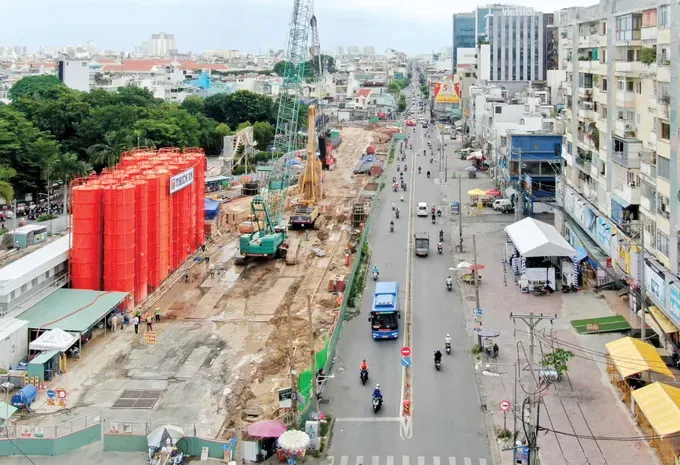
In early October, as recorded on several roads under the Thoi An - Thanh Xuan road project in Thoi An Ward, local residents were eagerly waiting for the project’s deployment.
According to Vice Chairman Nguyen Dinh Bao Quoc of the Thoi An Ward People’s Committee, the project requires land acquisition from 470 households, including 86 households requiring complete relocation and land clearance and 384 partially affected households. As of October 9, the ward had disbursed more than VND1.035 trillion in compensation to 296 cases and received cleared land from 228 households, paving the way for the start of construction.
Similarly, in Chanh Hung Ward, over three consecutive evenings on October 6, 7, and 8, the ward organized direct dialogue conferences to inform residents about the project to dredge, improve the environment, and renovate urban space along the main and branch drainage channels of Ong Be Stream. Currently, most residents have agreed with the relocation and compensation options, and the government is actively allocating funds for payment.
At key projects such as the HCMC - Moc Bai Expressway Construction Project (Phase 1); the infrastructure construction and environmental improvement project for Tham Luong - Ben Cat - Nuoc Len Canal; the dredging, environmental improvement, and infrastructure construction project for Xuyen Tam Canal; and the project for the road connecting Bien Hoa - Vung Tau Expressway with the 2 Thang 9 Roundabout in Phuoc Thang Ward, the progress of site clearance and construction is also being accelerated.
As of September 30, the city disbursed VND111,494 billion of public investment capital, reaching 75.5 percent of the capital plan assigned by the Prime Minister, 26.3 percent higher than the disbursement rate in the same period. The Ministry of Finance assessed HCMC as one of the localities with a large volume of disbursed capital, as well as one of 19 localities with a disbursement rate above the national average (62.9 percent).
Explaining the city’s improved performance, Hoang Vu Thanh, Director of the HCMC Department of Finance, said the decisive factor has been human capital. He attributed the results to the strong leadership of the HCMC Party Committee and People’s Committee, backed by clear direction and practical solutions, as well as the coordinated and proactive efforts of agencies and local authorities. The active engagement of administrations in wards, communes, and special zones in mobilizing residents to hand over land, together with contractors’ efforts to accelerate construction and fulfill project targets, has also played a key role in driving progress.
Flexible capital plan management
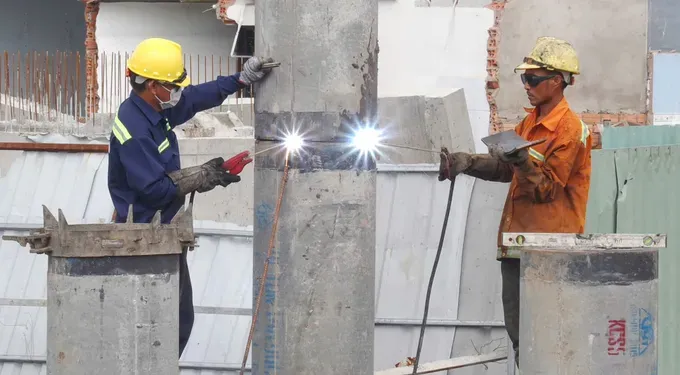
According to the HCMC Department of Finance, one of the groups of solutions actively implemented recently that brought practical effectiveness is flexible capital plan management, "not letting capital wait for projects." Through 8 internal capital transfers and reallocations between agencies and units, the city decisively transferred more than VND45,000 billion from slow projects lacking disbursement capacity to immediately supplement projects with good disbursement and actual volume.
With the remaining public investment capital for 2026, the Department of Finance worked directly with each project management board and investor to assign specific tasks, meticulously reviewing each sum to check which project and locality the capital is located in, as well as the monthly disbursement progress.
Along with flexible capital plan management, the decentralization, authorization, and enhancement of head responsibility in public investment disbursement were also aggressively implemented by HCMC.
Recently, the Chairman of the municipal People's Committee authorized the Director of the Department of Finance to approve the investment capital settlement for Group B and Group C projects. Mr. Hoang Vu Thanh stated that the unit works day and night, signing dossiers late at night to avoid delays. Work pressure is continuous every day and every hour, and wherever bottlenecks arise, they must be focused on and resolved immediately.
The Department of Finance focuses on urgently completing procedures for units, allocating capital promptly, and flexibly transferring capital from projects unable to fully disburse to those with good disbursement capabilities.
"The management principle is a determination to resolve work definitively within the day, not piling it into the next day to avoid extra costs and interest rates, and to ensure the overall progress of projects," emphasized the Director of the HCMC Department of Finance.
Ho Chi Minh City is setting a fourth-quarter growth target of 13.23 percent to complete the double-digit growth goal for 2026. This is an extremely challenging target, in which public investment disbursement is identified as an important driving force that leads and triggers all investment resources in society.
Head Nguyen Khac Hoang of the HCMC Statistics Office stated that in the last three months of the year, it is necessary to accelerate public investment disbursement and implement key projects; resolve obstacles regarding land, planning, compensation, site clearance, and investment procedures. At the same time, strengthen discipline in capital plan execution, handle delayed and backlog projects promptly, and quickly put resources into serving socio-economic development.
From October 1, the Law on Urban Development officially takes effect, creating a new legal framework for urban development, oriented toward delegating power and creating development momentum for special urban areas like HCMC. Codifying urban development mechanisms toward synchronization among planning, infrastructure, and investment resources will allow HCMC to be more proactive in deploying infrastructure projects, urban renovation, and spatial development in the coming time.
A notable point is the mechanism for land handling and site clearance—the biggest "bottleneck" in public investment. Allowing early implementation of tasks such as investigation, survey, measurement, inventory, and land origin verification for eligible projects helps the city prepare sites early instead of waiting for all procedures to finish before starting. Once site issues are resolved, capital can truly be converted into construction volume.
Pham Viet Thuan, Director of the Ho Chi Minh City Institute of Natural Resources and Environment Economics:
Effective implementation of special mechanisms and policies
Ho Chi Minh City is stepping up efforts to protect public officials who take initiative and act in the public interest. Under the city's approach, officials who comply with procedures, report to competent authorities, implement tasks under controlled conditions, and act without personal motives may receive protection and be exempted from or have liability reduced if unforeseen risks arise during implementation.
At the same time, the city is effectively applying special mechanisms and policies related to compensation and resettlement. Key measures include adjustments to the land price adjustment coefficient (K-factor) to ensure more appropriate compensation levels, as well as support for houses and land acquired through informal transactions. These policies are helping to address longstanding obstacles while safeguarding the legitimate rights and interests of affected residents.
In addition, Decision No. 11/2026/QD-UBND grants greater authority to project-level compensation, support and resettlement councils, promoting collective responsibility and reducing concerns among officials about potential accountability risks. With more authority delegated to the commune level, the leadership role of ward and commune authorities, together with the participation of mass organizations, has become increasingly important in project implementation.
According to Director Pham Viet Thuan, the synchronized deployment of these solutions is expected to help remove bottlenecks in site clearance, accelerate project implementation, and support the city's efforts to meet its 2026 public investment disbursement targets.