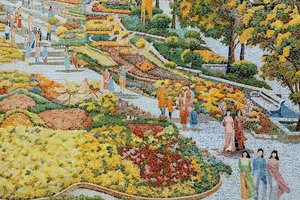
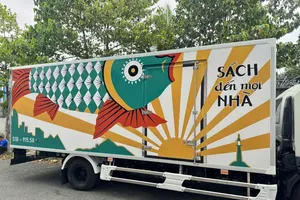
The recent launch of the “Go to Bac Ninh” brand is a notable example of how technology is being used to bring heritage closer to the public through interactive and accessible formats.
Social media has recorded millions and even billions of interactions related to heritage, creating a new, expansive, and compelling wave of cultural dissemination.
Heritage enters the viral online
The launch of the “Go to Bac Ninh” tourism and cultural promotion brand by the Bac Ninh Provincial Department of Culture, Sports and Tourism highlights how local authorities are using digital tools to bring heritage closer to the public. Technology is allowing heritage to move beyond traditional exhibition spaces and reach audiences through more interactive and accessible formats.
Digital tools such as virtual tours, 3D exhibitions, and augmented reality are now being applied at major heritage sites, including the Temple of Literature, the Hue Monuments Complex, Quang Ninh Museum and digital archives of Hoi An’s ancient architecture. According to cultural expert Pham Viet Long, digital space has become a new frontier for Vietnamese heritage to reach and engage global audiences.
Social media has played a key role in amplifying this impact. The hashtag #DiSanVietNam on TikTok has generated more than 307,000 videos and over six billion views.
Mr. Nguyen Lam Thanh, Director of TikTok Vietnam, noted that the campaign offers a very different perspective on heritage preservation and promotion in the digital space. A livestream showcasing heritage experiences in Hue attracted as many as 913,000 concurrent viewers, demonstrating the strong appeal of heritage when it is presented through digital storytelling familiar to younger audiences.
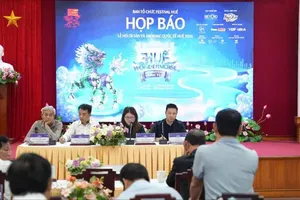
This momentum is further reflected in specialized programs such as “The Beauty of Vietnam – Season 3: Touching Heritage,” which brought together numerous content creators and guided audiences on virtual journeys from the Hung Kings Temple to Ninh Binh, Hanoi and Hue through livestreams lasting several hours.
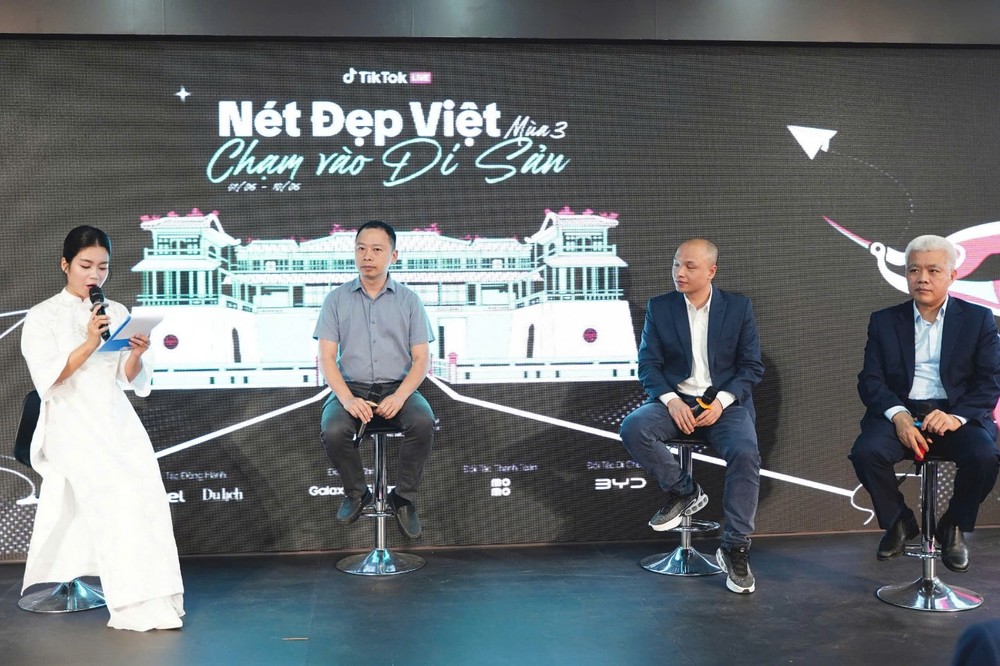
Activities like making “banh chung” (Vietnamese square sticky rice cakes), performing Xoan folk songs with artisans, retelling the legend of Lang Lieu, or exploring the Thang Long Imperial Citadel each drew hundreds of thousands of views. This shows that young people are not indifferent to tradition, only in need of the right approach.
Preserving core values in digital spaces amid the information deluge
Despite the opportunities created by digital platforms, promoting heritage online comes with inherent risks. The spread of cultural and historical content through short videos increases the likelihood of distortion and oversimplification. According to Dr. Pham Viet Long, inaccuracies or a lack of verification can lead to the misrepresentation of heritage values, underscoring the need for both creativity and rigorous information control.
M.A. Luong Viet Anh stressed the importance of building a well-trained cultural communication workforce with strong professional capacity and a clear sense of responsibility toward heritage. At the same time, it is necessary to improve young people’s information-evaluation skills so they do not unintentionally amplify inaccurate or misleading content. This is especially crucial as Generation Z, which spends up to eight hours a day online, is emerging as a core content-creation force.
Another issue concerns the management and preservation of digital resources. Dr. Le Thi Minh Ly noted that the digital space is a “vast archive” that makes it possible to monitor the development of heritage, but it also raises the need for access control and for safeguarding the rights of communities and heritage stakeholders. Cultural heritage is a shared asset, so the approach must be very open, but accompanied by appropriate levels of management. This becomes even more critical as many digital materials can be exploited without proper oversight, used out of context, or serve profit-driven exploitation.
Regarding sustainable promotion, experts recommend strengthening cooperation programs among management agencies, educational institutions and the creative community. The agreement between the Vietnam Cultural Heritage Preservation Support Fund and the Faculty of History under the Hanoi National University of Education is a positive example, helping to build a young generation with deep knowledge of heritage, thereby spreading cultural values through accurate and reliable understanding. A thorough understanding, appreciation, and preservation of heritage are essential to ensuring sustainable development for future generations.
Furthermore, sustained investment in digital infrastructure, including 3D digitization, virtual and augmented reality, digital cultural mapping, and digital archives, is crucial for enabling multi-dimensional access to heritage. Dr. Pham Quoc Quan emphasized the significance of social engagement in heritage conservation, calling for the mobilization of diverse societal resources to protect the nation’s invaluable heritage. As digital technologies evolve and the demand for immersive experiences increases, coordinated collaboration among the state, the private sector, and communities will create synergistic effects, allowing Vietnamese heritage to extend its global reach.
The digital space is emerging as a “new environment” for Vietnamese culture, where past and present meet through highly interactive platforms. Cultural heritage is no longer static; it is continuously narrated, shared and disseminated, extending beyond museums and heritage sites to exist on the smartphones of tens of millions of users.