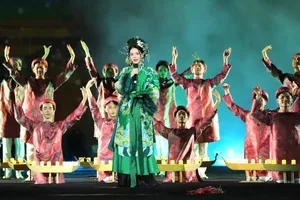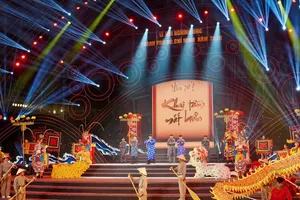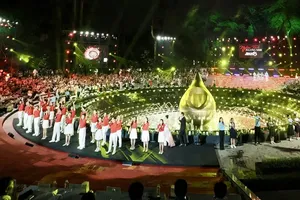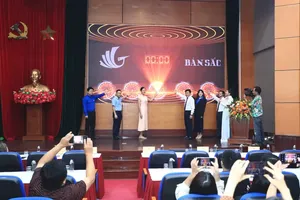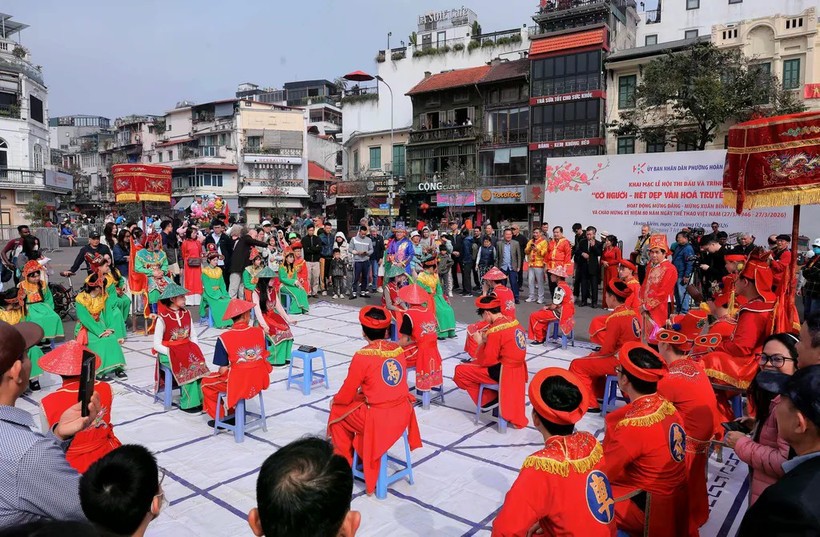
The “Human Chess—A Traditional Vietnamese Cultural Beauty” festival, hosted by the People’s Committee of Hoan Kiem ward, opened with a lion–dragon dance, conveying wishes of prosperity, good fortune, and happiness. The resounding festival drums echoed through the Old Quarter, drawing enthusiastic applause from residents and visitors alike.
In her opening remarks, Nguyen Hong Trang, Standing Vice Chairwoman of the Hoan Kiem People’s Committee, emphasized that human chess is a unique folk cultural and sporting practice, embodying intellectual depth, performance artistry, and the Vietnamese martial spirit. Each chess piece represents not only a tactical role but also discipline, strategy, unity, and national identity.
Over generations, human chess has become a highlight of spring festivals, serving as a platform for community connection, intellectual engagement, and the promotion of healthy sportsmanship.
Unlike traditional Chinese chess, human chess, or live chess, it is a form of chess in which people take the place of pieces. It blends strategic gameplay with live performance art. On a life-sized chessboard drawn directly on the square, each piece is portrayed by a person dressed in traditional costume, moving according to the players’ commands. Every advance, retreat, attack, and defense is expressed through movement and stage presence, creating a vivid cultural tableau in the heart of the Old Quarter.
More than a game, human chess serves as an open-air stage for folk culture, where spectators not only observe tactics but also experience the values of composure, bravery, and community spirit. Each match tells a strategic story; every move reflects a calculated balance between offense and defense, much like choices in everyday life.
After a series of matches marked by unity, integrity, and fair play, organizers awarded the first prize to Ho Guom Chess Club and honored outstanding individuals, recognizing the participants’ thorough preparation and responsible competitive spirit.