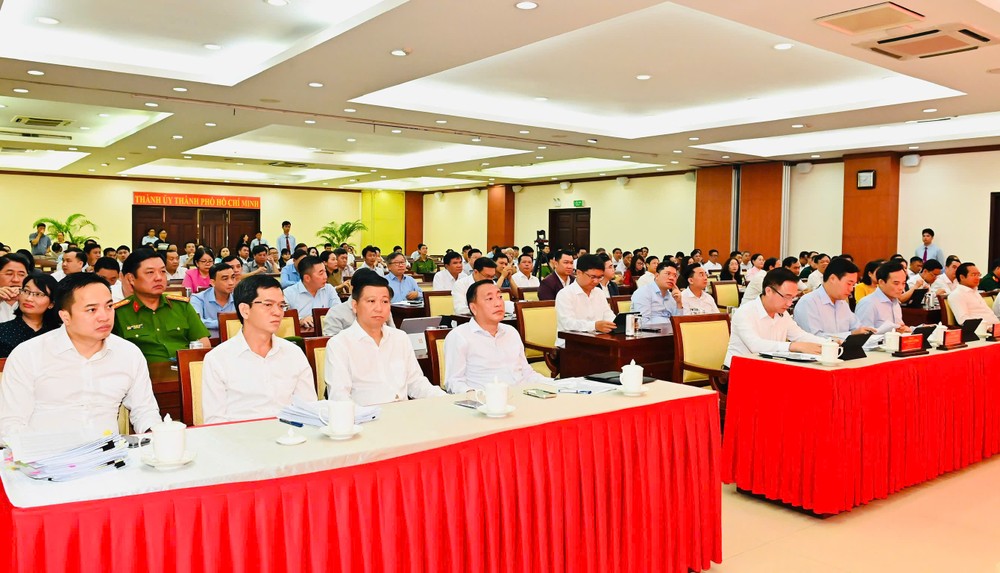
The HCMC Steering Committee for the Development of Science, Technology, Innovation and Digital Transformation (Steering Committee) convened a conference to review the 2025 agenda and outline key tasks for 2026 in implementing the Politburo’s Resolution 57, the Secretariat’s Scheme 204, and the Government’s Scheme 06 on the morning of January 14.
Reporting on the implementation of Resolution 57, Mr. Lam Dinh Thang, Director of the HCMC Department of Science and Technology, said the city has earmarked VND12.705 trillion for science and technology in the 2026 budget, making up 4.16 percent of total spending. The figure aligns with targets set in the HCMC Party Congress Resolution for the 2025–2030 term and underscores the city’s strong commitment to investment in science and technology.

According to Mr. Lam Dinh Thang, 2026 has been designated as a year of acceleration, deploying synchronized measures so that science and technology, innovation, and digital transformation can yield concrete, quantifiable products that directly contribute to the goal of double-digit economic growth. A core priority is positioning businesses at the center of innovation, advancing the commercialization of research results, mobilizing broader social resources, and channeling investment into strategic sectors. Under central government requirements, provinces and cities must register three to five “major problems” with tangible, assessable deliverables by year-end.
On that basis, the HCMC Department of Science and Technology proposed three missions aligned with central directives. These include establishing a technology exchange platform connecting corporate innovation needs with universities and research institutes; setting up an internationally oriented Innovation Center with pilot policies allowing intellectual property to be used as collateral for loans; and creating a venture capital fund with contributions from the State budget. The department also proposed two additional initiatives: a pilot scheme to commercialize products derived from research, and a sandbox to regulate digital assets and digital currency at the International Financial Center.
Mr. Lam Dinh Thang added that in 2026, the city will continue investing in digital infrastructure and smart governance, expanding 5G coverage from 70 percent to 80 percent of the population, and upgrading IoT and smart camera networks. HCMC also plans to expand the use of existing high-tech infrastructure, announce at least one new digital technology zone, and in Q1-2026 unveil its smart city development proposal to attract investment and build a new data architecture befitting a mega-city.
The city will also coordinate closely with the Ministry of Public Security to implement critical tasks, including construction of National Data Center No.2; deployment of the city’s Cybersecurity Monitoring Center; completion of national and key sectoral databases; piloting digital replicas and location-based digital IDs; piloting a data exchange platform; and completing the four pillars of digital citizenship—digital identity, digital accounts, digital data and digital literacy.
Presenting a report on Scheme 06 implementation, Colonel Nguyen Dinh Duong, Deputy Director of the HCMC Police Department, emphasized that 2026 will not only continue ongoing work but elevate Scheme 06 and Resolution 57 to a more substantive and impactful level. The city’s breakthrough roadmap is structured around five core task groups.
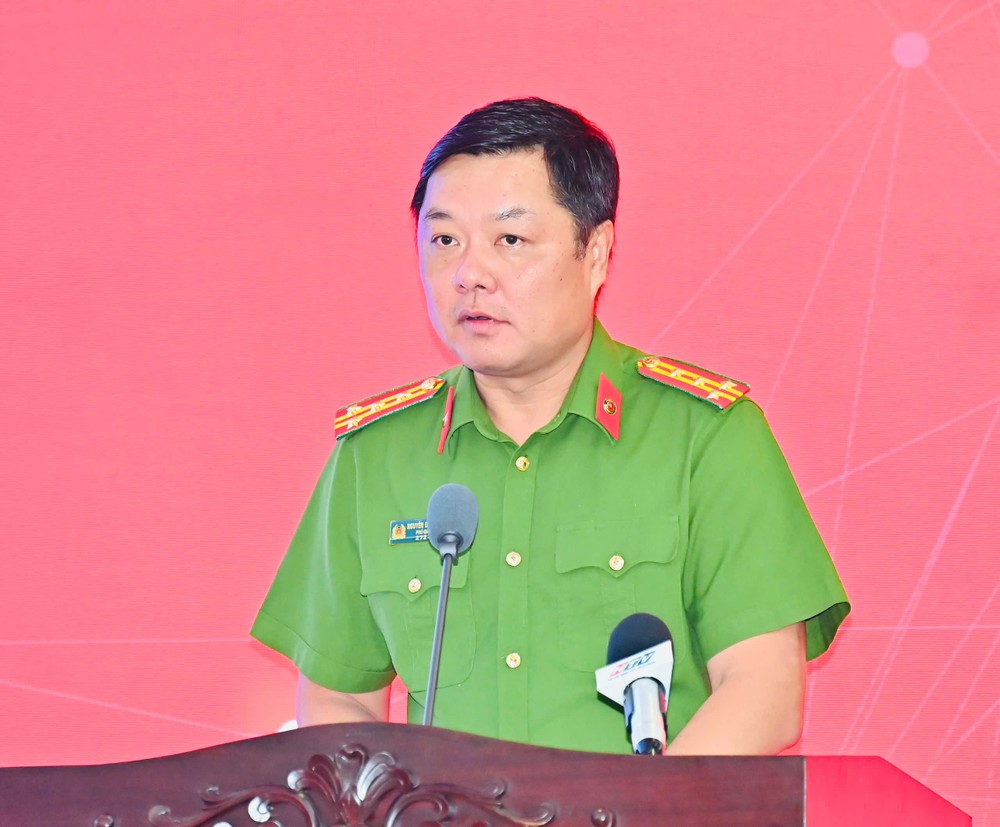
These include completing an integrated data-sharing platform for effective connectivity and exploitation; establishing a favorable legal framework that encourages citizen adoption; ensuring absolute protection of personal and corporate data; mobilizing public participation anchored on four foundational pillars; and expanding initiatives that directly benefit citizens.
Key measures include rolling out digital citizen service stations in apartment complexes and public locations; applying biometric authentication along the Ben Thanh–Suoi Tien Metro Line; and connecting the city’s security camera systems to the national population database to enhance smart mobility management and ensure public order and safety.