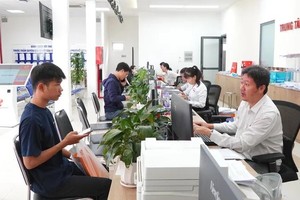
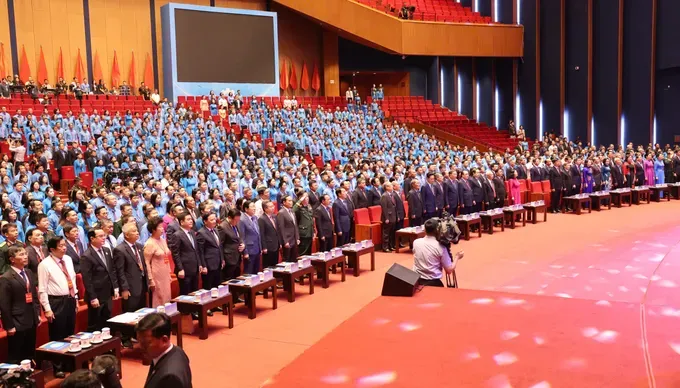
Speaking at the 14th Congress of the Vietnam General Confederation of Labour for the 2026-2031 term, city labor leaders highlighted initiatives to strengthen trade unions as a pillar of support for millions of workers.
At the official session of the 14th Congress of the Vietnam General Confederation of Labour for the 2026-2031 term on June 4, Vice Chairwoman of the Ho Chi Minh City Federation of Labor Nguyen Kim Loan presented a report on innovating and enhancing the effectiveness of representation, care and protection of the legitimate rights and interests of union members and workers in response to new requirements.
Addressing workplace issues promptly
According to the Vice Chairwoman of the Ho Chi Minh City Federation of Labor, the city's trade union system currently oversees more than 23,000 grassroots unions, over 2.4 million union members and nearly 7.2 million workers, civil servants and employees.
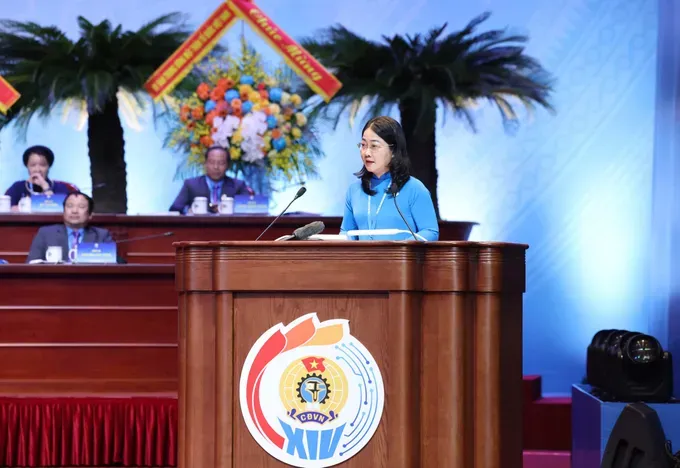
As Vietnam's largest economic, financial, trade and service hub, Ho Chi Minh City is home to a vast and diverse workforce employed across various industries and business sectors. Following the restructuring and merger of trade union organizations from Ho Chi Minh City, Binh Duong and Ba Ria–Vung Tau, the city now accounts for approximately one-quarter of the nation's total union membership.
The vast scale of the city's trade union network is both an honor and a responsibility. It requires trade unions to continuously improve their capacity, adopt modern management approaches, and deliver more responsive services to a rapidly growing and increasingly diverse workforce.
According to her, the credibility of trade unions depends on their ability to stay connected with workers and effectively advocate for their interests. To this end, union organizations have expanded workplace consultation mechanisms, organized regular dialogues with employers, and worked to resolve employee concerns promptly.
In 2025 and the first half of 2026, city trade unions organized more than 26,000 workplace dialogue sessions and coordinated over 20,000 employee conferences. These efforts helped resolve numerous worker concerns related to wages, bonuses, working hours, occupational safety, meal quality and working conditions, contributing to harmonious, stable and progressive labor relations.
Trade unions have also placed strong emphasis on collective bargaining, resulting in nearly 14,000 active collective labor agreements citywide. Many include provisions that surpass statutory requirements, enabling workers to enjoy higher wages and additional benefits such as housing and childcare support, health care services, voluntary insurance contributions, and assistance for vulnerable employees.
Advancing worker services through digital transformation
Facing growing demands for digital transformation and more effective membership management, the city’s trade union system has developed a digital platform that connects and coordinates trade union activities at all levels.
The initiative is gradually building an integrated and synchronized database of union members, enabling faster, more accurate, and more responsive worker support services.
At the same time, trade unions continue to strengthen legal consultation and assistance programs to protect workers whose rights have been violated. Annual Tet (Lunar New Year) care programs for workers, whether returning to their hometowns or remaining in the city during the holiday period, are funded with an estimated budget exceeding VND1 trillion (US$38 million) each year.
The federation has also signed several strategic cooperation agreements with businesses to develop rental and rent-to-own housing projects for workers. The program targets approximately 125,000 housing units between 2026 and 2030.
In partnership with healthcare providers, trade unions are expanding health screening programs, including occupational disease detection and serious illness examinations for workers. By the end of 2026, the city aims to ensure that 100 percent of union members and workers have electronic health records.
The Vice Chairwoman of the Ho Chi Minh City Federation of Labor also recalled the recent visits by Party General Secretary and State President To Lam during Workers' Month and activities commemorating Labour Day. She noted that his messages had inspired trade union officials and workers across the city.
Following his guidance, the Ho Chi Minh City Federation of Labor has integrated the leadership's directives into its programs and activities, with a continued focus on innovation and strengthening its role as a reliable support system for workers.
Placing workers at the core of union efforts
Also addressing the congress, Mr. Nguyen Van Thang, Vice Chairman of the Vietnam Fatherland Front Committee in Hanoi and Chairman of the Hanoi Federation of Labor, presented a report on political, ideological and legal education for union members and workers.
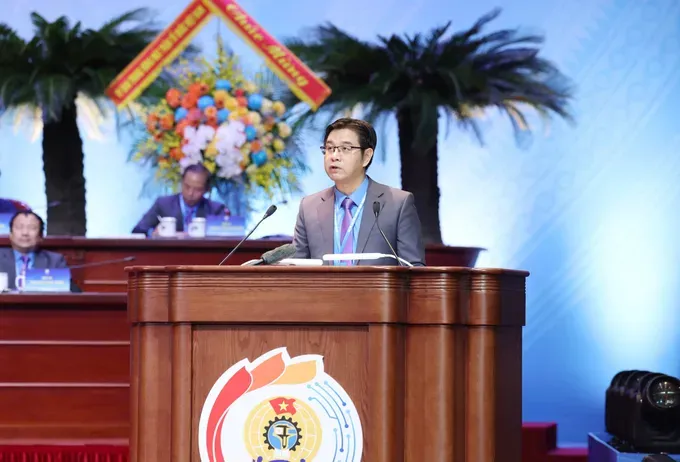
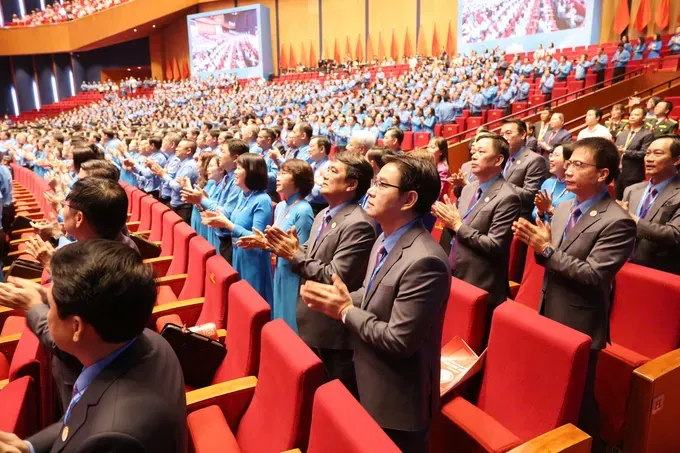
As technological advancements, digital transformation and artificial intelligence continue to reshape production models and social life. He said that trade unions must not only safeguard workers' rights but also help build a modern workforce equipped with strong political awareness, professional knowledge, vocational skills, industrial discipline and adaptability.
He stressed that effective worker engagement requires trade unions to stay close to workers, communicate clearly and persuasively, and address issues that matter most to employees.
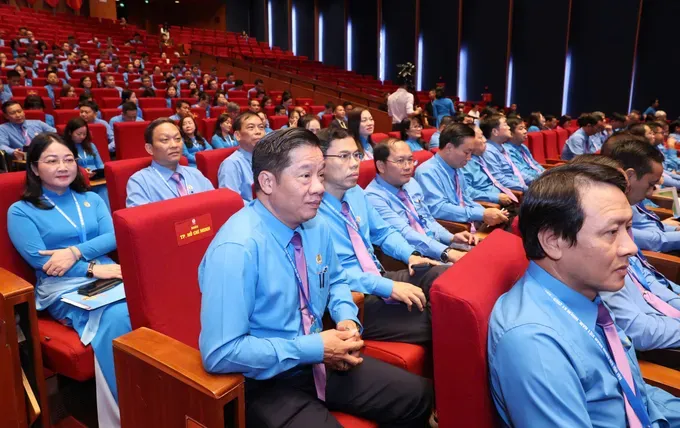
For Hanoi's trade unions, communication and education are viewed as strategic tools for strengthening trust, maintaining stable labor relations, and supporting the sustainable development of both the capital and the country.
This vision has driven Hanoi's trade unions to continually innovate, placing workers at the heart of all activities, strengthening grassroots engagement, utilizing digital tools to enhance communication, and evaluating performance through real-world impact.