On January 7, 2026, the Politburo issued Resolution No. 80-NQ/TW (Resolution 80) on the development of Vietnamese culture which is a document of special significance that marks a major shift in the Party’s thinking on national development.

Sai Gon Giai Phong newspaper spoke with Tran The Thuan, Director of the Department of Culture and Sports of Ho Chi Minh City, about the core contents, new points, and the implementation of Resolution 80 in Ho Chi Minh City—a special urban center and one of the country’s leading hubs of economy and culture.
Resolution 80 was issued in the context of profound changes both domestically and internationally, posing urgent requirements for the building and development of Vietnamese culture. Globally, the Fourth Industrial Revolution, digital transformation, and globalization are unfolding strongly, creating major opportunities for cultural exchange, adaptation, and creativity. At the same time, they bring significant challenges, including the infiltration of harmful cultural products, risks of fading national identity, and issues of cultural security, especially in cyberspace.
As the nation enters a new stage of development with the goal of becoming a developed, high-income country by 2045, the demand is to strongly awaken human resources and the power of national culture. Resolution 80 was born precisely to meet this objective.
Historically, the resolution marks a new step in the Party’s theoretical thinking on culture. For the first time, culture is comprehensively defined as the spiritual foundation, endogenous resource, driving force, pillar, and regulatory system of sustainable development, placed on equal footing with economy, politics, and society. This represents a major shift from viewing culture as a supportive field to recognizing it as an intrinsic strength of national development.
Compared with the 1943 Outline of Vietnamese culture and previous resolutions and national cultural conferences, Resolution 80 continues the Party’s consistent ideological line on culture, beginning with the 1943 Outline drafted by General Secretary Truong Chinh—considered the Party’s first cultural platform. Its core spirit of Nationalization, Scientification, and Popularization is inherited in Resolution 80, but expressed in modern language and thinking, suited to integration and digital transformation. The viewpoint of President Ho Chi Minh that “Culture must light the way for the nation” remains the guiding thread.
Resolution 80 also emphasizes action and practicality, with commitments such as allocating at least 2 percent of the annual state budget to culture, promoting public–private partnerships, and clearly defining the goal of developing cultural industries. Culture is seen not only as spiritual value but also as an important economic sector contributing to national soft power.
Ho Chi Minh City views the implementation of Resolution 80 as both an opportunity and a major responsibility of a special urban center and cultural hub. The city is shifting from an administrative management approach to cultural development governance, placing culture at the heart of its development planning to 2030, with a vision to 2050, closely linked to creative economy, tourism, and smart urban development.
The city is investing in modern cultural and sports infrastructure, such as the Phu Tho Circus and Multi-Performance Theater and the Rach Chiec Sports Complex, aiming to create creative spaces and host regional and international cultural events. It is also building a cultural industry ecosystem with the identity of Ho Chi Minh City, focusing on film, music, design, digital advertising, gaming, fashion, and cuisine, tied to the night-time economy and tourism.
Events such as the Ho Chi Minh City International Film Festival (HIFF), Ho Chi Minh City International Music Festival Hozo, Ho Chi Minh City Book Street, and the Ao Dai Festival are organized along value chains, generating revenue, jobs, and clear contributions to the city’s GRDP.
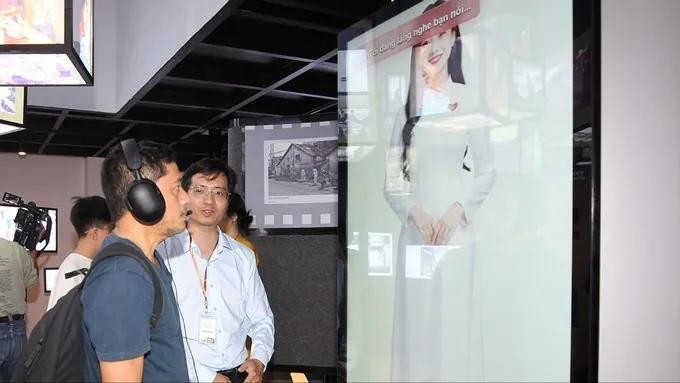
At the same time, the city is accelerating digital transformation in culture, developing digital museums, libraries, and cultural maps, and applying technology in exhibitions, performances, and distribution of cultural products, thereby expanding access and enjoyment for citizens.
For Resolution 80 to truly take root, the key factor is a strong shift in awareness and action across the political system and society regarding the role of culture. Cultural development is not the sole task of the cultural sector but a shared responsibility of all responsible agencies, sectors, businesses, and citizens.
Culture must permeate every field from policymaking, urban management, education, and economy to daily life and cyberspace. Special attention must be given to human development—the creators and beneficiaries of culture. Ultimately, investing in culture means investing in people and in the sustainable future of the nation.


)