Leaders of the Ho Chi Minh City People’s Council have assigned its specialized committees to proactively advise and propose measures to improve mechanisms and policies, while also formulating orientations for a legal framework to support the development of the Law on Special Urban Areas.
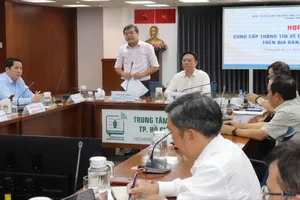
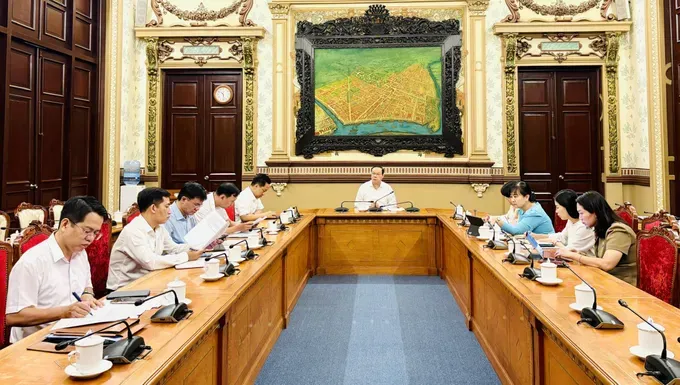
On April 8, the Standing Committee of the Ho Chi Minh City People’s Council held a meeting with its specialized committees to hear reports on the monitoring and acceleration of the implementation and concretization of Resolution No. 98/2023/QH15 and Resolution No. 260/2025/QH15 issued by the National Assembly.
The session also focused on discussions regarding research and proposals of matters within the competence of the municipal People’s Council, aimed at preparing legal arguments for the formulation of the Law on Special Urban Areas.
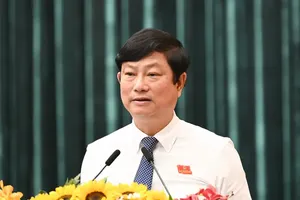
The meeting was chaired by Standing Vice Chairman of the Ho Chi Minh City People’s Council, Nguyen Van Tho.
Reporting at the working session, the leadership of the Economic and Budget Committee stated that the implementation of the National Assembly’s resolutions across the city has achieved a number of important initial results. These are reflected in the Ho Chi Minh City People’s Council’s issuance of multiple specific resolutions aimed at institutionalizing special mechanisms and policies.
Regarding Resolution No. 98/2023/QH15, Ho Chi Minh City has completed 17 out of 25 assigned tasks and promulgated 53 resolutions, focusing on key sectors such as finance–budget, investment, transport, and environment.
However, several contents remain unimplemented due to legal obstacles and a lack of synchronization, particularly in areas such as the equitization of state-owned enterprises, fee collection mechanisms, the carbon credit market, and vehicle emission control.
Regarding Resolution No. 260/2025/QH15, Ho Chi Minh City has fulfilled 5 out of 9 assigned tasks and issued six key resolutions related to planning, infrastructure development, and financial–budgetary mechanisms. The remaining tasks are being further implemented or will be carried out as new requirements arise.
Overall, the implementation of special mechanisms has laid an important foundation for the city’s development. However, there remains a need to further institutionalize frameworks, address existing bottlenecks, and enhance policy coherence to improve implementation effectiveness in the coming period.
Leaders of the committees under the Ho Chi Minh City People’s Council also reported on the results of monitoring and urged the implementation of resolutions in executing the two aforementioned National Assembly resolutions.
They reviewed contents within their respective areas of responsibility that need to be concretized into legal provisions, serving coordination with the Ho Chi Minh City University of Law in organizing scientific workshops and collecting expert opinions. These efforts aim to help identify and orient key contents requiring institutionalization in the development of the Law on Special Urban Areas.
Concluding the meeting, Mr. Nguyen Van Tho assigned the Economic and Budget Committee to take the lead, in coordination with other committees of the Ho Chi Minh City People’s Council and the People’s Committee, in conducting a comprehensive review and assessment of the implementation of Resolution No. 98/2023/QH15 and Resolution No. 260/2025/QH15.
The review is required to clearly identify completed and pending tasks, as well as to delineate responsibilities among central authorities, the municipal People’s Council, and the People’s Committee.
On that basis, the committee will advise the Standing Committee of the People’s Council in reporting to the Municipal Party Committee to seek overarching policy direction.
The Economic and Budget Committee has been tasked with taking the lead in reviewing Resolution No. 18/NQ-HDND of the municipal People’s Council to assess implementation outcomes, benchmark it against Resolution No. 260/2025/QH15, and advise on amendments or replacements where necessary.
Meanwhile, other committees of the People’s Council, in line with their assigned functions and mandates, are to continue reviewing the implementation of the aforementioned resolutions as well as those already promulgated by the municipal legislature. They are also required to proactively propose improvements to mechanisms and policies and to help shape the orientation of a comprehensive legal framework in service of the formulation of the Law on Special Urban Areas.