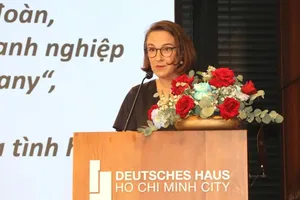
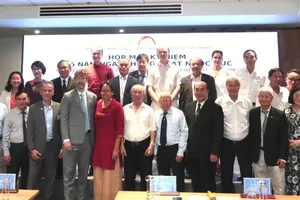
On the morning of May 12, at the opening session of the 11th National Congress of the Vietnam Fatherland Front (VFF) for the 2026-2031 term, which opened in Hanoi, Ms. Truong Thi Bich Hanh, member of the Standing Board of the Ho Chi Minh City Party Committee and Standing Vice Chairwoman of the Vietnam Fatherland Front Committee of Ho Chi Minh City, delivered a presentation titled “People’s well-being as the foundation for building the great national unity bloc in Ho Chi Minh City.”
Numerous practical social welfare policies introduced, directly benefiting the people
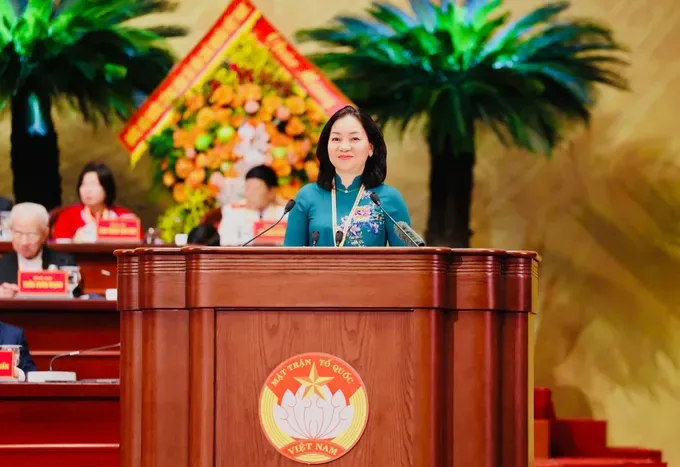
The presentation emphasized that, in concretizing the directives of the Party Central Committee and the Ho Chi Minh City Party Committee, the Vietnam Fatherland Front Committee of Ho Chi Minh City has consistently identified the people’s well-being as the foundation for building and consolidating the great national unity bloc, thereby fostering social consensus and promoting the strength of the entire population.
In carrying out its tasks, the Vietnam Fatherland Front Committee of Ho Chi Minh City has consistently upheld and implemented the principle of “people know, people discuss, people implement, people inspect, people supervise, and people benefit.” Among these principles, “people benefit” is regarded as a key criterion for evaluating the effectiveness of movements, campaigns, and social welfare activities.
According to Ms. Truong Thi Bich Hanh, the Vietnam Fatherland Front Committee of Ho Chi Minh City has proactively coordinated the review and proposal of numerous practical social welfare policies directly benefiting the people.
In addition, the city reviewed the most preferential policies previously implemented in Ho Chi Minh City, Ba Ria–Vung Tau, and Binh Duong in order to select and integrate the most beneficial policies, ensuring the highest level of public benefit before promulgating new ones.
To date, 23 policies related to people’s well-being and social stability have been issued following the reorganization of the two-tier local government apparatus in Ho Chi Minh City after the merger.
Many policies with profound humanitarian significance have been implemented, including full allowances for orphaned children until the age of 18; free health check-ups for residents; tuition support from preschool through higher levels of education; full health insurance support for people aged between 65 and 75; and health insurance subsidies for students.
The city is also moving toward expanding health insurance support for people aged 60 and above, providing free bus fares for residents, and offering educational expense support for pupils and students from ethnic minority communities.
In addition, the Vietnam Fatherland Front Committee of Ho Chi Minh City has implemented various practical social support models, including the “For the Poor Fund,” the Social Welfare Fund, the “For the Homeland’s Seas and Islands – For the Frontline of the Fatherland” Fund, and emergency relief resources aimed at providing timely assistance to key sectors, disadvantaged people, and vulnerable groups.
Great national unity bloc: Especially important source of strength
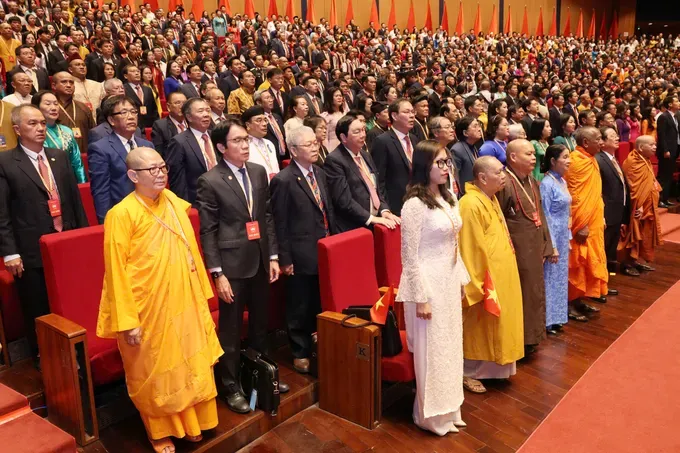
According to Ms. Truong Thi Bich Hanh, practical experience has shown that the strength of the great national unity bloc has always been an especially important resource for the city. This was particularly evident during the fight against the Covid-19 pandemic, helping the city overcome difficulties, recover, and continue on a path of sustainable development.
Ho Chi Minh City has consistently upheld the view that economic development must go hand in hand with social equity, aiming not only for GRDP growth but also for improvements in the people’s quality of life. Over the years, the city has continuously raised the poverty line in line with the characteristics of a special urban area; focused on eliminating temporary and dilapidated housing; and gradually upgraded urban infrastructure and improved living conditions for residents.
These efforts also represent the city’s practical approach to nurturing the values of a “civilized, modern, and compassionate” city throughout the process of building and developing the city named after President Ho Chi Minh.
The Standing Vice Chairwoman of the Vietnam Fatherland Front Committee of Ho Chi Minh City also noted that supervisory activities conducted by the city’s Fatherland Front at all levels have shifted from a broad-based approach to a more in-depth and substantive one, without avoiding difficult or sensitive issues.
Through its supervisory role, the Vietnam Fatherland Front Committee of the city has consistently emphasized the requirement that every policy decision must serve the city’s development, safeguard the highest interests of the people, and ensure that the people’s right to mastery is exercised substantively and practically in line with public aspirations.
According to Ms. Truong Thi Bich Hanh, these methods and solutions are significant in further refining the operational principles of the Vietnam Fatherland Front, with the overarching goal of ensuring “social welfare, security, safety, and public well-being.”
A notable feature of Ho Chi Minh City is its proactive efforts to innovate coordination mechanisms within the political system right from the grassroots level. The city has implemented a policy under which 100 percent of Standing Deputy Secretaries of commune-level Party Committees participate as members of the Fatherland Front Committees at the same level.
This is not merely an organizational arrangement but also reflects the requirement to strengthen the Party’s direct and unified leadership over Fatherland Front affairs, ensuring that policies aimed at caring for the people are implemented more closely and effectively at the grassroots level.
The city has identified that, to better serve the people, the political system must stay close to the people, remain attentive to their needs, and maintain close coordination within residential communities.
At present, Ho Chi Minh City is entering a new stage of development, with requirements to build major infrastructure projects, accelerate digital transformation, foster innovation, and promote the private sector as an important driving force of the economy. In this context, the city’s Vietnam Fatherland Front Committee of Ho Chi Minh City must continue to strongly innovate its modes of operation, further promoting its role as a bridge between the Party, authorities, and the people, while mobilizing the strength of the great national unity bloc to contribute to the city’s development.
In the coming time, the Vietnam Fatherland Front Committee of Ho Chi Minh City will continue accompanying the city in key tasks such as digital transformation, building united, compassionate, self-governed, and safe residential communities; participating in the resolution of livelihood, environmental, and public security issues; and improving the quality of life for residents.
The Front will continue to affirm that all activities must be directed toward the grassroots level, place the people at the center, and regard the people’s satisfaction and well-being as the highest objective. This is considered one of the important foundations for building a strong “people’s support posture.”
)