To generate substantial developmental momentum in the forthcoming period, the HCMC People’s Committee has recently promulgated a portfolio of investment-attracting projects for the 2026-2030 timeframe, encompassing a total of 250 initiatives across various pivotal sectors.
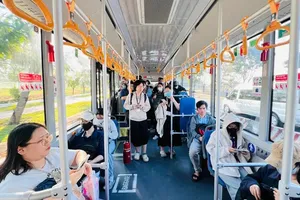
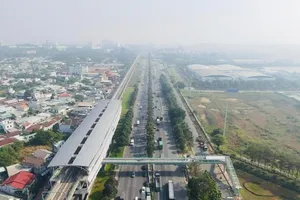
Notably, the infrastructure sector features most prominently due to its sheer urgency, boasting 22 transportation projects (including 9 metro ventures with an estimated total investment approaching VND1 quadrillion – US$40 billion). Prominent large-scale initiatives encompass the Railway Line No. 3 project connecting Vung Tau, Ba Ria, and Phu My (VND127.65 trillion – $4.8 billion); the Urban Railway Line No. 1 from Ben Thanh to An Ha (VND86.5 trillion – $3.3 billion); and Ring Road 4 (VND14 trillion – $531.7 million).
The seaport and logistics services sector comprises six distinctive projects. The most massive in scale is the Long Binh ICD port cluster, commanding a projected total investment of VND6 quadrillion ($227.9 billion). This endeavor aims to strategically attract domestic and international shipping lines, freight forwarders, cargo owners, and logistics enterprises.
Situated meticulously on the right bank of the Dong Nai River, the port cluster is designed to accommodate 5,000-tonne vessels with a designated capacity of 11-12 million tonnes annually (equivalent to 0.85-0.94 million TEUs of containerized cargo per year) and will be executed under a Public-Private Partnership (PPP) model.
Meanwhile, the Vung Tau International Passenger Port project, located in Vung Tau Ward, is highly anticipated by the tourism industry to provide supplementary developmental momentum. Accordingly, the overarching construction scale of the project spans 73.24 hectares, encompassing a terminal area and a port zone featuring a 420-meter-long pier capable of accommodating passenger ships with a tonnage of up to 225,000 GT, alongside a marina area boasting a capacity for approximately 280 yachts.
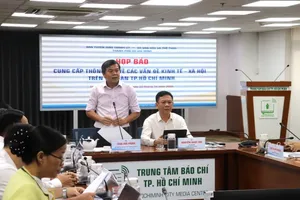
Moving beyond the aforementioned project portfolio, Director Hoang Vu Thanh of the HCMC Department of Finance indicated that within the first four months of the year, HCMC granted in-principle investment approval for 12 projects and facilitated capital increases for four domestic investment ventures, cumulating in a total investment capital of approximately VND209 trillion ($7.9 billion). These strategic moves constitute an integral part of HCMC’s effort to mobilize investment capital to rigorously fulfill its double-digit growth objectives.
Leaders of the HCMC Department of Finance disclosed that this May, HCMC will thoroughly research mechanisms to mobilize capital from credit institutions as well as both domestic and foreign investors for infrastructure investment, urban beautification, and urban development. HCMC will then vigorously accelerate projects utilizing the PPP framework, specifically prioritizing the Transit-Oriented Development (TOD) model alongside metro lines and Ring Road 3. Simultaneously, the city will evaluate novel financial instruments, such as municipal bonds and project bonds, to effectively diversify capital sources destined for critical infrastructure investments.
Regarding the attraction of capital flows for TOD, a research cohort led by Vice President Dinh Cong Khai of HCMC University of Economics claimed that compared to nations successfully implementing TOD, Vietnam fundamentally requires the early and proactive participation of the private sector. The research group recommended utilizing the Floor Area Ratio (FAR), which permits the adjustment of construction density based on height or floor area, a strategy successfully employed by several countries. This adaptable mechanism profoundly amplifies land use efficiency, safeguards public spaces, and actively lures private capital into TOD zones.
Remittances constitute another colossal resource that serves as a core strength for HCMC. In 2025, remittances flowing into HCMC reached $10.3 billion, with the first quarter of the year alone amassing over $2 billion. Recently, HCMC established a definitive target of mobilizing VND1 trillion ($38 million) in remittances by 2027 by deploying sophisticated financial instruments such as green certificates of deposit, technology certificates of deposit, and science and technology investment funds.
As stated by Director Hoang Vu Thanh, to genuinely unleash the flow of social resources, HCMC will persistently and vigorously improve the business and investment environment. The primary focus involves meticulously reviewing regulations that remain overlapping, ambiguous, or laborious to implement in practice; enhancing systemic consistency during the guidance and processing of dossiers; and simultaneously continuing to compress the resolution time for administrative procedures, thereby cultivating a substantially more favorable environment for investors to accurately prepare and deploy their projects.
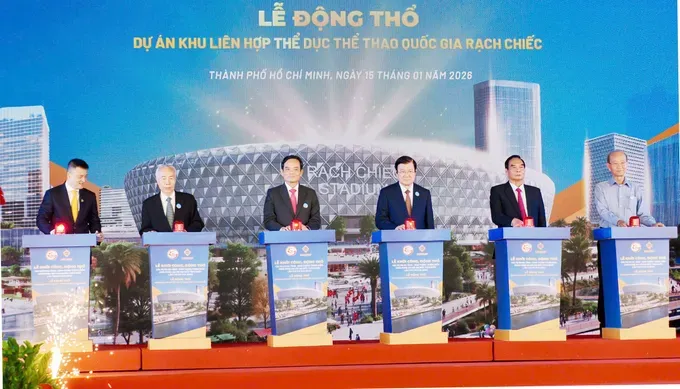
To expedite overall progress, numerous massive projects in HCMC have recently been transitioned to the Public-Private Partnership (PPP) investment method, including the Rach Chiec National Sports Complex and the Binh Quoi – Thanh Da New Urban Area ones. Prior to this, the HCMC People’s Council also approved several projects under the PPP format, such as the Can Gio Bridge and the Phu My 2 Bridge ones. During its April 2026 session, the HCMC People’s Council officially approved the initial batch of land parcels earmarked as payment for Build-Transfer (BT) projects.