Bringing mutual benefits
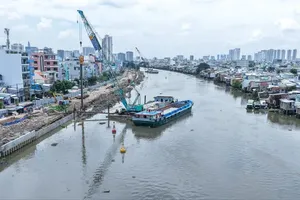
Having lived stably in their new home for over half a year, Tran Duc Tri and his wife, residents of Neighborhood No.49 in Chanh Hung Ward, believe relocating for the North Bank of Doi Canal project was the right decision. Previously living in a flood-prone canal-side house, the family was initially hesitant about the city’s urban embellishment plans. However, after authorities clarified compensation, resettlement, and vocational support policies, they readily agreed.
As one of the first households to accept compensation, Tri used the funds to purchase a nearby home, invest in business, and build savings. Since moving over six months ago, the family has turned a new page, enjoying a stable and prosperous life.
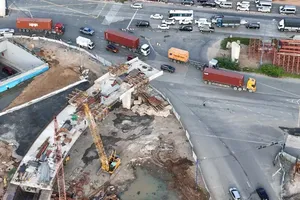
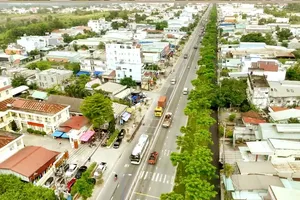
Thanks to resident consensus, Duong Quang Ham Street has expanded from a narrow 7-meter road to six lanes, transforming the area with modern infrastructure. This key project, costing over VND2.3 trillion (US$87.5 million), required land from 425 households. Despite initial hesitation over compensation rates, local authorities secured full cooperation through effective dialogue.
Tran Van Toan, one of 60 total clearance cases, accepted lower-than-market compensation for the common good. “Every time I see the spacious, beautiful road, I feel happy to have contributed,” Toan shared, reflecting the community’s willingness to prioritize collective benefits over personal gain.
In the Thu Thiem New Urban Area, many households have agreed to compensation, support, and resettlement policies to hand over land, facilitating the city’s planned project implementation. P.T.H (formerly living in the Thu Thiem area) shared that leaving her old home was difficult, but being arranged a new place with convenient traffic and synchronous infrastructure led her family to agree.
Besides initial successes in consensus, some cases remain concerned with prolonged petitions due to the complexity of major urban projects. Therefore, functional agencies continue to review and adjust policies to be realistic, ensuring harmony between development requirements and residents’ legal interests. The Standing Committee of the HCMC Party Committee has repeatedly emphasized that resolving practical issues requires persistence and caution; dialogue, listening, and policy perfection are fundamental solutions to creating social consensus.
Synchronizing social security policies
Looking back at the Thu Thiem New Urban Area implementation, with a total of 14,357 compensation and support files, the city has completed compensation, support, resettlement, and land recovery for 14,286 cases.
Implementing Government Inspectorate conclusions and HCMC Party Committee directives, the HCMC People's Committee issued Decision No. 70/2025/QD-UBND amending regulations on compensation and resettlement support in the Thu Thiem New Urban Area. Regarding concerns from some household representatives during implementation, HCMC leaders stated the city would review each file to ensure residents’ legal and legitimate rights.
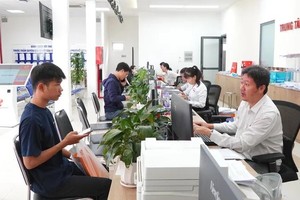
Immediately after the issuance of this decision, An Khanh Ward coordinated to implement relevant procedures. The Thu Duc City Compensation Board (under the HCMC Department of Agriculture and Environment) dispatched 10 civil servants to An Khanh Ward to issue decisions supplementing support for eligible residents. Implementing Decision No.70/2025/QD-UBND, An Khanh Ward has processed 2,019 out of 2,391 files, reaching a rate of 84.44 percent.
In practice, alongside compensation and resettlement, HCMC applies many support policies to stabilize lives, convert jobs, and even fund overseas work for those affected by land recovery. This includes regulations on job creation support and vocational training levels.
The HCMC People’s Committee recently issued a plan to merge the Job Creation Support Fund for Land Recovery Subjects into the Job Creation Loan Fund. This aims to consolidate capital, enhance management efficiency, increase loan scale and financial capacity, expand borrower eligibility, and create strong financial resources for easy access to job creation loans.
Simultaneously, this removes difficulties in managing preferential capital, reducing administration costs and redundant ineffective loans, ensuring consistency with industry management mechanisms. Notably, it ensures continuous, synchronous support for workers, especially those with recovered land, by increasing loan limits and simplifying procedures.
Under this regulation, residents losing land receive five years of vocational support, including funded training, travel allowances, and free career counseling. Access to preferential loans and full coverage for overseas work costs are also included. Resident Nguyen Van Hung from Phuoc Long Ward praised the policy as humane, reflecting the State’s care for those affected by projects.
At the grassroots level, Chairman of the People's Committee of An Khanh Ward Nguyen Thanh Trung said the ward always cares for difficult cases. Beyond general HCMC policies, local authorities use available resources to care for those in difficult or sudden distress situations. An Khanh Ward also supports residents in affected areas to participate in vocational training, job conversion, or business loans.
From the reality of implementing urban embellishment and social security policies, HCMC persistently resolves each obstacle with the motto of placing residents at the center. The city does not avoid historical difficulties but faces them with sincerity, listening, and a receptive attitude. This builds trust and social consensus, creating a foundation for HCMC's continued development in the new period.