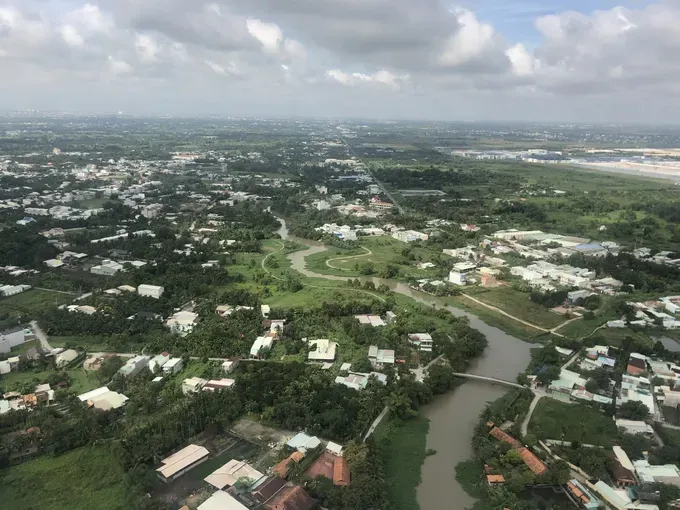
On March 13, the Office of the Ho Chi Minh City People’s Committee announced that, under the plan for the 2025–2030 period, the city will develop four ecotourism routes in the Can Gio Mangrove Forest integrated with scientific research and environmental education activities. The routes will span a total length of about 53.48 km, contributing to the effective utilization of the locality’s distinctive ecotourism potential.
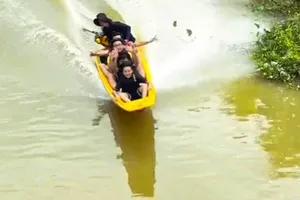
Among them, Ecotourism Route No. 1 will connect the Dan Xay River with the Vam Sat Ecotourism Area, covering a distance of approximately 11.47 km. The route will pass through existing forest trails, forest protection patrol roads, inland waterways, and local access roads. The travel itinerary is designed in the form of river excursions along waterways such as the Dan Xay, Dinh Ba, Lo Ren, and Vam Sat rivers.
Visitors will have the opportunity to explore the Can Gio mangrove ecosystem, participate in experiential activities, and enjoy distinctive mangrove forest cuisine at local restaurants.
Ecotourism Route No. 2 will span approximately 20.47 km, connecting the Dan Xay Ecotourism Site with the mangrove forest management areas in Binh Khanh and Thanh An communes. This route is designed to highlight tourism experiences closely associated with local livelihoods and forest protection activities.
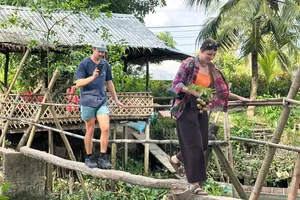
Visitors may join residents in forest patrols and take part in traditional fishing practices such as net casting, setting bamboo traps to catch mudskippers, climbing mangrove trees to collect mud creepers, harvesting wild vegetables, and enjoying local dishes prepared from fresh ingredients sourced from the mangrove ecosystem.
Ecotourism Route No. 3 will have a length of approximately 9.75 km, connecting the Dan Xay Ecotourism Site with the Thieng Lieng community-based tourism destination. The route is oriented toward the development of community-based tourism, enabling visitors to gain deeper insights into the daily life, cultural traditions, and coastal lifestyle of residents.
Ecotourism Route No. 4 is an interregional route, stretching approximately 11.79 km, linking the center of Ho Chi Minh City with the Can Gio area through major river systems such as the Saigon, Nha Be, Long Tau, Dinh Ba, Lo Ren, Vam Sat, and Soai Rap rivers. The route will start from Bach Dang Wharf and connect to several prominent destinations, including the Dan Xay Ecotourism Site, the Vam Sat Ecotourism Area, the Rung Sac Revolutionary Base Historical Site, and the Thieng Lieng community-based tourism area.
According to the plan, these tourism routes will primarily utilize existing infrastructure, including forest trails, forest protection patrol roads, inland waterways, and local access routes. They are expected to be operated mainly under a self-organized model.
The establishment of these ecotourism routes is anticipated not only to diversify Ho Chi Minh City’s tourism products but also to integrate tourism development with the conservation of the mangrove ecosystem, improve local livelihoods, and strengthen environmental education for the community and visitors alike.