Da Lat is one of the few cities in Vietnam originally developed as a resort town. To meet the needs of both residents and visitors, the French introduced temperate crops, including vegetables, flowers, tea and coffee. These were first cultivated in Cau Dat, now part of Xuan Truong - Da Lat Ward, about 25 kilometers from central Da Lat in Lam Dong Province. Today, Cau Dat has become a must-visit agro-tourism destination for travelers to the highland city.

Cau Dat is home to some of the earliest tea and coffee plantations in Vietnam, where the French successfully conducted experimental cultivation before expanding production across the Central Highlands. Located at an elevation of around 1,600–1,650 meters above sea level, about 100 meters higher than Da Lat’s average altitude, the area offers ideal soil and climate conditions for tea and coffee cultivation.
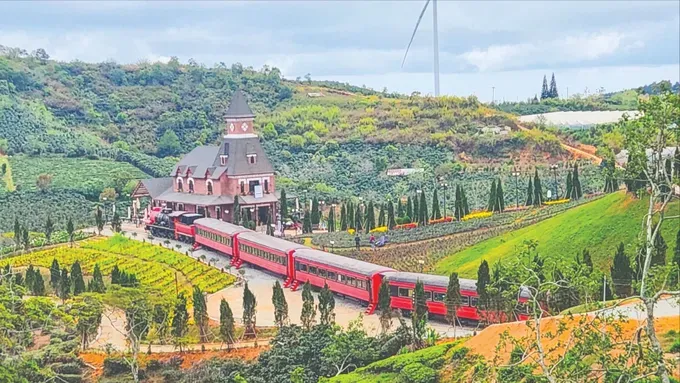
In 1927, the French established the first tea plantation in Indochina here, laying the groundwork for the spread of tea and coffee farming across the Di Linh Plateau, Lang Biang Plateau, and later to regions such as Dak Lak and Gia Lai. Over time, flatter lands in Bao Loc and Dak Lak facilitated larger plantations, forming estates owned by French settlers and some Vietnamese entrepreneurs.
In addition to tea, visitors are drawn to Cau Dat’s coffee farms, particularly its renowned Arabica varieties. One highlight is Mocca Cau Dat coffee, grown locally and prized for its quality. Travelers can visit the “Cau Dat Fair Trade” Cooperative, led by director Vo Khanh, established in 2015 with 30 members. The cooperative earned international Fair Trade certification in 2016 for 46 hectares of authentic Cau Dat Arabica coffee, including varieties such as Tipica, Bourbon and Catimor, introduced by the French in the 1920s, meeting strict environmental and sustainable farming standards.
According to Mr. Tran Hung Son, Chairman of Xuan Truong - Da Lat Ward People’s Committee, the locality aims to further expand agricultural production while enhancing market access, digital transformation, and linkages between production, processing, and consumption. These efforts are integrated with tourism development to increase the value of local products and promote sustainable economic growth.
Tourism sites in the area are continuously upgraded, many located along National Highway 20, including popular cloud-hunting cafés and pine forest viewpoints that attract visitors.
In recent years, the number of tourists visiting Cau Dat has risen significantly, boosting the consumption of local specialties such as tea, coffee, and dried persimmons. This growth not only helps ease pressure on Da Lat’s city center but also creates more jobs for local residents.















)