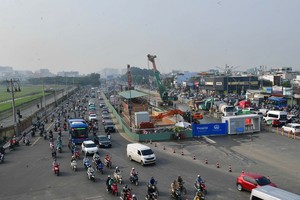
Residents of Binh Khanh Commune hope the city will accelerate the progress of projects such as the Can Gio Bridge, the Ben Thanh–Can Gio metro line, the Rung Sac interchange, the Ben Luc–Long Thanh Expressway, and the Binh Khanh Fisheries Center, creating new development momentum for the coastal areas.
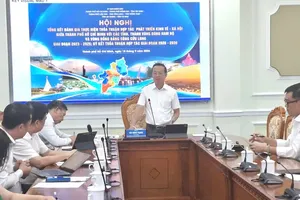
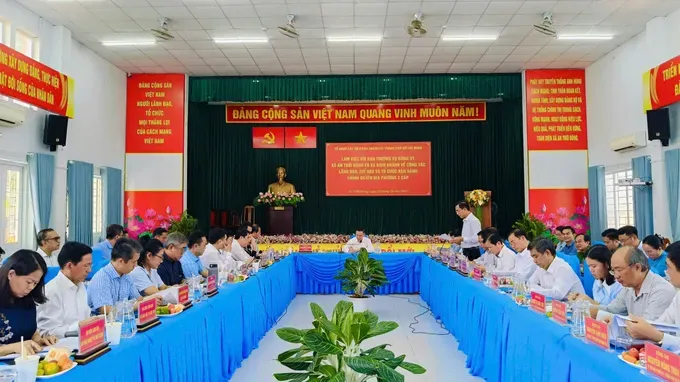
On October 23, Task Force No. 2 of the Standing Committee of the Ho Chi Minh City Party Committee, led by Vice Secretary of the municipal Party Committee, Dang Minh Thong, conducted oversight of the implementation of Plan 249-KH/UBKTTW issued by the Central Inspection Commission at the Party Committees of Binh Khanh and An Thoi Dong communes.
Reporting to the delegation, leaders of Binh Khanh Commune noted that while the two-tier local government model offers certain advantages, it also presents considerable challenges. The offices of the Party Committee, People’s Council, People’s Committee, and Vietnam Fatherland Front Committee are currently more than 15 kilometers apart. Many departments have to temporarily use the Cultural and Sports Center facilities, complicating leadership, administration, and regular coordination among agencies.
Infrastructure is inconsistent, with many facilities deteriorating. The electricity, water, and Internet systems are unstable, and outdated IT equipment fails to meet digital transformation requirements, particularly hindering the implementation of a “paperless meeting room" model.
Despite numerous challenges, the commune’s cadre and civil servant team generally meets professional and operational competency requirements. However, due to a significant increase in workload, most staff are required to handle multiple areas of responsibility, with a notable shortage of personnel dedicated to inspection, complaints and denunciations, and anti-corruption work.
In addition to the organizational work, the commune also conveyed numerous residents’ requests for the city to expedite key infrastructure projects, such as the Can Gio Bridge, the Ben Thanh–Can Gio metro line, the Rung Sac interchange connecting to the Ben Luc–Long Thanh Expressway, and the Binh Khanh Fisheries Center.
The commune also recommended that the city invest in a centralized office complex for the Party Committee, People’s Council, People’s Committee, and Vietnam Fatherland Front Committee of the commune, while promptly guiding the establishment of a public service unit and a commune-level project management board to ensure the progress and quality of public investment projects. Additionally, the commune proposed the timely deployment of construction inspection personnel from the Department of Construction to the locality to manage and maintain building and urban order, as well as protect public environmental spaces.
Leaders of An Thoi Dong Commune also noted that the locality still needs to upgrade and standardize office equipment and workspaces, such as desks, chairs, filing cabinets, and waiting seats, at the commune’s Public Service Center to provide more professional and efficient services to residents.
Notably, due to the commune’s geographic characteristics, its offices are located far apart, necessitating the maintenance of two separate headquarters. This arrangement complicates meeting organization and handling urgent tasks. Furthermore, certain areas, such as commerce and education, still lack dedicated staff, requiring some civil servants to take on multiple responsibilities, which affects the quality of their work.
Therefore, the commune recommended that the city promptly consider approving investment in the repair and upgrade of office facilities and adjust staffing norms for cadres and civil servants to align with the locality’s specific characteristics, large workload, and extensive management scope.
In his concluding remarks at the supervision session, Vice Secretary of the Ho Chi Minh City Party Committee, Dang Minh Thong, praised the efforts of the Party Committees of both communes in overcoming difficulties and effectively operating the two-tier local government. He commended the responsibility and proactiveness of collectives and individuals in fulfilling their duties, while urging them to continue demonstrating this spirit to fully achieve the targets and tasks set out in the communes’ Party Congress resolutions.
He instructed both communes to carefully review the proposals raised during the session; issues within the communes’ authority should be proactively addressed and resolved, while matters beyond their jurisdiction must be thoroughly compiled and reported to higher authorities for timely consideration and guidance. Additionally, the communes are expected to continue focusing on Party building, developing new Party members, and strengthening the quality of grassroots Party organizations.
)