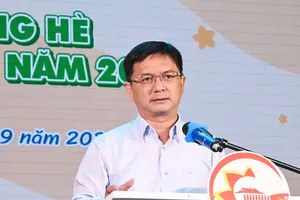
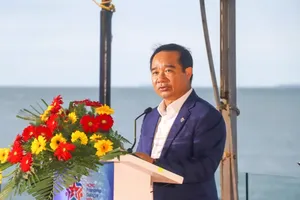
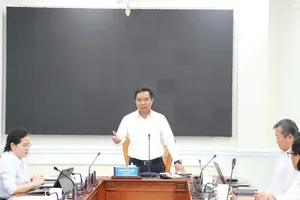
Speaking at the conference, Mr. Luan Quoc Hung, Deputy General Director of the Ho Chi Minh City Power Corporation (EVNHCMC), said that greater autonomy in energy management is particularly important for the city's future growth.
As a megacity, Ho Chi Minh City accounts for approximately 20 percent of Vietnam's total electricity consumption. Around one-fifth of that electricity comes from renewable energy sources. During the first five months of 2026, electricity consumption in the city rose by nearly 7 percent, significantly higher than the 2-4 percent annual growth recorded in previous years, driven largely by industrial and construction activities.
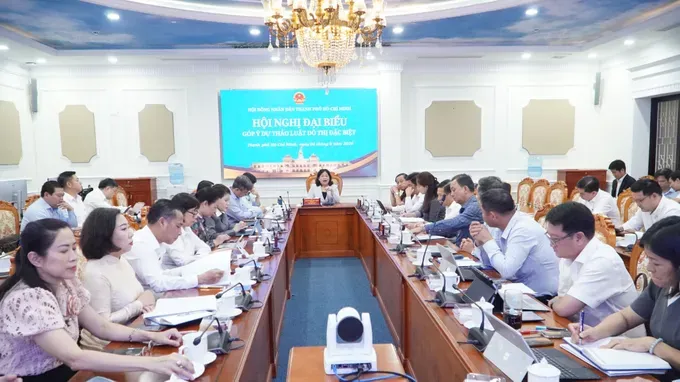
At the same time, national electricity demand continues to increase rapidly. According to him, the risk of power shortages remains a concern as economic growth accelerates while climate change creates additional challenges for the energy sector.
Currently, most of Ho Chi Minh City's electricity is supplied from power generation centers in Phu My, Tra Vinh and Nhon Trach and transmitted over long distances. The city has yet to achieve energy self-sufficiency.
Given these realities, the Deputy General Director of the Ho Chi Minh City Power Corporation voiced support for provisions in the draft law that would grant Ho Chi Minh City greater authority in the energy sector. Such mechanisms would enhance the city's ability to attract investment in local power generation projects, strengthen energy security, and support sustainable development.
He also welcomed proposed reforms in urban planning. Under current regulations, even minor additions such as transmission lines or substations often require approval from ministries, leading to lengthy review processes. The draft law would allow the city government and the chairman of the municipal People's Committee greater flexibility in adjusting planning schemes.
He noted that a reliable local power supply is an important factor for foreign investors considering investment destinations, particularly in high-tech and low-emission sectors such as data centers. Improved energy security could therefore unlock substantial economic opportunities for the city.
Empowering local governments as drivers of development
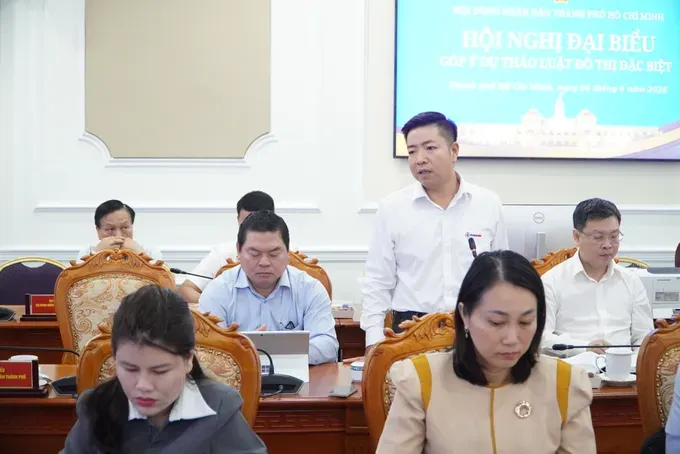
According to Mr. Nguyen Anh Tuan, Chairman of Binh My Commune People's Committee, the draft legislation marks an important step toward greater decentralization for Ho Chi Minh City. However, he recommended adopting a governance model that grants special urban areas broader, integrated powers linked to development spaces and strategic projects, helping overcome the limitations of fragmented sector-based management.
Such an approach would help overcome conflicts between legal documents, reduce rigidity in sector-specific regulations, and shift governance from a traditional administrative mindset toward a development-oriented model. Under this framework, urban areas would be managed as integrated ecosystems with clearly defined objectives.
He also stressed that the current challenge facing the two-tier local government model is not a lack of administrative authority but rather the absence of mechanisms that enable grassroots governments to become active drivers of development.
He proposed adopting a decentralization principle whereby authority is assigned to the lowest level capable of performing tasks effectively, while higher levels intervene only when lower levels lack the necessary capacity.
In addition, he suggested allowing commune- and ward-level authorities greater flexibility to mobilize, coordinate, and utilize public, private, community, cultural, and international resources for local development. He also called for pilot programs that would encourage community-based governance models, co-creation initiatives, and multi-stakeholder partnerships to support infrastructure development, urban renewal and social welfare programs.
Ho Chi Minh City promotes green growth through clean food systems
Commenting on provisions related to green economic development, Mr. Pham Trung Kien, General Director of Saigon Co.op, proposed adding measures to support the development of clean agricultural products, organic food, and ecological food systems.
He recommended that the draft law establish stronger legal foundations and policy mechanisms to foster a sustainable ecosystem for clean and organic food production, aligning agricultural development with the city's broader green growth and circular economy objectives.