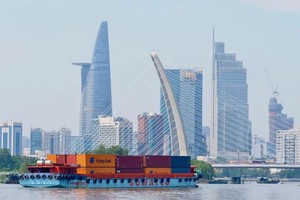
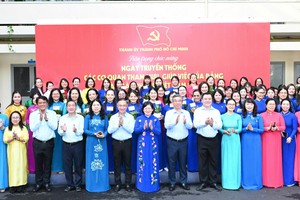
At the third session of the 11th-term Ho Chi Minh City People's Council, Chairman of the municipal People's Committee Nguyen Van Duoc reaffirmed the city's commitment to achieving annual GRDP growth of over 10 percent while calling for accelerated public investment disbursement, administrative reform, and the mobilization of development resources.
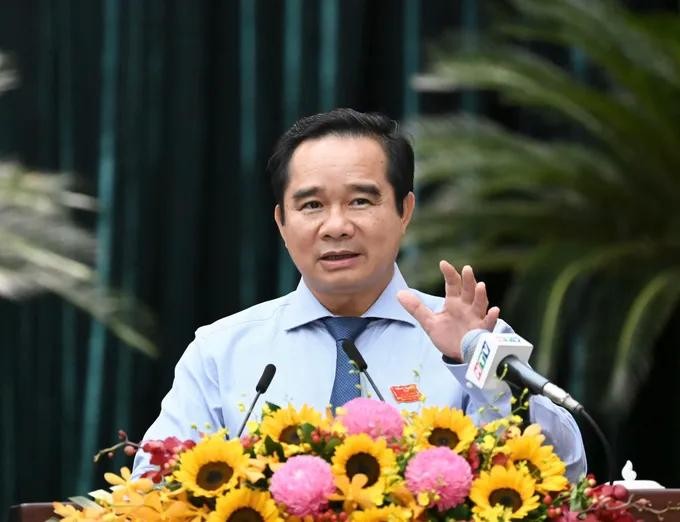
Speaking at the session, the Chairman of the municipal People's Committee said that despite continued volatility in the global economy, Ho Chi Minh City has maintained positive growth momentum. State budget revenue in the first six months exceeded VND500 trillion (US$19.2 billion), while total social investment capital was estimated at VND312.429 trillion, up 10.9 percent year-on-year. The Index of Industrial Production (IIP) posted strong growth of 11.5 percent.
Tourism recorded particularly strong recovery, generating VND213.98 trillion in revenue, up 63.9 percent from the same period last year.
The city’s investment environment has also become more attractive, with its startup and innovation ecosystem rising 12 places to rank 98th globally. Beyond economic achievements, the spirit of a “compassionate city” has continued through social welfare, healthcare, and education programs, benefiting not only local residents but also people across the country.
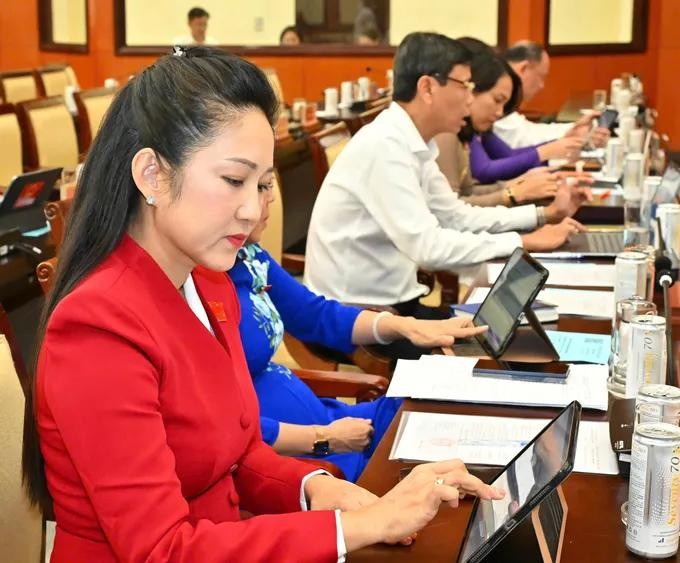
At the same time, Chairman Nguyen Van Duoc acknowledged several shortcomings that require attention. Public investment disbursement had reached only about 30 percent of the annual plan by the end of June. Many wards and communes are also handling heavy workloads while facing constraints in human resources and infrastructure.
He stressed that the city administration would continue to take stronger and more decisive actions to achieve a 100 percent public investment disbursement rate, thereby supporting economic growth and ensuring smoother operation of local government.
The city chairman directed relevant departments and agencies to proactively propose reallocating capital from projects unlikely to disburse funds to projects with strong implementation progress, immediate capital needs, and the capacity for rapid disbursement. The process, he said, must adhere to the principles of concentration, efficiency, and avoidance of scattered investment.
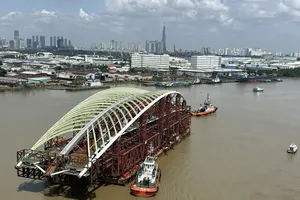
He revealed that the city will also focus on resolving issues related to construction unit prices, building materials, resettlement housing funds, and the implementation of key infrastructure projects.
In addition, the administration will study and propose mechanisms to assess the accountability of agency heads based on public investment disbursement results. HCMC Chairman Nguyen Van Duoc called for a shift from a mindset of “control and management” to one centered on “governance and service.”
Addressing issues raised by voters, the chairman reiterated that Ho Chi Minh City remains firmly committed to achieving GRDP growth of at least 10 percent.
This is a political mandate and the city’s responsibility to its people and to the nation, he said.
To achieve this target, the city will steadfastly implement its plans regardless of challenges arising from the international environment. It is also determined to push total state budget revenue beyond VND1 quadrillion and place strong emphasis on institutional reform and unlocking development resources.
The city is preparing the necessary conditions to implement special mechanisms and policies. In particular, it is promoting the development of a Special Urban Law aimed at creating a breakthrough institutional framework capable of removing long-standing development bottlenecks.
To ensure the target is met, Ho Chi Minh City has assigned specific growth targets to individual departments, sectors, and major enterprises, while establishing reward mechanisms for units that perform well.
The city will also reduce administrative processing times by 50 percent, cut compliance costs by 50 percent, and eliminate 100 percent of unnecessary business conditions in line with directives from the Prime Minister.
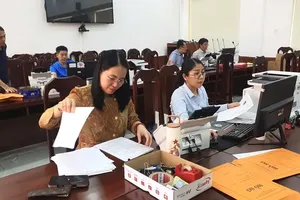
At the same time, responsibility among leaders of departments, agencies, and local authorities will be strengthened in handling procedures for citizens and businesses. Authorities will strictly address acts of avoidance, shirking responsibility, causing inconvenience, or delaying administrative procedures.
In urban planning, Ho Chi Minh City will pursue a transit-oriented development (TOD) model around metro stations and major transport corridors. The program to relocate homes along canals and waterways will also be accelerated to meet targets ahead of schedule, while healthcare services and school infrastructure remain top priorities.
HCMC Chairman Nguyen Van Duoc pledged that the city government would act with the highest level of determination, efficiency, and accountability, firmly rejecting local interests, hesitation, or responsibility-shifting that could hinder development. He emphasized that the satisfaction and prosperity of residents and businesses would remain the ultimate measure of the effectiveness of the city administration.



)