This mismatch underscores the need for a dedicated Urban Development Law capable of giving cities the tools to manage increasingly complex development challenges.
Development beyond administrative boundaries
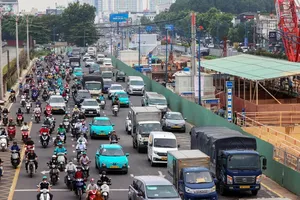
HCMC is confronting problems that increasingly transcend the existing legal framework. Its seaports, airport, ring roads, expressways, railways, waterways, and logistics networks function as a single, interconnected economic system spanning multiple localities. Yet investment decisions, funding, and administrative procedures remain largely divided along provincial boundaries and sectoral lines.
As a result, projects can languish not necessarily because of a lack of funding or demand, but because there is no sufficiently powerful authority to coordinate them across jurisdictions.
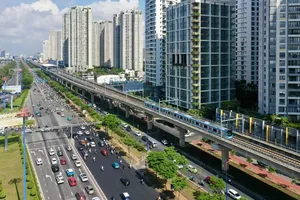
Meanwhile, HCMC is undertaking a broad restructuring of its urban landscape. Metro lines and transit-oriented development (TOD) could turn areas around stations into hubs for housing, commerce, services, and public spaces while generating revenue from rising land values. Yet current regulations lack an effective mechanism to capture rising land values and channel the proceeds into infrastructure and urban investment.
The same problem arises in the redevelopment of canal-side housing, aging apartment blocks, and deteriorating neighborhoods. Such projects involve land management, compensation, resettlement, livelihoods, infrastructure, environmental concerns, financing, and community support all at once.
When each component must pass through a separate law and government agency, projects can spend years navigating procedures before construction even begins.
HCMC is also seeking to develop an international financial center, free trade zones, logistics hubs, and centers for innovation and high technology. Such ambitions require a flexible regulatory framework that can accommodate new financial products, capital flows, and business models, while offering modern dispute-resolution mechanisms and incentives to attract international professionals.
The draft Urban Development Law takes an important step toward addressing these shortcomings.
It would allow greater flexibility in using public funds for interregional infrastructure projects and enable cities to capture and reinvest the land value generated by TOD in urban development. It would also give local authorities greater discretion over urban renewal, redevelopment, and rehabilitation, while promoting integrated planning.
The draft would also pave the way for free trade zones, integrated logistics hubs and controlled pilot programs — tools increasingly vital to major cities competing in the global economy.
What is emerging is more than a collection of policy exceptions. It is a potential new institutional framework for managing economic activities that are increasingly complex, interconnected, and internationally competitive.
A new institutional operating system
The draft law would give Ho Chi Minh City and other cities officially classified as special urban areas full access to its proposed mechanisms. Other cities could use selected mechanisms subject to approval by competent authorities, depending on their specific circumstances, development needs, and implementation capacity.
Such provisions, however, need to be backed by clear and measurable criteria.
Greater decentralization must also come with greater accountability. Pilot programs should have defined time limits, monitoring mechanisms, independent evaluation, and clear provisions for termination if they fail to deliver results. Each experiment should establish specific objectives, scope, duration, risk-management arrangements, and evaluation methods.
The principle should be straightforward: give cities sufficient authority to act but never grant authority without safeguards.
The lawmaking process should also examine stalled urban projects in concrete terms, including metro systems, flood-control infrastructure, seaports, logistics facilities, underground development, urban redevelopment, and interregional connectivity, to determine precisely where they are being held up.
How many procedures can be consolidated? How much time and cost could be saved? What safeguards would be put in place once powers are decentralized?
The answers to these questions should come from the realities of urban development rather than from policy proposals alone. Actual projects provide the strongest evidence for why a new law is necessary.
A separate legal framework for major cities should not be viewed as preferential treatment. It is a response to the realities of economic development.
When leading cities are expected to undertake projects and perform functions extending beyond their own administrative boundaries, the legal system must be flexible enough to address challenges that are interregional, cross-sectoral, and internationally competitive.
Giving major cities the right institutional tools is therefore not simply about empowering local governments. It is about unlocking new engines of growth for the wider economy.