The city remains committed to achieving growth of more than 10 percent, accelerating public investment disbursement, resolving bottlenecks related to land, planning and infrastructure, and completing special mechanisms for a new phase of development.
Key indicators show positive growth
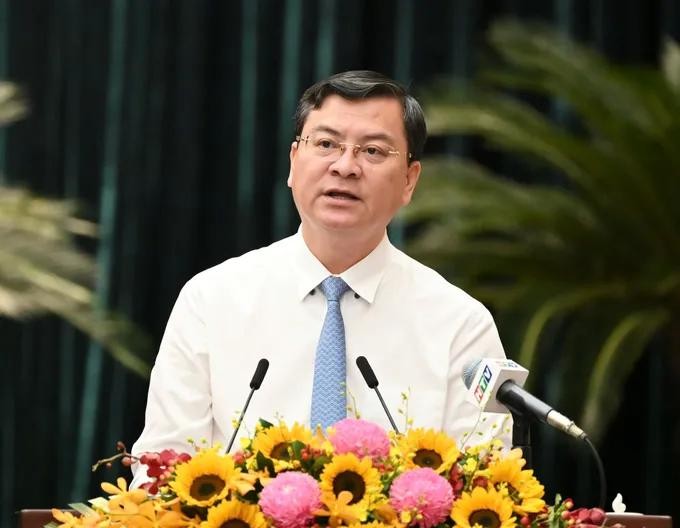
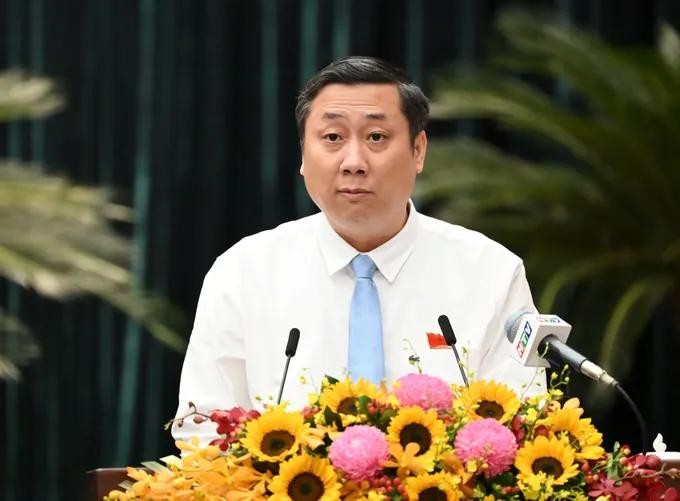
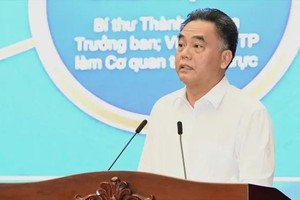
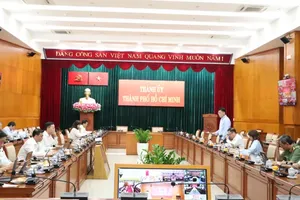
On June 19, at the third session of the 11th-term Ho Chi Minh City People's Council, Vice Chairman of the Ho Chi Minh City People's Committee Nguyen Cong Vinh presented summaries of reports submitted by the municipal administration.
According to the reports, the city's economy maintained positive growth in the first half of 2026, largely meeting planned targets, with many key indicators recording strong increases.
Total social investment capital was estimated at VND312.429 trillion (≈ US$12.0 billion), up 10.9 percent year-on-year. The industrial production index rose 11.5 percent, while key industries continued to serve as growth drivers and expanded production capacity.
Tourism rebounded strongly. Tourism revenue reached approximately VND213 trillion, equivalent to 64.8 percent of the annual target and up 63.9 percent from the same period last year. International visitor arrivals totaled about 6.39 million, an increase of 48.5 percent.
The fields of science and technology, innovation and digital transformation also recorded positive results. Digital infrastructure continued to be developed in a synchronized manner, with 5G coverage exceeding 95 percent. The city further promoted its innovation startup ecosystem, enhancing its position on the global innovation map.
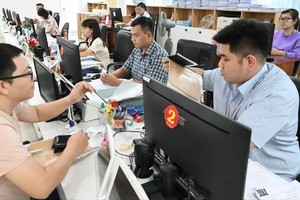
In administrative reform, the city's administrative procedure processing system received nearly 1.5 million applications, of which around 1.29 million were submitted online. The on-time processing rate reached 97.4 percent. The city reduced and simplified 491 administrative procedures while strengthening connectivity and deployment of shared databases.
Data digitization also achieved notable progress. The city completed the digitization of approximately 15.4 million civil status records and 5.7 million land records, while integrating more than 4.1 million electronic identification accounts. These efforts provide an important foundation for improving urban governance, streamlining administrative procedures and delivering better services to residents and businesses.
State budget revenue remained a bright spot, estimated at around VND500 trillion, equivalent to 81 percent of the 2026 target. Total state budget expenditure reached VND98.575 trillion, equal to 30.1 percent of the annual estimate. Public investment disbursement totaled about VND44 trillion, accounting for 30 percent of the annual plan.
The city also completed the resolution and handling of all projects subject to review under the Prime Minister's directives, covering total investment of approximately VND206 trillion and an area of around 17,000 hectares.
Culture, education, healthcare and social welfare programs continued to be implemented in a coordinated manner. The healthcare sector proactively controlled disease outbreaks and strengthened grassroots healthcare capacity. Efforts related to employment, poverty reduction, social welfare and support for policy beneficiaries also remained a priority.
HCMC is committed to growth above 10 percent
According to Nguyen Cong Vinh, Ho Chi Minh City will remain committed to achieving GRDP growth of more than 10 percent in the second half of the year, while targeting state budget revenue of around VND1 quadrillion.
The city will continue reviewing and updating growth scenarios, identifying growth potential in manufacturing, pharmaceuticals, logistics, and finance-banking sectors. It will also address difficulties facing businesses, particularly bottlenecks involving land, planning, site clearance, construction materials and investment procedures.
One key priority is accelerating public investment disbursement with the goal of achieving 100 percent of the assigned plan. Delays caused by subjective factors will be dealt with strictly.
The city will also promote safe and effective credit growth, expand bank-business connectivity programs, improve the investment and business environment, and effectively implement Resolution 68 on private sector development as well as policies supporting foreign-invested economic sectors.
Regarding infrastructure, the city will focus on accelerating major projects, resolving compensation and site clearance issues, and finalizing, submitting for approval and implementing the Ho Chi Minh City Master Plan for the 2025-2050 period with a 100-year vision.
In the second half of 2026, the city aims to complete procedures and begin construction on major projects, including Can Gio Bridge, the Thu Thiem–Long Thanh railway, Thu Thiem 4 Bridge, Binh Tien Road and other key transport projects intended to reduce traffic congestion and environmental pollution.
Ho Chi Minh City will also continue adjusting its housing development program, prioritizing social housing and worker housing associated with industrial parks and export processing zones. The city will implement its environmental protection program for 2026-2030, promote science and technology, innovation and digital transformation, and further develop culture, arts and sports. It will also organize activities marking the 50th anniversary of Saigon - Gia Dinh officially being honored with the name of President Ho Chi Minh.
Alongside economic development, the city will continue restructuring public service units, effectively managing public assets and surplus office facilities, advancing administrative reform linked to digital transformation, and ensuring national defense, security and social order. Efforts to combat crime, smuggling, trade fraud, counterfeit goods and environmental violations will continue, while maritime areas, sea borders and islands will remain under strict management. The city will also rigorously implement measures to prevent and combat corruption, misconduct and waste.

)