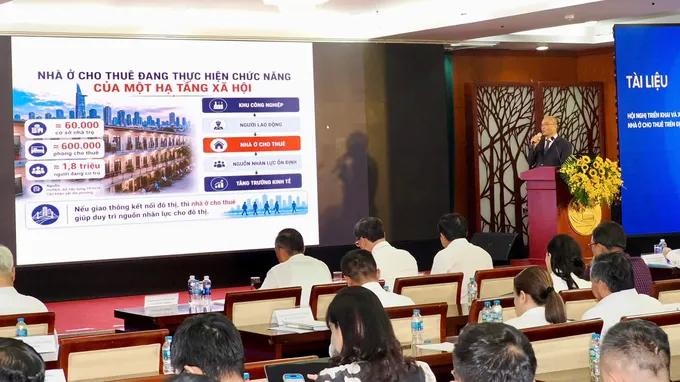
The information was provided by Chairman Nguyen Van Duoc of the Ho Chi Minh City People's Committee at a conference jointly organized by the Department of Construction and the Association of Construction Science and Technology yesterday.
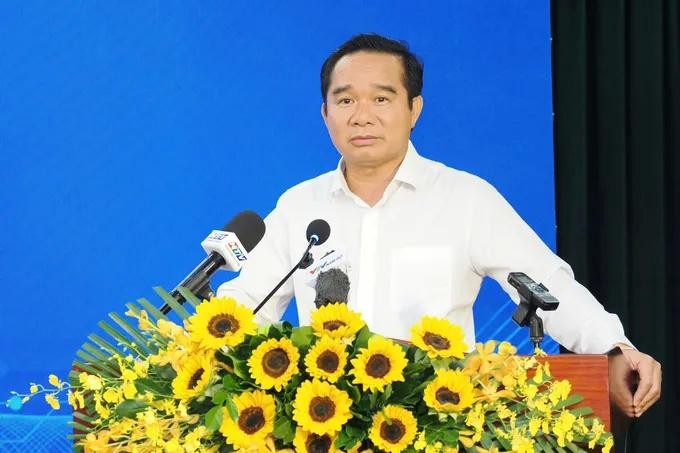
Addressing the conference, Chairman Nguyen Van Duoc of the Ho Chi Minh City People's Committee said the strong response from businesses was an encouraging sign for the city's strategy to expand social and rental housing.
He highlighted a major imbalance in the current real estate market, noting that approximately 70 percent of housing supply is concentrated in the high-end segment and 30 percent in the mid-range segment, while social housing for low-income earners remains limited. As a result, many people with genuine housing needs are unable to access affordable homes, while a portion of available housing is not occupied by owner-residents.
According to the city Chairman, the city views the development of social housing as both a responsibility in implementing directives from national leaders and a practical solution to meeting residents' basic housing needs. He noted that 13 enterprises, including four state-owned and nine private companies, have committed to developing more than 97,000 housing apartments. Of these, state-owned enterprises account for about 46,755 apartments and private companies approximately 50,690 apartments.
Although the central government's target calls for 199,000 social housing apartments by 2030, the city believes it has established a solid foundation to meet and potentially exceed that goal.
To accelerate project implementation, the Chairman of the Ho Chi Minh City People’s Committee has instructed relevant agencies to develop a “green channel” for social housing and rental housing projects. The Department of Construction, the Department of Planning and Architecture, and the Department of Finance have been tasked with proposing specific measures to streamline procedures and facilitate project approvals.
For projects developed on privately owned land, the city pledged maximum support in adjusting planning schemes and expediting land-use conversion procedures. For projects on public land, Ho Chi Minh City will seek approval from the Prime Minister for designated investment mechanisms and other suitable implementation models.
The city is also reviewing proposals to introduce a rental price ceiling based on workers' average incomes. The Department of Finance has been assigned to study and recommend an appropriate framework to ensure affordability while maintaining market viability.
In addition, Ho Chi Minh City will propose a range of incentive policies to the Government and the Ministry of Construction, including periodic land-use fee exemptions of five to ten years, interest-rate and tax incentives, and the early issuance of standards and regulations governing non-commercial land development.
Deputy Minister of Construction Nguyen Van Sinh said Ho Chi Minh City has been at the forefront of housing development, including social housing projects. Looking ahead, he said the city should shift its approach from focusing solely on providing housing for those who do not meet home ownership conditions to ensuring access to housing for those who lack the financial means to purchase a home.

To support the development of rental housing, Deputy Minister of Construction Nguyen Van Sinh recommended that the city conduct a comprehensive assessment of housing demand to ensure investment plans align with actual needs and avoid situations in which completed projects struggle to attract tenants. He also urged the city to prioritize land allocation for rental housing and consider working with developers to reserve 20 percent of social housing apartments for rental purposes.
According to the Deputy Minister of Construction, the Ministry of Construction will review these proposals as it develops appropriate standards and regulations. He added that public assets that could be converted into rental housing should be carefully reviewed and utilized effectively in line with the Prime Minister’s directive to prevent waste.
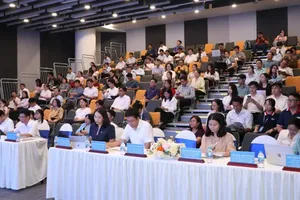
Representatives of government agencies and businesses sign commitments to develop rental housing projects including:
- Ho Chi Minh City Federation of Labor: 10,000 apartments
- Ho Chi Minh City Export Processing Zone and Industrial Park Management Board: 10,000 apartments
- Ho Chi Minh City Housing Development Fund: 25,000 apartments
- Saigon Real Estate Corporation: over 1,755 apartments
- VinGroup: 4,500 apartments
- CT Group: 20,000 apartments
- Bcons Investment and Construction Joint Stock Company: 10,000 apartments
- Nam Long Apartment Development Joint Stock Company (Nam Long ADC): 1,000 apartments
- Le Thanh Trading and Construction Company Limited: 800 apartments
- Kim Oanh Real Estate Services, Trading and Construction Joint Stock Company: 5,000 apartments
- Nova Real Estate Investment Group Joint Stock Company (Novaland): 4,240 apartments
- Company Thien Phat Investment, Construction, Production, Service and Tourism Joint Stock Company: 3,150 apartments
- Duc Manh Joint Stock Company: 2,000 apartments





)