Head Dao Quang Duong of the Land Economics Division at the HCMC Department of Agriculture and Environment outlines the shift in how financial obligations will be calculated under the new regulatory framework.

According to Dao Quang Duong, the city is transitioning from a system that relied primarily on a static land price list to one that incorporates the K-coefficient. This change follows National Assembly Resolution 254/2025/QH15, which stipulates that for several categories, most notably land use conversion for households and resettlement allocations, financial obligations will now be calculated using the land price list multiplied by the K-coefficient.
"We are currently in the public consultation phase and encourage residents to provide feedback to ensure the draft is as comprehensive as possible before it is submitted for final approval," said Mr. Duong.
Addressing concerns regarding the impact on citizens, the head of the Land Economics Division explained that the K-coefficients are derived from recent property transfer data and compensation projects. While some areas have seen proposed coefficients increase significantly, the Department of Agriculture and Environment is working to ensure the financial impact remains manageable for residents seeking to convert land for housing.
"We are carefully considering these rates to ensure residents can fulfill their financial obligations without facing an undue burden," he stated. However, he acknowledged that this new formula will inevitably result in higher costs compared to previous regulations.
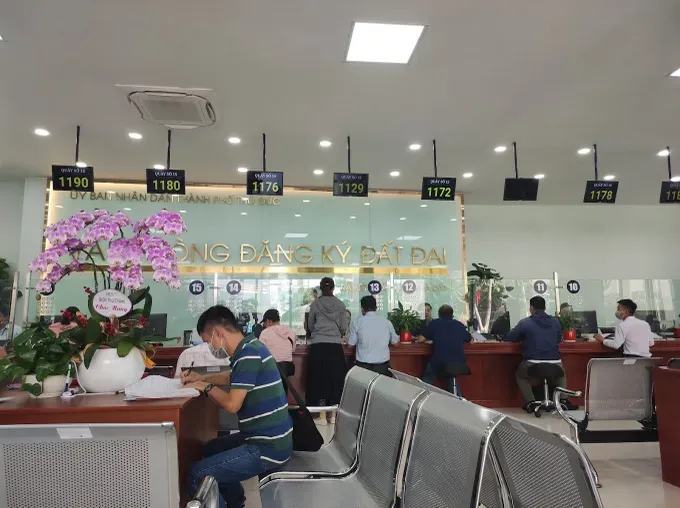
Looking ahead, the Department of Agriculture and Environment has proposed provisions for the forthcoming Special Urban Law that would give the Ho Chi Minh City People's Committee greater discretion in determining land valuation methods.
Under the proposal, the city could choose, depending on specific circumstances, to apply the base land price, the base price adjusted by the K-coefficient, or a specific land price.
According to Mr. Duong, the added flexibility could help balance revenue considerations with economic development objectives. He noted that applying the base price adjusted by the K-coefficient to businesses paying annual land rent could substantially increase operating costs and weaken competitiveness.
“For example, if we apply the base price multiplied by the K-coefficient to businesses paying annual land rent, it could significantly increase input costs and reduce competitiveness. If we instead apply the base land price, it encourages investment and promotes socio-economic development,” Mr. Duong said.
The city official said that the proposed approach would allow land-use financial obligations to be calibrated to local conditions, helping maintain economic stability while supporting investment, business growth, and housing access for its 14 million residents.







)