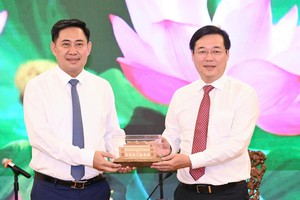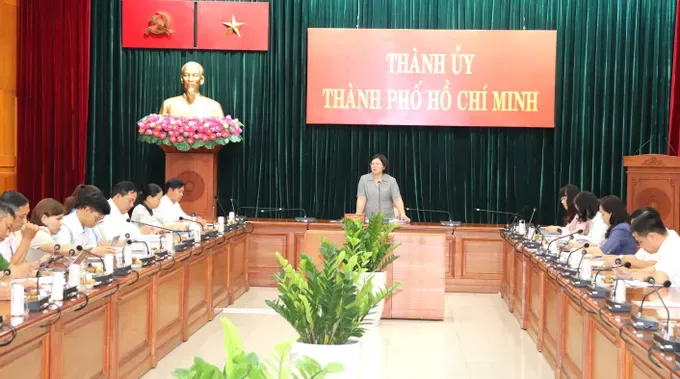
Vice Secretary of the Ho Chi Minh City Party Committee, Van Thi Bach Tuyet, held a working session with the Standing Committees of the Party Committees of Tan Son Nhi and Tay Thanh wards on the implementation of tasks in the first six months of the year, as well as orientations and key tasks for the last six months of 2026.
At the working session, a representative of Tan Son Nhi Ward reported that the ward has so far completed 10 out of 30 targets and tasks set for 2026, while the remaining targets are being actively implemented to ensure the set schedule.
Since February 2026, the ward has maintained the monthly organization of the “Month of Listening to Residents’ Voices” program in residential areas, coffee shops and various other spaces. The program has helped the Party Committee and local authorities promptly listen to and understand the thoughts and aspirations of residents, improve the effectiveness of management and administration, and foster social consensus.
However, the disbursement of public investment capital remains slow. External transport routes in the ward, such as Au Co, Tan Ky Tan Quy and Truong Chinh streets, continue to experience frequent traffic congestion and have yet to meet the requirements for the ward’s socio-economic development.
In Tay Thanh Ward, the ward has recently implemented a plan to carry out the 2026 National Target Program on Sustainable Poverty Reduction, thereby promoting solutions to support near-poor households in increasing their income and improving their living conditions.
Administrative reform efforts have been intensified, contributing to improving the quality of services provided to residents and businesses. During the six-month period, the ward’s Public Administration Service Center received more than 8,830 dossiers and processed over 8,760 dossiers, with no overdue cases.
A representative of the ward also said that most neighborhood-level staff are currently elderly and have limited capacity in applying information technology, resulting in delays in accessing social media platforms, processing information, and performing tasks in the digital environment.
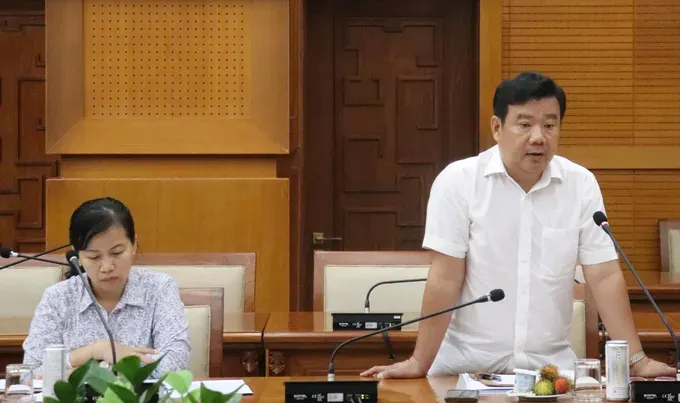
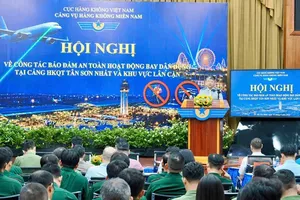
Speaking at the conference, Vice Secretary of the Ho Chi Minh City Party Committee Van Thi Bach Tuyet highly appreciated the results achieved by Tan Son Nhi and Tay Thanh wards during the first six months of the year.
According to Vice Secretary of the Ho Chi Minh City Party Committee Van Thi Bach Tuyet, after one year of operating the two-tier local government model, the contingent of officials and civil servants has demonstrated its strengths while also identifying certain shortcomings. The Standing Committee of the Ho Chi Minh City Party Committee has agreed to focus on solutions to improve the quality of commune-level officials and civil servants.
Reassessing the grassroots-level contingent of officials is of great importance. Only through an accurate evaluation of officials’ capabilities can they be properly assigned and provided with appropriate training and professional development plans.
Van Thi Bach Tuyet said that the Standing Committee of the Ho Chi Minh City Party Committee has also adopted a policy of evaluating each Party Committee Secretary, Standing Committee member, and key grassroots-level officials. Therefore, she requested ward Party Committees to review, assess, arrange, and reorganize their personnel once again to ensure that each official and civil servant is assigned to the most suitable position, enabling them to fully promote their capabilities, ensure effective operations, and achieve the highest work efficiency.
She also requested localities to send officials to participate in training and professional development courses to meet requirements and assigned tasks and to develop a detailed and rigors job position scheme at the ward level, closely following the guidance of the Ho Chi Minh City Party Committee’s Organization Commission.
She also reminded localities to pay attention to the disbursement of public investment capital, the arrangement of Party organizations in association with the restructuring of residential areas, and the effective implementation of administrative reform, including reviewing administrative procedures and delegated and authorized tasks, while prioritizing support for businesses operating in the area.