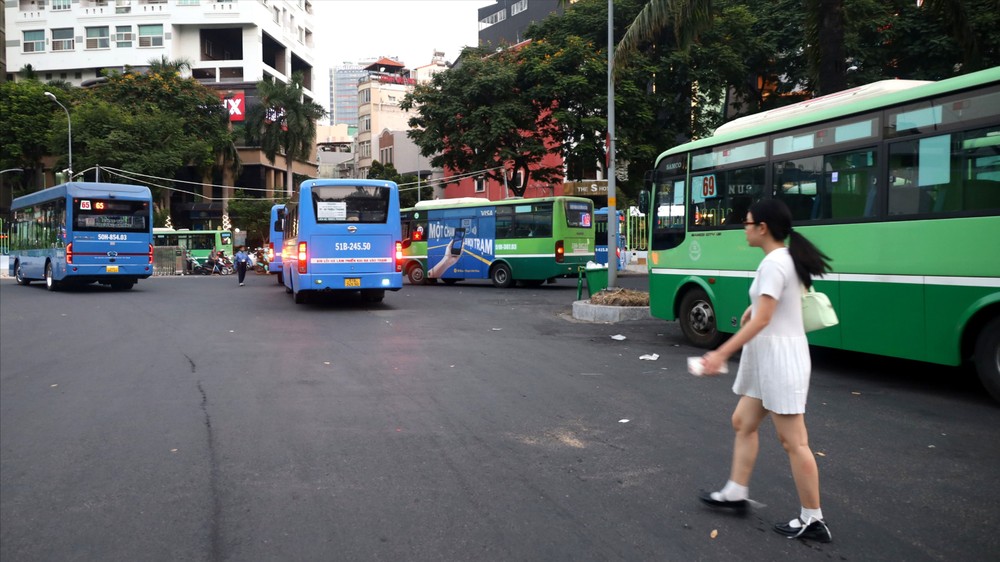
The HCMC Management Center of Public Transport announced on June 22 that the policy will cover all passengers using bus services within the city, including both subsidized and non-subsidized routes. However, the program will not apply to interprovincial bus services, open-top tourist buses, airport connector routes, or services operating under models similar to interprovincial transport.
Authorities said the fare waiver will follow a "free but controlled" approach, balancing convenience for commuters with regulatory and management requirements. The program will be implemented in two phases.
During the first phase, from July 1 to September 30, passengers will be able to ride buses free of charge without mandatory identity verification or passenger registration. The period will be used to raise public awareness, familiarize residents with the service, and complete preparations for the next stage. Authorities will focus on upgrading technological infrastructure, expanding databases, and refining the electronic ticketing system.
At the same time, residents will be encouraged to voluntarily verify their identities and record bus usage through digital platforms, helping authorities collect data and assess the policy's effectiveness.
The second phase, running from October 1 to December 31, will maintain the 100-percent fare subsidy while requiring passenger authentication through approved methods. Commuters may use chip-based citizen identification cards, VNeID accounts, bank cards, e-wallets, the MultiGo application, or other legally recognized electronic verification systems.
Alongside the fare-free program, HCMC plans to continue investing in improvements to the city's bus network. Between 2026 and 2027, authorities are expected to build and upgrade bus shelters and stops, renovate the Saigon and Cho Lon bus terminals, and develop multi-story parking facilities at major bus terminals, including Cho Lon, Saigon, and Tan Phu, as well as other suitable locations identified in urban planning schemes.
The city will also continue enhancing its digital transport ecosystem by upgrading the electronic ticketing system, expanding shared databases, and improving passenger service platforms. Officials expect these investments to strengthen service quality, streamline operations, and deliver a more convenient travel experience.