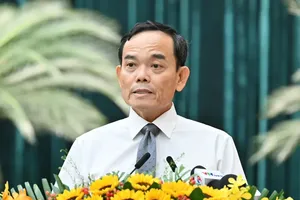
The Chairman of the Ho Chi Minh City People’s Committee emphasized that the demand for affordable housing remains high, calling for a comprehensive and long-term plan to ensure residents can settle securely and contribute to the city’s sustainable development.
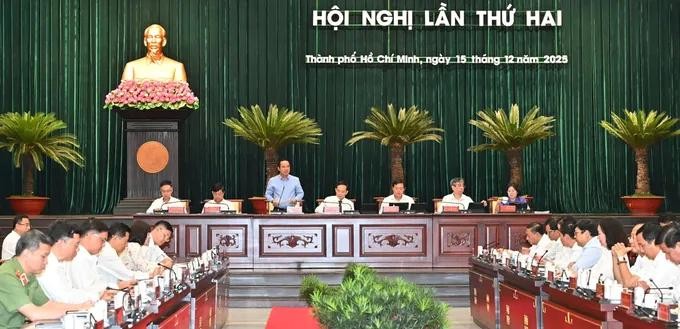
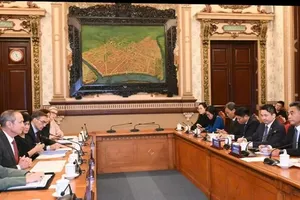
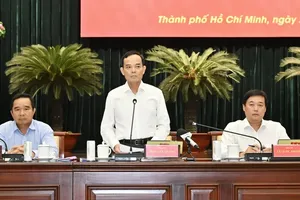
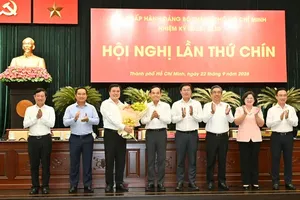
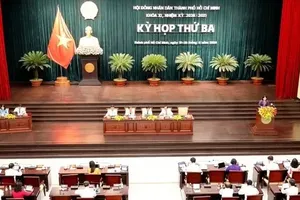
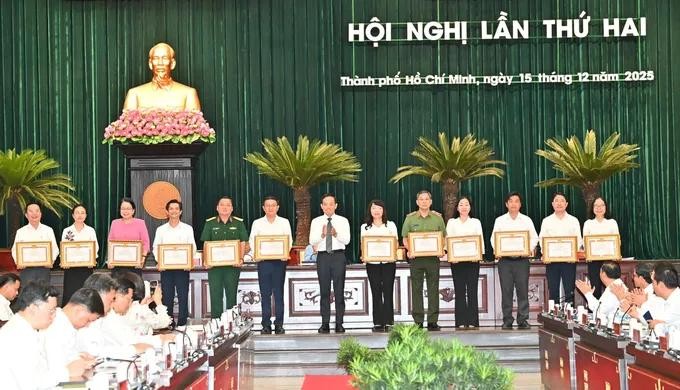
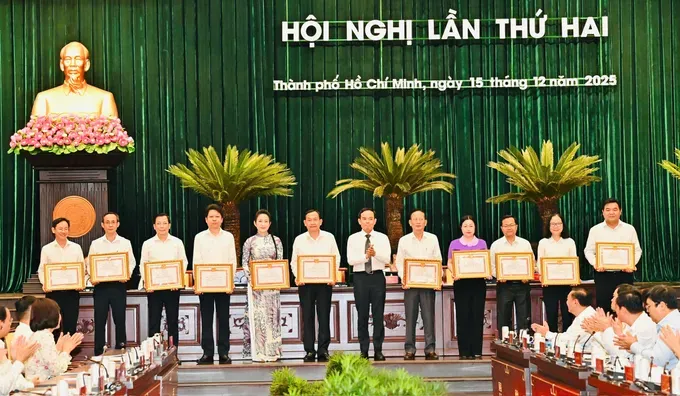
At the session chaired by Tran Luu Quang, Secretary of the Ho Chi Minh City Party Committee, participants discussed a wide range of pressing issues related to economic growth targets, public investment disbursement, transportation infrastructure, environmental pollution control, flood prevention, social housing, urban beautification, building a drug-free city, and maintaining public security and order.
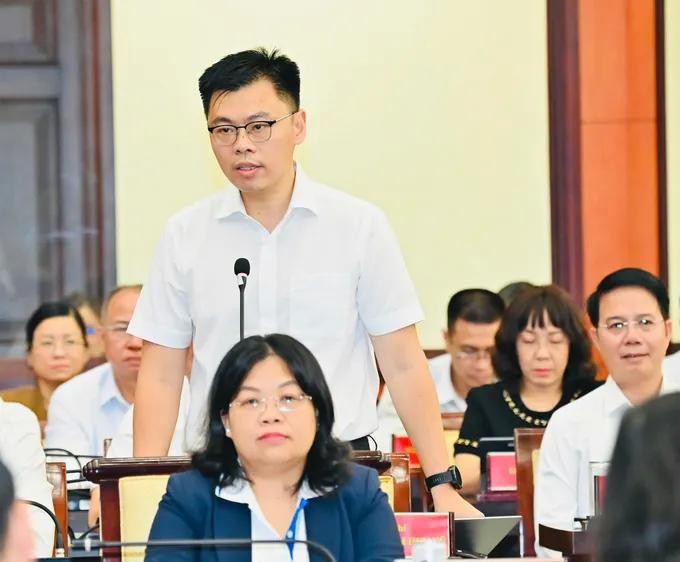
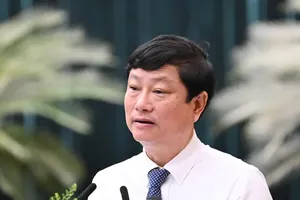
Assessing the current global and domestic economic landscape, Truong Minh Huy Vu, Director of the Ho Chi Minh City Institute for Development Research, presented projected growth scenarios for 2026 and the 2026–2030 period.
According to Director Truong Minh Huy Vu, there are three possible growth scenarios for 2026. Under the most optimistic scenario, if Ho Chi Minh City effectively utilizes the mechanisms and policies under the amended and supplemented Resolution 98, while mobilizing capital from large-scale strategic projects (each worth over US$10 billion), the city could achieve a growth rate of 10.5 percent to 11 percent.
He added that if the city successfully addresses existing bottlenecks in public investment disbursement, land clearance, and compensation especially for key transportation and metro projects combined with the establishment of the Ho Chi Minh City International Financial Center to attract new capital flows, the 10.5 percent–11 percent growth scenario is both achievable and sustainable.
HCMC will resolve the VND10,000 billion flood control project by 2026
According to Nguyen Toan Thang, Director of the Ho Chi Minh City Department of Agriculture and Environment, the city has developed a plan to reduce environmental pollution, identifying air pollution as a priority task requiring immediate action.
The program until 2030 focuses on two main groups: identifying and controlling pollution sources from transportation and industry, encompassing over 12 million vehicles and approximately 23,000 production facilities with potential pollution risks.
Accordingly, Ho Chi Minh City is implementing a plan to convert private transportation to public transportation (including converting buses from gasoline to electric and CNG), developing urban rail and increasing the percentage of electric taxis to approximately 70 percent.
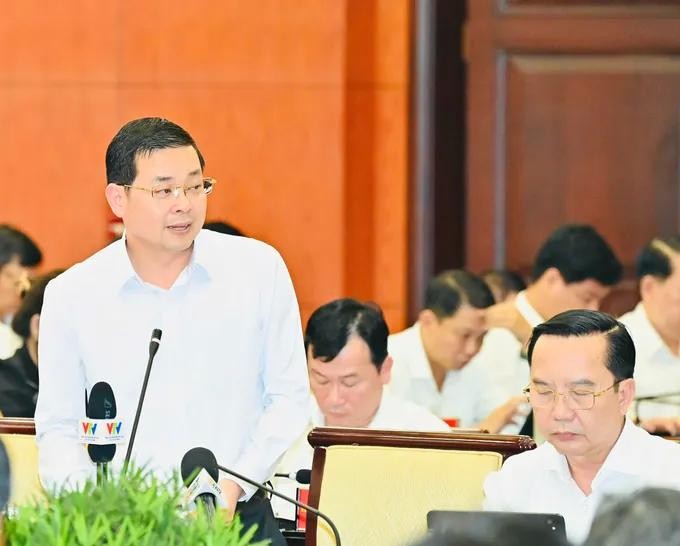
Simultaneously, policies are being applied to encourage and restrict the gradual reduction of polluting vehicles in the central area.
The city aims to reduce air pollution to the lowest level among major pollution sources by 2030.
Nguyen Van Duoc, Chairman of the Ho Chi Minh City People's Committee, emphasized that green transformation requires appropriate policies and a roadmap, with the consensus and support of departments, agencies, and localities. He requested the Department of Agriculture and Environment to urgently relocate polluting industrial clusters and facilities away from residential areas; and to review and strengthen the environmental monitoring system in the city.
Regarding flood control solutions, Chairman of the Ho Chi Minh City People's Committee, Nguyen Van Duoc, requested the Department of Agriculture and Environment to decisively implement solutions, including the VND10,000 billion flood control project, which must be completed by 2026. He also requested the expansion of comprehensive flood control solutions, including inviting cooperation with foreign partners.
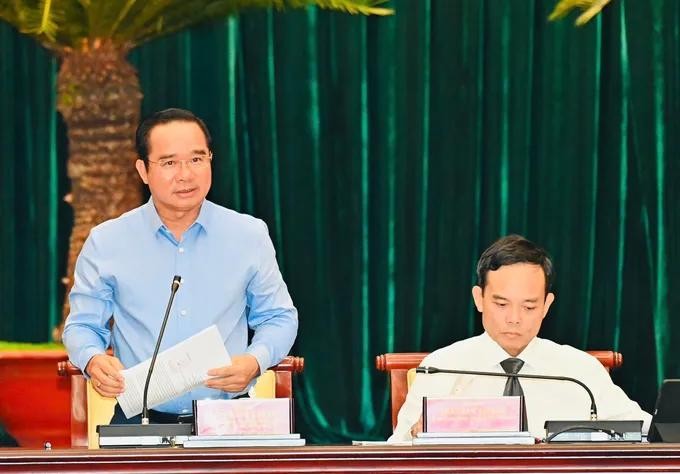
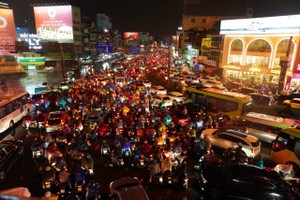
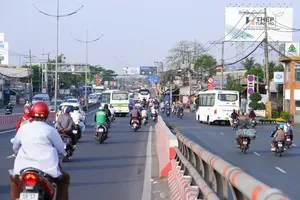
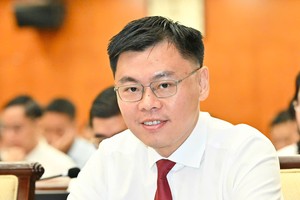
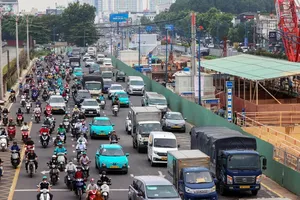
Regarding traffic congestion, Director of the Ho Chi Minh City Department of Construction, Tran Quang Lam, stated that the city currently has approximately 1 million cars and 10 million motorcycles. The rapidly increasing demand for transportation leads to frequent traffic congestion during peak hours and at gateway areas.
The city is learning from international experience, focusing on developing sustainable and modern transportation infrastructure; investing in road systems, expressways, ring roads, and bridges at gateways.
Ho Chi Minh City currently has 79 key projects, mostly transportation projects; the goal is to basically complete the road infrastructure framework by 2030.
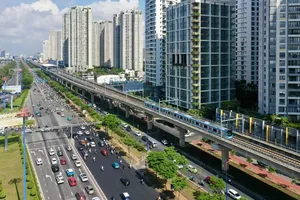
Regarding urban rail, the city is preparing a scientific and clear plan; especially with amended and supplemented Resolution 98, the city is allowed to apply a streamlined mechanism, facilitating faster procedures.
Accordingly, the city aims to complete 6 urban rail lines (total length 190km) by 2030, and an additional 5 lines by 2035.
Currently, the city is focusing on optimizing existing infrastructure: remotely controlling approximately 2,000 traffic light intersections; applying AI to optimize traffic flow; and deploying digital maps. Simultaneously, it is accelerating the progress of infrastructure investment projects and improving traffic management efficiency.
The city also aims to expand the bus network, increase multimodal connectivity; invest in local areas to expand sidewalks; gradually develop bicycle usage; and reorganize industrial zones and export processing zones in conjunction with traffic management.
HCMC attracts strategic investors for urban renewal, social housing
Ho Chi Minh City is intensifying efforts to attract strategic investors and accelerate urban renovation projects, particularly in the area of social housing development.
According to the Government’s plan, the city has been tasked with completing 13,040 social housing units by 2025, of which 97 percent have already been achieved. For 2026, the target has been raised to 28,500 units, reflecting the city’s commitment to addressing housing demand and improving living conditions for low- and middle-income residents.
To meet these goals, the city is preparing land for 38 projects currently under review and investment appraisal, while also planning approximately 732 hectares for future housing development.
With supportive policies and mechanisms now in place under the city’s new development framework, Ho Chi Minh City is confident it will fulfill its housing targets and continue advancing toward comprehensive urban renewal.