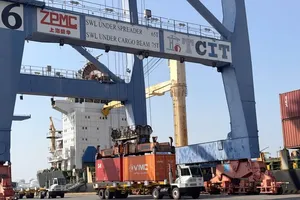
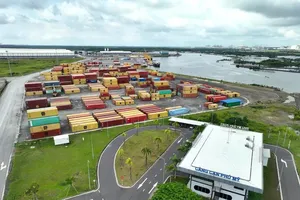
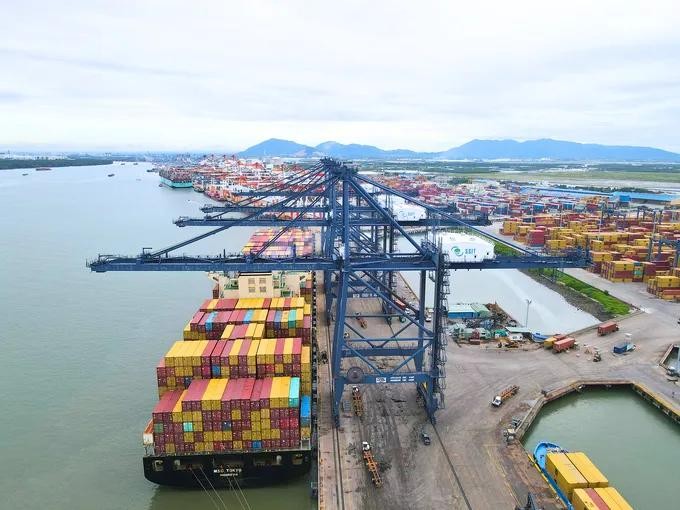
From a stretch of untamed wetlands, the Cai Mep - Thi Vai port complex has evolved into one of the region’s leading deep-water hubs, capable of accommodating the world’s largest container vessels. Behind this remarkable rise lies a combination of long-term planning vision, breakthrough social investment policies, and early technological adoption.
Long-term vision and an open policy framework
Few could have imagined that more than three decades ago, the area along the Thi Vai River consisted largely of melaleuca and mangrove forests, dotted with a handful of small berths handling vessels of just 3,000 to 5,000 DWT. According to Pham Anh Tuan, Chief Executive Officer of Portcoast, the transformation of Cai Mep - Thi Vai can be summed up as a journey “from mangrove forest to mega port.”
The turning point came with strategic foresight, as planners recognized the area’s rare natural advantages with ideal depths of 15 to 20 meters, reaching up to 60 meters in some locations, stable riverbeds with minimal sedimentation, and proximity to major international shipping lanes. This prompted a decisive shift to relocate port infrastructure toward the river mouth, replacing inner-city ports in Ho Chi Minh City.
However, the defining factor was the post-2005 policy of diversification of investment sources. As the State transitioned to a facilitative role focusing on planning, channel dredging, and shared infrastructure, it effectively created a “runway” for strong inflows of private and foreign direct investment.
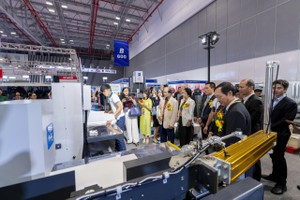
Beyond capital, international investors brought modern operational technologies, advanced management expertise, and global customer networks. These elements provided a critical boost, enabling Cai Mep - Thi Vai to accelerate its development and compete with major regional ports in a significantly shorter timeframe.
Competitive advantages
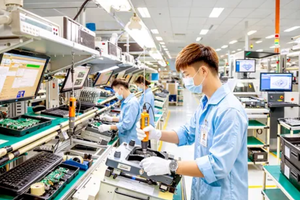
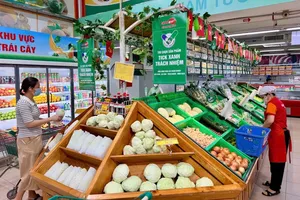
The rise of the Cai Mep - Thi Vai complex has helped establish an integrated port system for Ho Chi Minh City, supporting industrial growth and expanding import-export capacity. Cargo flows efficiently between Cat Lai Port and Cai Mep - Thi Vai, while imported goods are redistributed to the city and surrounding provinces.
The port system is projected to grow at an annual rate of 3.5 percent to 3.8 percent, with plans to expand the Cai Mep Ha terminals and develop into an international transshipment hub aligned with green port standards, smart port operations, and digital transformation. Building on its current foundation, Cai Mep - Thi Vai is expected to become a key link in the global logistics chain.
According to Nguyen Xuan Sang, Deputy Minister of Construction, the complex holds a distinct advantage with channel depths ranging from 14 to 15.5 meters, allowing it to accommodate container ships exceeding 200,000 DWT. In practice, vessels of up to 234,000 DWT have already called at the port without the need for transshipment. The ability to handle such mega vessels not only affirms infrastructure capacity but also strengthens its competitive edge.
Cargo can be shipped directly to Europe, the Americas, and major Asian markets, reducing logistics costs by 20 percent to 30 percent, shortening transit times, and minimizing risks. The port also benefits from strong connectivity to inland waterway corridors, with more than 90 percent of cargo transported by river. At the same time, regional infrastructure links continue to improve. In the long term, the Cai Mep - Thi Vai system is positioned to become a strategic import-export gateway for southern Vietnam and the country as a whole, evolving into a modern maritime-logistics ecosystem capable of competing across the region.