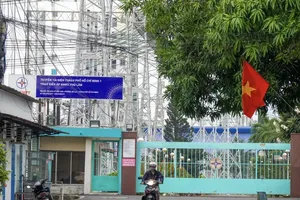
Head Tran Huu Linh of the Agency for Domestic Market Surveillance and Development under the Ministry of Industry and Trade mentioned the creation of a "blacklist" to prevent repeat offenses as a fundamental solution in the fight against counterfeit goods.

The Head of the Agency for Domestic Market Surveillance and Development reported that while enforcement authorities have successfully cracked down on major violations, the tactics used by illicit actors are becoming increasingly sophisticated and audacious. This trend is particularly evident in the petroleum sector, where numerous websites have emerged to market unauthorized fuel additives with false claims about their ability to optimize E10 gasoline.
This reality shows that the business of infringing goods is shifting strongly to the online space. Violators are taking advantage of the anonymity of e-commerce to conceal their actions, making inspection and handling difficult, while petroleum products directly affect the safety of consumers, he said.
According to him, because there are still loopholes in the legal system, people often take advantage of them to circumvent regulations. This is one of the main reasons why counterfeit goods continue to proliferate. Although the legal system is relatively comprehensive, enforcement remains ineffective. Some violators are willing to pay fines and then establish new legal entities to return to their old ways. The consequences are not only revenue losses and consumer harm, but also a decline in the competitiveness of legitimate businesses and the investment environment.
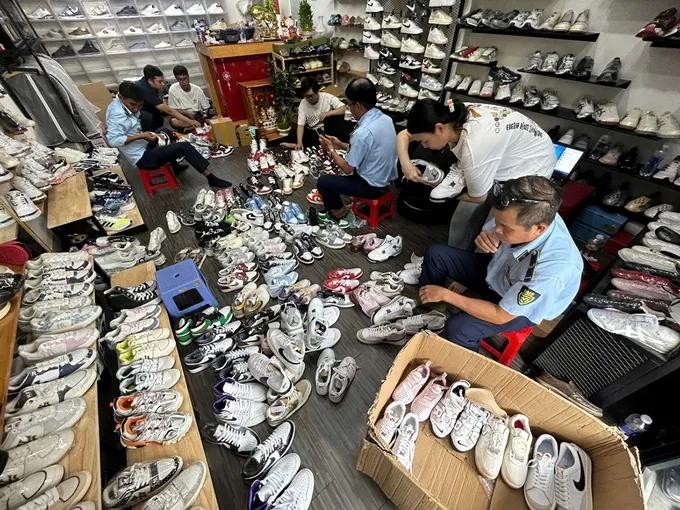
Regarding the concerns of some businesses in Ho Chi Minh City struggling and feeling helpless against the problem of counterfeit goods, Head Tran Huu Linh of the Agency for Domestic Market Surveillance and Development revealed that in the coming time, the Agency for Domestic Market Surveillance and Development will focus on applying technology to combat violations in cyberspace, forcing e-commerce platform owners to take greater responsibility, for example, to immediately remove links containing illegal products.
In addition, the agency will propose the creation of a "blacklist" to track violators. The agency will shorten the complaint processing procedure so that when businesses provide evidence, authorities can immediately take action to crack down on counterfeit goods, ensuring businesses are not left alone in this fight. For consumers, the agency will urge them to absolutely not consume counterfeit goods for the sake of low prices. The decisive rejection of smuggled and counterfeit goods by consumers is the sharpest weapon to protect and clean up the market.
Regarding the measures developed countries are applying to combat counterfeit goods, Mr. Linh stated that according to reports from the OECD (Organization for Economic Cooperation and Development) and EUIPO (European Union Intellectual Property Office), counterfeit goods account for 2.5 percent - 3.3 percent of global trade, equivalent to hundreds of billions of US dollars annually. To address this situation, many countries have implemented strict penalties and increased the application of technology in market control.
In the United States, large-scale intellectual property infringements can result in criminal prosecution and the confiscation of illegal profits and related assets. In the European Union, customs authorities play a crucial role in detecting and preventing counterfeit goods at border crossings through advanced data analysis tools.
Based on international experience, Vietnam needs to continue improving its law enforcement mechanisms, enhancing the deterrent effect of penalties, strengthening data exchange between relevant agencies, and strictly controlling repeat offenders to prevent them from easily establishing new legal entities to continue their operations, said Mr. Linh.
Between December 15, 2025, and May 15, 2026, Ho Chi Minh City authorities inspected and handled 12,402 violations involving smuggling, trade fraud, and counterfeit goods. This enforcement effort addressed 326 cases of prohibited and smuggled items, 11,176 instances of trade fraud, and 900 cases of counterfeit products. Resulting actions led to the prosecution of 70 cases involving 145 individuals and contributed VND6,884 billion (nearly US$262 million) to the state budget.