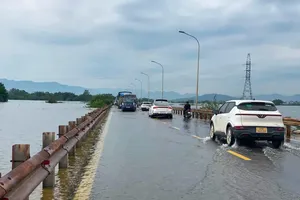
As intense heatwaves continue to sweep across Central Vietnam and the Central Highlands in late May, construction projects, agricultural production and daily life have all been heavily affected. In response to soaring temperatures, contractors, farmers, livestock breeders and local authorities have implemented flexible measures to maintain productivity, ensure worker safety and stabilize livelihoods.
Workers shift to nighttime construction to avoid heat
At the Cam Lo–La Son Expressway expansion project connecting Quang Tri Province and Hue City, contractors have maintained 74 construction teams despite extreme weather conditions.
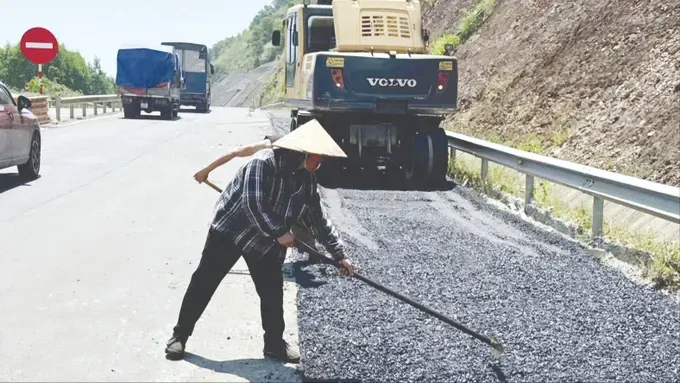
Mr. Chu Van Long, Executive Director of the project management board, said that work schedules had been adjusted to cope with the severe heat. Construction workers now begin shifts from 6 a.m. to 10 a.m., one hour earlier than usual, and continue from 2 p.m. to 7 p.m. in the afternoon.
Labor safety measures have also been strengthened, while night shifts continue uninterrupted to maintain project progress.
After every 50 to 60 minutes of outdoor work, workers rotate shifts to rest and rehydrate before returning to work. Daytime activities mainly focus on resolving remaining issues so night crews can accelerate construction, he said.
After one year of construction, the La Son–Hoa Lien Expressway expansion project has largely completed road surfaces and bridge structures along the route. Contractors are now adjusting work schedules by starting earlier and finishing later to complete the remaining items, including 50 bridges and synchronized traffic safety systems, with the goal of finishing the project by June 30.
Farmers step up measures to protect livestock
In Ha Tinh Province, known as Vietnam’s deer-farming hub with major farming areas in Son Giang, Huong Son, Kim Hoa, Son Tien, Tu My and Son Hong communes, farmers are focusing on protecting livestock from extreme heat.
Mr. Nguyen Thanh Mau, a resident of Bao Trung Hamlet in Son Giang Commune, said that his family has proactively supplied cool water and herbal electrolyte supplements to help deer stay hydrated, reduce heat stress, maintain energy, and strengthen immunity during peak heat days.
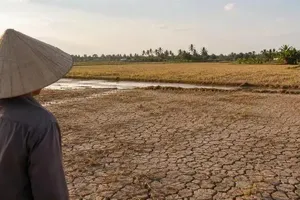
Meanwhile, prolonged hot weather has caused severe freshwater shortages on Be (Small) Island in the Ly Son Special Zone of Quang Ngai Province. Many households have had to purchase freshwater transported by boat from the larger island while also relying on rainwater reserves collected from previous seasons.
Mr. Nguyen Thanh An, a resident of Bac An Binh Hamlet, said that water prices currently range from VND250,000 to VND270,000 (US$9.5-US$10.3) per cubic meter, depending on transport distance and water salinity. Deliveries to beach areas serving tourists can cost as much as VND300,000 to VND400,000 (US$11.4-US$15.2) per cubic meter due to additional transport by cycle rickshaws.
Mr. Nguyen Van Huy, Chairman of the Ly Son Special Zone People’s Committee, said that local authorities have requested the island’s seawater desalination plant to conduct a comprehensive system assessment and propose long-term solutions to stabilize freshwater supplies for residents.
Farmers urged to save water
In Dak Lak Province, Mr. Trinh Duc Minh, Chairman of the Buon Ma Thuot Coffee Association, warned that El Niño conditions are expected to persist this year, increasing the risks of extreme heat and drought.
Authorities are therefore encouraging farmers to adopt water-saving irrigation methods such as drip irrigation, sprinkler systems, mulching and grass cover to retain soil moisture while avoiding excessive water use that could deplete local water resources.
According to weather agencies, the Northern region began to see relief from the widespread heatwave starting May 29 due to the influence of a cooler air mass. Many areas are expected to continue receiving thunderstorms that help ease temperatures, while rainfall in the Southern region may increase during the final days of May.