The 150-day campaign launched by the Ho Chi Minh City People's Committee to complete the city's 2026 socio-economic development targets ahead of schedule reflects a strong commitment to achieving double-digit economic growth. Sai Gon Giai Phong Newspaper gathered opinions from experts and policymakers on measures to help achieve that goal.
Nguyen Si Dung, former vice chairman of the National Assembly Office, said human resources are a key driver of growth.
He said Politburo Resolution No. 09-NQ/TW, which allows Ho Chi Minh City to increase its staffing by up to 20 percent above the quota assigned by the central government, marks a significant shift in administrative reform. Rather than mechanically increasing or reducing staffing levels, the policy aims to allocate public personnel based on functions, workload, and development needs.
As the country's largest economic, financial, science, technology, and innovation hub, Ho Chi Minh City must not only handle a massive administrative workload but also serve as the nation's growth engine, test new governance models, and lead major development initiatives.
He said these responsibilities can't be fulfilled through sound policies or special mechanisms alone. Ultimately, policies produce results only through the officials responsible for implementing them.
As the country strives for double-digit economic growth, the role of public servants has become increasingly important. Growth does not come from policy documents alone. Projects can only move forward when administrative procedures are processed on time, investment capital can only be utilized when bottlenecks are removed, and investment opportunities create value only when the administrative system responds quickly, coordinates effectively, and takes responsibility.
He said additional staffing should therefore be viewed not simply as hiring more people, but as increasing the government's capacity to solve problems, serve residents and businesses, and turn development opportunities into tangible results. If officials are assigned to appropriate positions and have the necessary skills, motivation, and accountability, the value they create can far exceed the budget spent on their positions.
He added that staffing should not be allocated evenly but instead prioritized for sectors facing labor shortages or creating the greatest impact, including public services, urban governance, digital transformation, science and technology, public investment, planning, land administration, and other strategic areas.
The effectiveness of additional staffing should be measured by outcomes rather than headcount, he said, including faster administrative processing, more projects cleared for implementation, improved public services, and higher satisfaction among residents and businesses.
Huynh Thanh Dien, a lecturer at Nguyen Tat Thanh University, said Ho Chi Minh City should simultaneously upgrade existing economic activities, develop new growth engines, and remove barriers that slow the flow of resources into the economy.
He said the city should restructure existing industries to generate higher added value, as opportunities to expand output through traditional growth models are becoming increasingly limited. The focus should shift from producing more to creating greater value from existing resources.
The city should also develop new growth drivers, including the digital economy, nighttime economy, silver economy, cultural industries, modern logistics, and high-quality services. It should gradually establish economic corridors linking industrial parks, urban areas, seaports, airports, logistics centers, and new growth poles.
During the 150-day campaign, the city should finalize pilot mechanisms, launch feasible projects, remove administrative obstacles for new business models, and prepare a list of priority investment projects.
However, he said new growth drivers will succeed only if long-standing bottlenecks are removed. Despite having capital, land, labor, and investment-ready projects, many resources remain tied up by administrative procedures, planning issues, land clearance, and weak interagency coordination. The immediate priority is to shorten administrative processing times, remove obstacles facing businesses, resolve stalled projects, and quickly channel resources into the economy.
Vice Chairman Pham Ngoc Hai of the Ho Chi Minh City Tourism Association said the city should target high-spending visitors.
Tourism has been a significant contributor to economic growth. In the first six months of the year, tourism revenue reached VND213.98 trillion (US$8.2 billion), while the city welcomed 6.39 million international visitors. He said the city needs breakthrough measures to enable tourism to contribute more to economic growth.
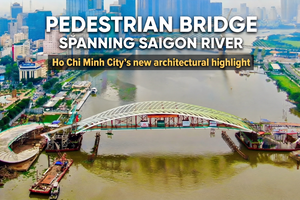
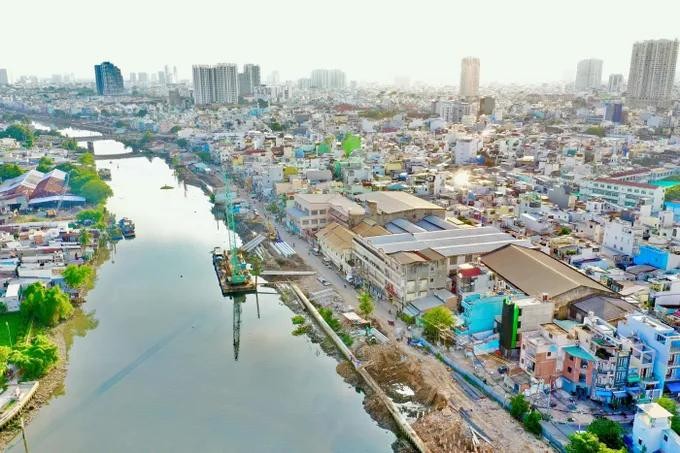
He recommended fully developing underutilized strengths, particularly river tourism and event tourism, while creating high-quality tourism products for affluent travelers.
The city should also capitalize on each locality's distinctive tourism offerings through regional cooperation and make use of support policies adopted by the Ho Chi Minh City People's Council. At the same time, government agencies should play a stronger coordinating role by encouraging travel companies to develop integrated tourism products and compete through service quality and after-sales experiences.
He added that promotional efforts should focus on international markets, as foreign visitors generate higher profit margins and contribute more significantly to economic growth.
Chairman Pham Van Xo of the Ho Chi Minh City Import-Export Association said the business community has long supported the creation of a "southern super economic region."
He said closer integration among Ho Chi Minh City, Dong Nai City, and Tay Ninh Province would improve supply chain efficiency and harmonize policies. At present, different customs procedures among localities increase costs and delays for businesses.
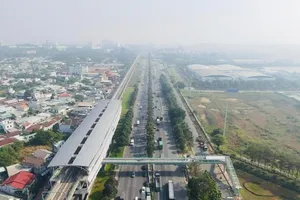
Logistics costs in Vietnam remain high, he said, and businesses are calling on the government to prioritize public investment in major transportation infrastructure, including expressways, Ring Roads 1, 2, 3, and 4, as well as metro and railway networks. Transportation accounts for the largest share of logistics costs, making modern infrastructure critical to improving the competitiveness of Vietnamese goods.
Businesses also want the effective implementation of 24/7 customs services. Customs and tax authorities should fully apply digital technology so that all systems can operate online around the clock. Combined with stronger regional connectivity and integrated seaport systems, modern administrative procedures would help maximize the expanded regional economic space and attract more foreign direct investment into all three localities.