A proposal to study the establishment of special urban administrative units serving as development hubs, in line with the conclusions of General Secretary and State President To Lam, is opening a new chapter in governance for Ho Chi Minh City. The initiative is intended to strengthen institutional capacity to coordinate development and maximize the effectiveness of growth centers within the city's emerging multi-center megacity model.
HCMC weighs special urban units to coordinate expanding growth poles
Following its expansion, Ho Chi Minh City has grown in both area and population, forming a multi-center development structure encompassing financial, industrial, logistics, science and technology, and coastal urban zones.
As the city's scale continues to increase, it must establish administrative centers with sufficient authority to coordinate growth poles, connect infrastructure, and effectively manage development across different urban areas.
This approach was outlined in Notice No. 100-TB/VPTW issued by the Office of the Party Central Committee, conveying the conclusions of General Secretary and State President To Lam following a one-year review of the three-tier government model.
Under the conclusions, the central government called for studying the establishment of special urban administrative units that would serve as development hubs responsible for coordinating growth, connecting infrastructure, public services, and key economic zones. The proposal was later reiterated by Nguyen Duy Ngoc, head of the Party Central Committee's Organization Commission, at a national conference reviewing one year of the two-tier local government model.
According to Nguyen Dinh Thai, a lecturer in public administration at the University of Economics and Law under Vietnam National University Ho Chi Minh City, the essence of a special urban administrative unit is a governance and coordination mechanism established at the grassroots level but granted significantly greater authority, responsibilities, and resources than a conventional commune-level administrative unit.
Rather than simply administering its own boundaries, such a unit would serve as the institutional anchor connecting technical infrastructure, public services, and economic space across an urban cluster or development corridor.
For Ho Chi Minh City, lecturer Nguyen Dinh Thai said these hub units should be designed around the city's emerging multi-center urban plan and linked to strategic growth areas, including the international financial center, seaport and logistics zones, high-tech industrial centers, and riverfront and coastal economic corridors.
To fulfill its coordinating role, the hub units should take the lead in operating shared digital platforms and integrating land, planning, and population databases among wards and communes within the same economic zone.
They should also be given special financial mechanisms to independently invest in connecting infrastructure and serve as the technical and administrative focal points for implementing regional development projects at the grassroots level, he added.
At a recent conference reviewing the first six months of 2026 and outlining priorities for the remainder of the year, the Ministry of Home Affairs said it is studying the establishment of special urban administrative units at the commune level in line with directives from the Party Central Committee and the Politburo.
Under the proposal, these units would function as hubs for coordinating development, infrastructure, public services, and key economic areas.
HCMC leverages the strengths of urban subregions
In addition to defining the role of these hub units, policymakers are focusing on selecting appropriate locations and designing governance models suited to each area, recognizing that these factors will determine the effectiveness of the initiative.
Bui Ngoc Hien of the Ho Chi Minh City Cadre Academy said the need for special urban administrative units has emerged as centrally governed cities expand in size.
For Ho Chi Minh City, establishing such units would help maximize the strengths of individual urban subregions, generate broader economic spillover effects, ease administrative pressure on city authorities, and provide testing grounds for new policies and development models.
The establishment of these units should be coordinated with the implementation of Resolution No. 09-NQ/TW and Ho Chi Minh City's overall development plan.
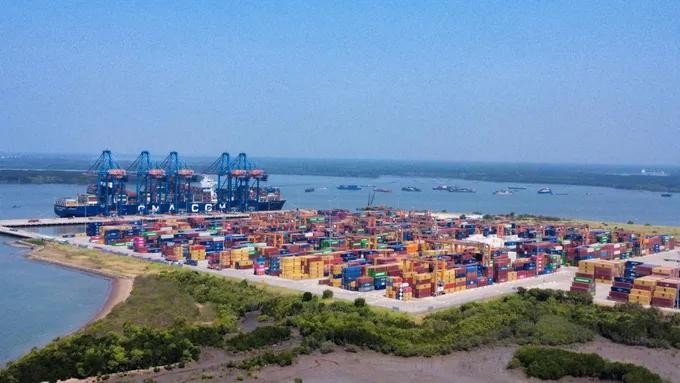
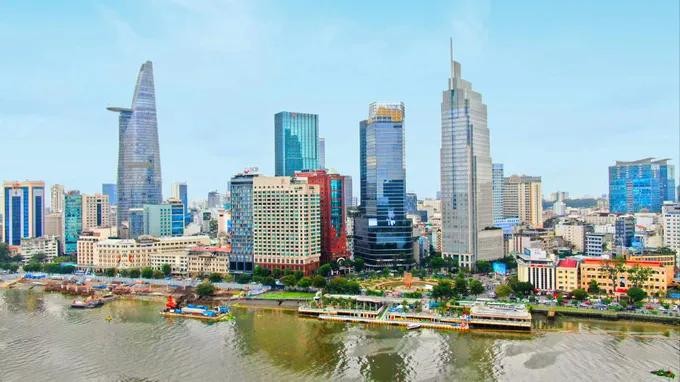
Based on that framework, the city could designate areas with sufficient potential to become urban hubs, including premium service centers along the Saigon River, innovation areas, science and technology zones, industrial processing and logistics centers, and coastal urban developments.
Another issue attracting considerable attention among experts is the need to establish a legal framework allowing special urban administrative units to be implemented in practice.
The issue was also raised by participants at a recent workshop on the draft Special Urban Law, now renamed the Urban Development Law.
Participants proposed incorporating into law a model for special administrative-economic units under Ho Chi Minh City, creating the legal basis for studying and implementing special urban administrative units as envisioned by the central government.
Such legislation would enable the city to apply more flexible governance mechanisms in areas serving as centers for finance, science and technology, innovation, seaport operations, and free trade.
Areas proposed for further study include a science and technology urban zone in the former Binh Duong Province; the international financial center in Saigon Ward and An Khanh Ward; a high-tech industrial center linked with a university urban area in the former Thu Duc City area and Di An Ward; and the Cai Mep port city associated with a next-generation free trade zone.
Experience from the former Thu Duc City also suggests that granting an administrative unit greater authority over investment, urban planning, and organizational management under National Assembly Resolution No. 98 can create strong momentum for development.
That experience is viewed as a practical reference as Ho Chi Minh City continues studying governance models suited to the demands of its next stage of development.





)