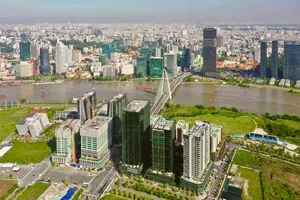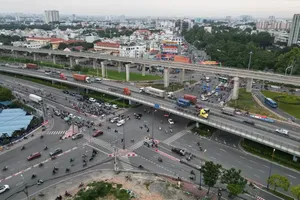
Hiep Binh Ward boasts a massive population of over 220,000 residents. Under current regulations, the ward is only allocated a remarkably sparse payroll of roughly 70 cadres, civil servants, and public employees. Consequently, on average, a single dedicated civil servant has to serve more than 3,000 citizens. Back in the day, the ward heavily relied on a highly active contingent of over 50 part-time workers who enthusiastically rolled up their sleeves to tackle various local tasks.
However, after this part-time workforce officially stopped working, the remaining ward cadres and civil servants have continuously run into severe difficulties and exhausting pressure. For Chairman Vo Thanh Binh of the Hiep Binh Ward People’s Committee, the sheer demographics pose a massive challenge.
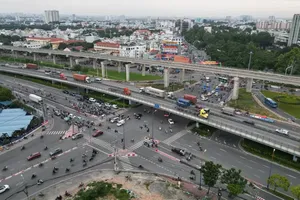
He explained that the ward is densely populated with a enormous influx of blue-collar workers. Furthermore, since the ward is actively rolling out multiple urban traffic and social infrastructure projects, the workload is absolutely colossal. This means they desperately need to recruit more officials to effectively manage urban planning, transportation, land usage, and local education.
Sharing a similar story is Saigon Ward, whose Party Committee oversees 126 affiliated Party organizations with nearly 11,000 members, yet the payroll for the Party and mass organizations is shockingly limited to a mere 33 people. This staggering disproportion leaves the advisory and support agencies grappling with an overwhelmingly heavy workload.
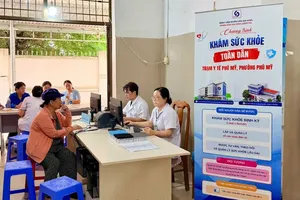
Besides that, the robust implementation of “boundaryless” administrative procedures has triggered a rapid surge in civil status records with increasingly complex processing requirements, while shockingly, there’s only a single civil servant currently handling this entire ordeal. This severe overload inevitably drags down the processing speed of administrative procedures and dramatically compromises the quality of public service.
Dr Le Thi Thu Hien from the Department of State and Law at the Region II Academy of Politics observed that countless communes and wards are experiencing a severe shortage of manpower required to adequately meet their professional demands. In some extreme cases, a solitary civil servant has to serve an average of around hundreds to thousands of local residents, all while the sheer volume of paperwork and unforeseen tasks continues to mount ceaselessly.
She argued that actively supplementing the workforce is an absolute prerequisite to enhance execution capacity and elevate the service quality for both everyday citizens and struggling businesses.
Confronted with this grim reality, Resolution No.09-NQ/TW issued by the Politburo has officially granted HCMC the proactive authority to decide its total payroll size, provided it doesn’t exceed 20 percent of the civil servant and public employee quotas strictly allocated by the Central Government.
In addition, the city must independently balance its finances and pay these additional salaries straight out of the municipal budget. This essentially represents a golden opportunity for HCMC to immensely fortify its grassroots manpower, thereby securing the vital resources needed to deploy highly practical solutions that cater to the pressing demands of society.
When compared to other localities, HCMC is uniquely permitted to bump up its civil servant and public employee payroll by a maximum of 20 percent. However, Dr Le Thi Thu Hien sternly warned that getting more staff doesn’t mean carelessly spreading them thin across the board; instead, the city genuinely needs to utilize this additional workforce allocation with maximum efficiency.
She suggested the city must prioritize heavily populated areas that are saddled with colossal workloads or buckling under immense pressure regarding administrative procedures, all to actively relieve the exhausting burden on grassroots cadres and civil servants. This strategic allocation must also be tightly coupled with pushing digital transformation and upgrading the staff’s caliber, strictly avoiding the antiquated mindset of merely adding more staff to the office mechanically.
The bustling metropolis should also carve out a specific quota to enthusiastically woo top-tier talent, including seasoned experts, brilliant scientists, outstanding university graduates, or exceptionally gifted individuals operating in niche sectors the city currently covets. This specific group will act as a pivotal resource to tremendously enhance governance quality, wildly promote creative innovation, and proactively resolve new developmental dilemmas for future prosperity.
Ultimately, Dr Le Thi Thu Hien firmly believes that if implemented flawlessly, this flexible mechanism will empower HCMC to be far more active in streamlining its administrative apparatus, ensuring that it possesses enough manpower for critical missions. Simultaneously, it’ll create optimal conditions for the city to vigorously maximize its role as the nation’s premier growth pole and ultimate hub for innovation and global integration.
Over the past period, HCMC has been meticulously reviewing and ruthlessly reshuffling its cadre workforce to strictly ensure the right people are sitting in the right jobs. Specifically, the city is actively operating a rigorous job quality assessment system based heavily on Key Performance Indicators (KPI), utilizing it as a rock-solid foundation to accurately quantify the genuine contributions of every single agency, unit, and individual toward the overarching collective mission.