According to the Department of Agriculture and Environment, Ho Chi Minh City collected VND484.84 billion (US$18.5 million) for its Disaster Prevention and Control Fund in 2025, achieving 27.18 percent of the annual target.
For 2026, the city aims to raise VND1.17259 trillion (US$44.6 million), including VND776.94 billion (US$29.6 million) from businesses and VND395.65 billion (US$15 million) from civil servants, public employees, salaried workers, and individuals receiving allowances. Relevant departments, agencies, units, and the People's Committees of wards, communes, and special zones are currently carrying out the collection and remittance of the 2026 fund.
Regarding expenditures, during 2025 and the first six months of 2026, the Disaster Prevention and Control Fund disbursed VND35.84 billion for projects approved in principle by the Ho Chi Minh City People's Committee.
In 2025, the city disbursed VND10.47 billion out of the planned VND123.5 billion, equivalent to a disbursement rate of 8.48 percent under the fund's 2025 operational and financial plan. In the first half of 2026, disbursements reached VND25.37 billion out of the planned VND145.68 billion, achieving a disbursement rate of 17.41 percent under the 2026 plan. The city plans to disburse an additional VND116.04 billion in the coming period.
For projects that have not yet received in-principle approval from the Ho Chi Minh City People's Committee, the Irrigation Department, the standing agency of the fund, is advising the Department of Agriculture and Environment to submit a funding plan to the city for approval, with a proposed total budget of VND284.66 billion.
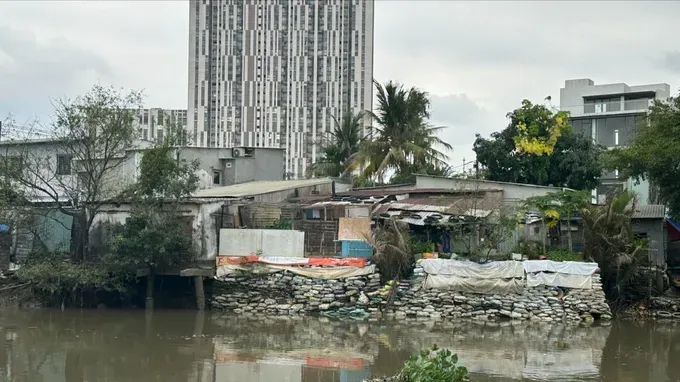
Of the proposed funding, VND227.9 billion is earmarked for the emergency repair, reinforcement, and construction of 89 projects aimed at preventing tidal flooding, urban inundation, and landslides across 21 wards and communes. Another VND16.22 billion will be allocated to implement community awareness and disaster risk management programs for 27 agencies and localities, while VND40.54 billion is designated for the procurement of specialized materials and equipment for 71 agencies and localities.
As of July 7, the balance of Ho Chi Minh City's Disaster Prevention and Control Fund stood at VND1.18 trillion. The fund serves as a vital financial resource, enabling the city to proactively prevent, respond to, and recover from natural disasters, particularly as its administrative responsibilities have expanded following the recent restructuring.
In the coming period, Ho Chi Minh City will upgrade and expand the functionality of the fund management software to meet the requirements of the two-tier local government model and the administration of 168 wards, communes, and special zones. The upgraded system is also expected to provide standardized and accurate support for local authorities, government agencies, businesses, and fund administrators in line with practical management needs.
According to the Department of Agriculture and Environment, Ho Chi Minh City's Disaster Prevention and Control Fund has been strengthened in terms of its organizational structure, operational mechanism, and legal framework and has been operating in accordance with its mandated purposes and designated beneficiaries.
To improve the fund's collection and disbursement efficiency, the department has proposed that the Ho Chi Minh City People's Committee recommend that the Ministry of Agriculture and Environment submit to the Government a proposal to raise the funding ceiling for emergency repairs, remediation, and construction of disaster prevention and mitigation works. The proposed adjustment would better reflect rising material and labor costs, as well as current technical requirements.