According to monitoring data, sea surface temperature anomalies in the Niño 3.4 region reached 0.5 degrees Celsius in May and increased to approximately 0.7 degrees Celsius in early June, confirming the onset of El Niño.
Forecasters noted that the transition from neutral conditions to El Niño has occurred more rapidly than usual, signaling accelerated warming in the central Pacific and stronger ocean-atmosphere interactions.
Current projections indicate that El Niño is highly likely to persist through the remainder of 2026, intensify toward the end of the year and potentially continue into early 2027. There is a 60-65 percent probability that it will develop into a very strong event, with an intensity comparable to the 2015-2016 El Niño, one of the strongest recorded globally since 1950.
Under the projected scenario, temperatures across Vietnam would remain above seasonal norms while rainfall decreases and cold-air activity weakens. Such conditions could lead to severe drought and water stress in the Central region, the Central Highlands and the South during the transition from 2026 to 2027.
Meteorologists forecast that nationwide temperatures during the second half of 2026 will be around 0.5-1.5 degrees Celsius above the long-term average. Between October and December, temperatures could exceed normal levels by as much as 1-2 degrees Celsius.
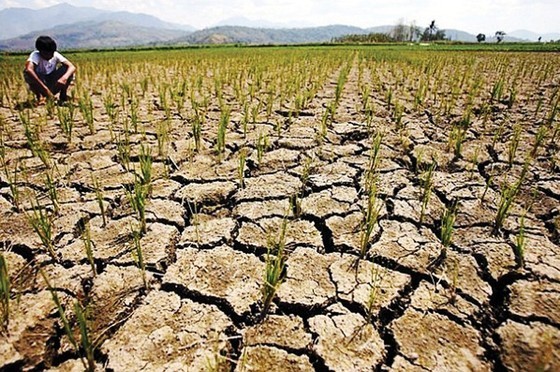
The Northern and Central regions are also expected to experience more frequent and intense heat waves than usual during the remainder of the summer, with some areas potentially recording temperatures that surpass historical records.
Rainfall is projected to decline by 25-50 percent in several regions, particularly along the south-central coast, in the Central Highlands and across the Southern region. Lower rainfall levels could trigger localized or widespread drought, particularly in areas with high demand for water for agriculture and daily use.
According to meteorologists, the number of storms and tropical depressions affecting Vietnam is often lower during El Niño years. Nevertheless, powerful storms capable of causing significant damage can still develop, meaning authorities and communities should not become complacent.
Although El Niño is typically associated with reduced rainfall, extreme weather events can still occur. Vietnam witnessed this during the historic Quang Ninh floods of 2015 and the severe flooding brought by typhoon Ketsana to the Central region in 2009. The 2015-2016 El Niño was among the strongest climate events recorded since 1950, comparable to the major El Niño episodes of 1982-1983 and 1997-1998.
During 2015, Vietnam experienced prolonged and widespread heat waves. In the Central coastal region, the longest heat spells lasted 32 days in the South-Central area, 36 days in the Central region and 39 days in the North-Central provinces. Temperatures in the North-Central region frequently reached 39-41 degrees Celsius, while Con Cuong Station in Nghe An Province recorded a peak temperature of 42.7 degrees Celsius on May 30, 2015.
The East Sea recorded only five storms and two tropical depressions that year, roughly half the long-term average. Only two storms made direct landfall in Vietnam, with most reaching wind strengths of level 7-8.









)