While the FDI sector’s export role is increasingly immense in Vietnam, domestic enterprises’ participatory capacity hasn’t kept pace.
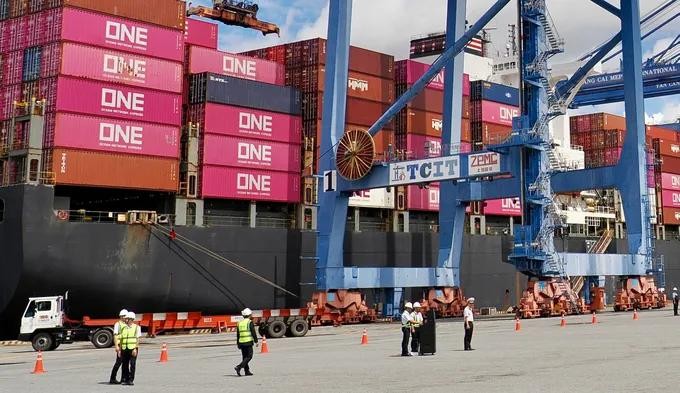
In 2026’s first eight months, the FDI sector reportedly exported US$300.37 billion, surging by 26.9 percent to account for 80.1 percent of total export turnover. The domestic sector achieved $74.47 billion, constituting just 19.9 percent. Alarmingly, local enterprises participating in the global value chain plunged from 35 percent in 2009 to 18 percent in 2023.
This disparity indicates the problem isn’t solely about export turnover, but rather Vietnam’s ability to retain added value, technology, and production links from billion-dollar FDI inflows.
According to Deputy Director Bui Thu Thuy of the Foreign Investment Agency (FIA – under the Finance Ministry), the FDI spillover effect hasn’t met expectations because many foreign enterprises bring familiar supplier ecosystems.
Meanwhile, most Vietnamese businesses remain constrained regarding capital, governance, and technology. Qualified domestic enterprises aren’t substantial; tech transfer remains sluggish, predominantly occurring internally within conglomerates. In reality, compliance costs for local supporting firms to meet stringent FDI requirements are unequivocally steep.
Still, some push forward. Duy Khanh Mechanical Co. Ltd. invested over VND180 billion ($6.92 million) constructing a precision mechanical factory using Sintering technology. For Chairman Do Phuoc Tong, supplying large FDI enterprises is demanding. “The company still must continuously upgrade technology and build smart factories to meet increasingly stringent requirements,” he explained.
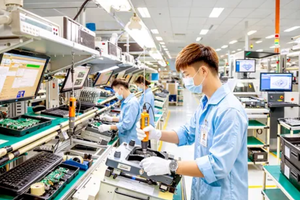
Similarly, SMC Phu My Precision Mechanical Co. Ltd. invested over $6 million upgrading machinery before securing orders. A year later, they received their first Samsung order, maintaining tier-1 supplier status today. After penetrating the chain, SMC continued investing in automated quality control while connecting more Vietnamese businesses to become lower-tier suppliers.
This demonstrates that enterprises must continually enhance capabilities to retain orders, meet higher-value production stages, and pull additional local suppliers into the fold. Essentially, this is a practical barometer for FDI quality, where foreign capital must contribute to enhancing domestic production capacity, rather than leaving Vietnam floundering in rudimentary processing stages.
By 2030, Vietnam aims to have approximately 10,000 domestic enterprises participating in FDI supply chains, wherein 500 to 1,000 businesses become tier-1 suppliers; the localization rate in key industries is targeted at 45 to 50 percent. The pressing challenge is transforming Vietnamese firms from potential suppliers into actual ones.
According to Ms. Whitney Pham, Executive Board Member of the Global Onchain Economic Alliance (GOEA), attracting FDI needs to be more tightly coupled with the domestic economy’s absorptive capacity.
To delve deeply into the value chain, Vietnamese businesses must elevate production standards, human resource quality, governance capacity, innovation, alongside technological receptiveness. Penetrating the supply chain is merely the first step; what’s more crucial is gradually mastering technology and migrating toward higher added-value stages.
Conversely, FDI attraction policies also need to generate momentum for investors to bolster linkages with the domestic sector.
Phan Duc Hieu, a full-time member of the National Assembly’s Committee for Economic and Financial Affairs, proposed that support should be tethered to the investor’s performance regarding commitments on localization, tech transfer, R&D, human resource training, domestic enterprise linkage, alongside green transition. Through this, policy resources can be channeled into projects that genuinely generate spillover effects.
Alongside enterprises and policy mechanisms, human resources are the decisive condition for technological absorption capacity. Training engineers, R&D teams, plus tech management personnel must run parallel with the supplier development process. Machinery and procedures can be transferred, but technology only morphs into economic capability when domestic businesses and workers can receive, operate, improve, alongside gradually mastering it.
Boosting FDI absorptive capacity, therefore, doesn’t stop at attracting more high-tech projects, but must forge a pathway for capital, technology, and markets to transform into domestic capability: from orders forming suppliers, from tech transfer elevating production capacity, and from human resource training advancing toward technological mastery.

For Prof Dr Vu Minh Khuong of the Lee Kuan Yew School of Public Policy, building technological absorptive capacity is paramount. He argued that science-technology and innovation policies must pivot from supporting isolated R&D activities toward architecting an ecosystem connecting the State, universities, enterprises, startups, plus global networks.
Research capacity inherently goes hand in hand with the ability to connect and absorb knowledge. The focal point remains building data infrastructure, AI, plus talent platforms while promoting university-enterprise linkages.
Concurrently, authorities must create conditions for technology to flow down to small and medium enterprises rather than concentrating within large conglomerates. The yardstick should shift from R&D spending to how much capability technology generates, manifested through commercialization rates alongside corporate innovation. Ultimately, the goal is transforming knowledge into the economy's endogenous strength.

As stated by Managing Director Vo Thi Lan Phuong of Vriens & Partners Vietnam, slashing compliance costs is equally critical. In the fierce competition to attract high-quality FDI, she noted that policy predictability alongside compliance costs directly impact investment decisions. Therefore, authorities should carefully review inspection regulations, eliminate redundant requirements, or avoid resubmitting data the State already possesses.
When policies shift, there should be a reasonable transition period so businesses can proactively plan investments. Management methods should transition from pre-checks to post-checks where appropriate, heavily applying risk-based management.
With novel technologies, it’s advisable to expand controlled testing mechanisms, managing by outcomes instead of forcing new tech to operate under archaic frameworks. Thanks to this, corporate resources currently dedicated to bureaucratic procedures can’t help but be redirected toward vital innovation.

According to Dinh Duc Quang, Head of Currency Trading at UOB Vietnam Bank, funneling capital to enterprises participating in FDI chains is the final piece of the puzzle. As Vietnam pivots toward high-tech FDI, capital flows need to delve deeper into the manufacturing ecosystem.
Bank capital shouldn’t merely serve FDI enterprises but must profoundly support industrial park infrastructure plus Vietnamese businesses entering supply chains. Meanwhile, domestic enterprises desperately need capital to invest in technology to meet international standards. Foreign banks have participated in connecting Vietnamese businesses with international capital, thereby amplifying FDI’s spillover effect within the wider economy.