Ho Chi Minh City proposes expanding direct power purchase mechanisms to LNG power plants and industrial zone customers.
Specifying the authority granted by the Urban Development Law, the HCMC People’s Committee has submitted a report to the HCMC People’s Council on a draft resolution to expand the subjects, conditions for participation, and direct direct power purchase agreement (DPPA) mechanism between power generation units and electricity consumers in the city.
Under the Urban Development Law, the HCMC People’s Council is authorized to regulate the expansion of participating entities, conditions, and mechanisms for DPPA between power generation units and electricity consumers within the city’s management scope, as well as the responsibilities of participating parties.
According to the report, the DPPA mechanism is currently governed by Decree 57/2025/ND-CP and amended and supplemented under Decree 243/2026/ND-CP. Existing regulations restrict participation to specific groups of renewable energy generation units and large electricity consumers.
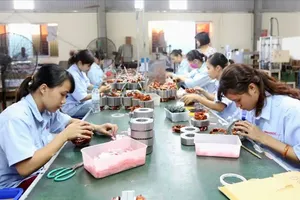
However, the demand among businesses in HCMC to buy electricity directly from renewable energy sources is substantial, particularly in industrial parks and high-tech zones. Allowing only large electricity consumers to participate in the DPPA mechanism limits the number of eligible businesses, impacting export capacity, investment attraction, and renewable energy development.
Therefore, the municipal People’s Committee proposes expanding the entities eligible to participate in DPPA via private connection grids. Specifically, it seeks to add power generation units operating liquefied natural gas (LNG) thermal power plants, as well as electricity consumers located in industrial parks, economic zones, export processing zones, industrial clusters, high-tech zones, centralized digital technology zones, and high-tech agricultural zones.
For LNG thermal power projects, allowing participation in the DPPA mechanism will enable investors to proactively seek customers for the remaining 35 percent of electricity output, following EVN’s commitment to purchase no less than 65 percent of the project’s average multi-year power generation output.
Expansion restricted to private connection grids
According to the report, the city will only expand the eligible entities for direct power purchases via private connection grids, not through the national grid. This targets consumers with small consumption volumes who do not need to conduct DPPA through the national grid.
Under the private connection grid model, transactions occur directly, with electricity traveling straight from the generation source to the point of consumption, and prices are mutually agreed upon by both parties.
Ho Chi Minh City currently possesses a large-scale power system, including eight 500kV transformer stations with a total capacity of approximately 12,150 MVA, thirty 220kV transformer stations with a total capacity of about 17,250 MVA, and 159 110kV transformer stations with a total capacity of roughly 17,892 MVA.
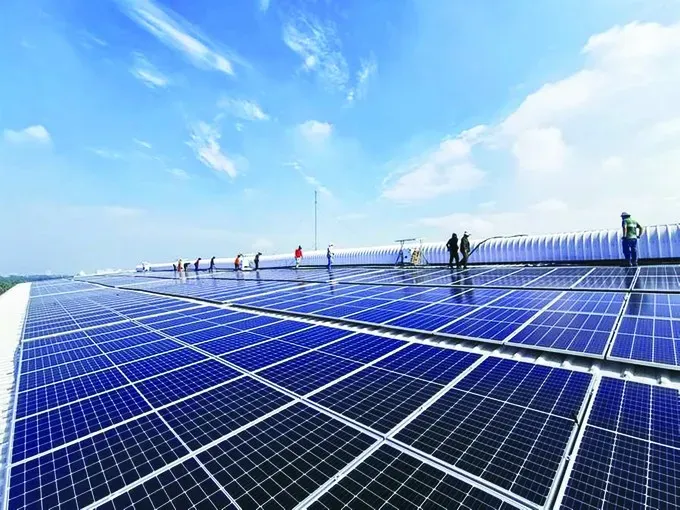
The city currently has over 21,500 rooftop solar power systems with a total installed capacity of over 1,600 MWp. In 2025, the total surplus power fed into the grid reached approximately 734.7 million kWh, while self-consumed output stood at about 765 million kWh, accounting for roughly 1.75 percent of the commercial electricity output in 2025.