Effective September 21, Vietnam’s stock market has officially been upgraded from Frontier Market to Secondary Emerging Market status. This historic milestone is expected to drive deeper integration of the country's capital markets into global investment flows.
Anticipated surge in foreign capital inflows

Speaking at the "Vietnam Officially Enters the FTSE Russell Global Equity Index Series" conference on September 18, representatives from FTSE Russell—a global index provider—expressed optimism about Vietnam’s stock market trajectory.
Fiona Bassett, CEO of FTSE Russell, emphasized that Vietnam’s inclusion in global benchmark indices marks significant recognition of the country's economic reforms and deeper integration into international capital markets. She noted that the milestone solidifies Vietnam’s standing as an increasingly crucial destination for international capital, reflecting growing global investor confidence in its market prospects.
FTSE Russell also pledged continued support for the development of Vietnam's capital markets as funds managed by Vanguard—the world’s second-largest asset manager—begin allocating capital and incorporating Vietnamese equities into their portfolios starting September 21.
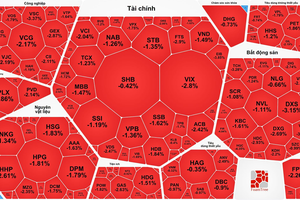
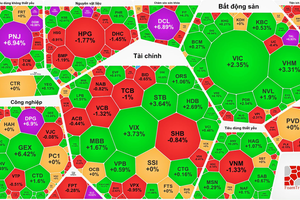
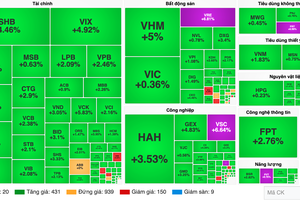
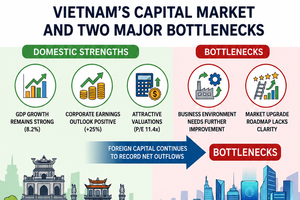
The official market upgrade has already delivered a tangible boost to investor sentiment. According to securities firm estimates, while foreign investors net-sold roughly US$3.5 billion in Vietnamese equities during the first eight months of the year, foreign capital showed clear signs of a turnaround ahead of the upgrade. During the trading week of September 14–18, foreign investors registered net purchases exceeding VND2.6 trillion (US$99.5 million), helping push the benchmark VN-Index up 20.45 points to close at 1,815.66.
Mr. Hoang Nam, Head of Research and Analysis at Vietcap Securities, projects that total passive capital inflows from index-tracking funds post-upgrade could reach US$2 billion to US$3 billion. An initial 10 percent allocation expected this September could deploy approximately US$200 million to US$300 million into the market.
Meanwhile, Thomas Nguyen, Head of Foreign Markets at SSI Securities Corporation (SSI Securities), noted that beyond passive capital, active funds and other institutional investors are expected to inject an estimated US$10 billion into Vietnam’s equity market over the next 12 months.
Elevating market quality
According to Dr. Can Van Luc, a member of the National Financial and Monetary Policy Advisory Council, while the upgrade is an important turning point, strict oversight is critical to prevent market sentiment from spiraling into short-term speculation, inflating stock prices beyond intrinsic values, and exposing the market to systemic risks. Investors and regulators alike must redirect capital toward long-term fundamentals and transparency, rather than trading on speculative rumors.
Dr. Can Van Luc warned that foreign capital can enter rapidly during favorable conditions but can exit just as quickly when sentiment shifts. Consequently, foreign investment should not automatically be equated with long-term capital. Overreliance on foreign funds could leave the market vulnerable to sharp volatility should capital flows reverse, creating ripple effects across asset valuations, market liquidity, and exchange rates.
Meanwhile, Thieu Thi Nhat Le, CEO of UOB (United Overseas Bank) Asset Management Vietnam, emphasized that one of the most profound impacts of the upgrade lies in long-term structural and qualitative transformations. This milestone is expected to catalyze further reforms aligned with international standards—from tightening disclosure requirements and improving market accessibility to expanding the institutional investor base.
From a regulatory standpoint, Minister of Finance Ngo Van Tuan stressed that the market upgrade is not the final destination but rather a new beginning that imposes higher standards on both the financial market and its governing bodies.
In the coming time, the Ministry of Finance will focus on key strategic directives, including refining the legal framework and enhancing the investment environment; reviewing the strategy for developing the stock market over the next 5 to 10 years; promptly addressing bottlenecks to improve market openness, access, and liquidity; modernizing technology infrastructure and trading systems; diversifying financial products to broaden investment horizons and risk management capabilities; and strengthening regulatory oversight, enforcement, and market surveillance to rigorously penalize violations and safeguard investor rights.
According to Bui Hoang Hai, Deputy Chairman of the State Securities Commission, maintaining the stock market’s upgraded status will require further reforms to ensure that the market operates with greater transparency and efficiency.
The State Securities Commission and the Ministry of Finance are actively working on measures including establishing a central counterparty clearing mechanism for the equities market, preparing mechanisms for trading, booking, and settlement services, and continuing to review and improve foreign ownership limits. Effective implementation of these measures will help maintain investor confidence.