The phased inclusion of Vietnamese stocks in the FTSE Global Equity Index Series (FTSE GEIS) not only recognizes efforts to improve the market's institutional framework but also creates new opportunities to attract international capital and develop the capital market.
Against the backdrop of estimated capital requirements of US$1.46 trillion for economic development between 2026 and 2030, according to experts at Vietnam's Dragon Capital fund management company, the market upgrade, together with the development of an international financial center and a strategy to attract new foreign investment flows, could provide additional channels for medium- and long-term financing.
Greater access to foreign capital could also help ease the pressure on the banking system and the State budget, which currently bear much of the burden of supplying capital to the economy.
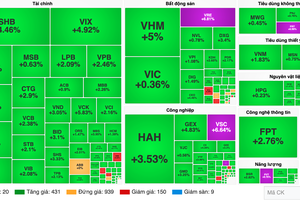
Even before the official transition to secondary emerging market status, foreign capital flows into Vietnam's stock market had shown signs of increased activity. In the final trading session of last week, foreign investors were net buyers by more than VND1.2 trillion.
Foreign investors were also net buyers of more than VND450 billion worth of government bonds in August. Notably, Vanguard, the world's second-largest asset management institution and a major institution tracking FTSE index series, is expected to invest about US$2.5 billion in Vietnam in the coming years, in connection with the country's market upgrade and deeper participation in international benchmark indices.
Another important direction being pursued by financial regulators is encouraging foreign direct investment (FDI) enterprises to list on Vietnam's stock market. The FDI sector currently accounts for more than three-quarters of the country's total export turnover, yet its presence on the stock market remains very limited.
At the end of 2025, the charter capital of FDI enterprises on the market accounted for only about 0.15 percent of the total charter capital of the entire market. Encouraging more FDI companies to list would help improve the quality of listed assets and enhance the market's appeal to international investment funds.
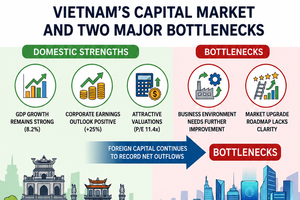
However, greater opportunity does not mean capital will automatically flow strongly into Vietnam. With the US Federal Reserve having just raised interest rates for the first time in more than three years, exchange-rate pressures and the risk of capital shifting away from emerging markets remain factors that need to be closely monitored.
According to experts at Ho Chi Minh City Securities (HSC), the VN-Index does not necessarily have to decline during periods of Fed monetary tightening, as market flows often respond to expectations about the future policy path rather than simply to an individual rate hike. Nevertheless, analysts have also cautioned against excessive expectations that the market upgrade will immediately trigger a wave of foreign capital flowing into Vietnam.
In the short term, the economy and stock market will continue to face pressures from interest rates, exchange rates and liquidity. At the same time, long-term capital requires a high degree of transparency, strong corporate governance, effective business performance, and the ability of companies to absorb capital efficiently.
For this reason, the ability to capitalize on the upgrade will ultimately depend on the underlying strength of Vietnamese companies. The reclassification may provide an initial boost to market sentiment and capital flows, but as expectations are gradually reflected in share prices, financial strength, earnings growth and reasonable valuations will determine whether companies can retain long-term capital.
Businesses seeking to sustainably attract foreign capital must demonstrate genuine business efficiency, sound governance and the ability to sustain growth. The market upgrade is only the beginning. The door to international capital has opened wider, but whether that capital stays for the long term will depend on the quality of Vietnamese companies, market transparency, and the depth of the country's stock market itself.