This model contributes to both the preservation of rural cultural identity and the creation of sustainable livelihoods amid the ongoing new rural development process.
Green suburban rural area
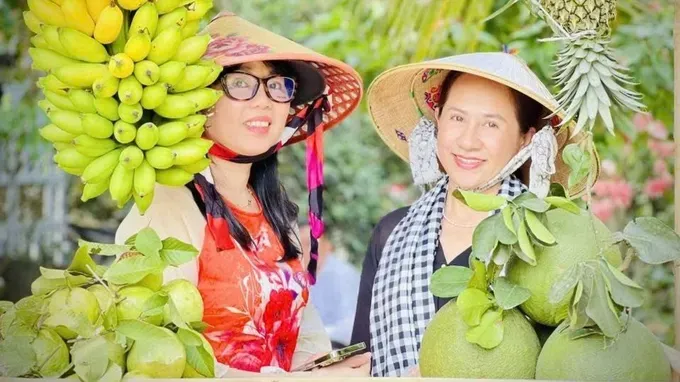
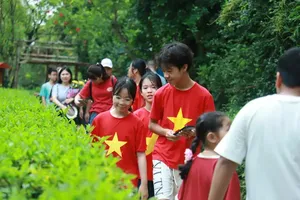
From the center of Ho Chi Minh City, traveling along Provincial Road 9 for nearly 20km will take you to Binh My Commune, a rural area along the Saigon River. Shaded village paths lined with lush greenery now welcome a growing number of visitors seeking an escape from the urban bustle.
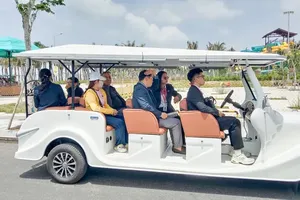
Here, tourists can cycle through peaceful riverside hamlets, pause at small countryside cafés, try their hand at crafting ceramic products, or sit down to listen to local women share stories about traditional crafts. Tourism, in this setting, emerges organically from the rhythm of everyday life.
Dairy farms, fruit orchards, and simple home-cooked meals—long familiar elements of local livelihoods—have now been transformed into unique and memorable experiences for visitors.
The Trung An rambutan orchard in Binh My Commune stands out as a distinctive highlight of eco-tourism in Ho Chi Minh City. For more than two decades, Ms. Ba Hanh has remained devoted to this ecological garden, personally guiding visitors as they pick ripe rambutans straight from the trees. With a gentle smile, she said that working in agriculture and having visitors come and listen to stories about the orchard makes the profession feel more meaningful. Thanks to ecotourism, her family’s income has also improved.
Situated to the north of Ho Chi Minh City, amid the sweltering heat of the Southern dry season, Sol Retreat Farm in Thuong Tan Commune appears as a refreshing expanse of greenery. Around a decade ago, this 10-hectare tract of arid, sloping land bordering Dong Nai Province was transformed by Ms. Nguyen Thi Xuan Thu—originally from the mountainous province of Lao Cai—and her associates into a thriving agricultural farm.
Through sustained efforts, they developed pepper, pomelo, and mandarin orchards cultivated in accordance with VietGAP standards, generating annual revenues worth billions of Vietnamese dong. Upon achieving economic stability, Ms. Thu allocated part of the land to develop an ecotourism model inspired by the cultural identity of Vietnam’s Northwest region.
Featuring traditional stilt houses, a café, and resort-style facilities, the site reflects not only a strategic diversification of rural economic activities but also a heartfelt expression of nostalgia—bringing the spirit of her northern homeland to the southern landscape.
According to Mr. Doan Quang Canh, Chairman of the People’s Committee of Thuong Tan Commune, Sol Retreat Farm initially operated as a model combining a café with a hillside farm. However, with a long-term development orientation, the investor has gradually transformed the site into a diverse tourism ecosystem, catering to a wide range of activities—from agricultural experiences to short-stay retreats for visitors.
“In Thuong Tan, farmers do not abandon their fields to pursue tourism; rather, their fields themselves become valuable resources for tourism development,” Mr. Canh noted.
Notably, during the recent Hung Kings Commemoration Day and the 51st anniversary of the Liberation of the South and National Reunification (April 30, 1975–2026) and International Workers’ Day (May 1) holidays, the An Nhut countryside market in Long Dien Commune emerged as a destination in the Southern region.
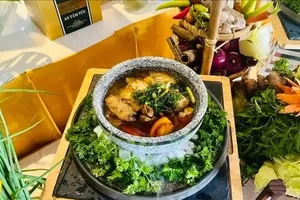
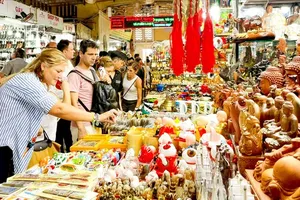
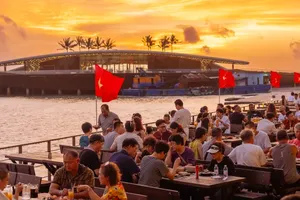
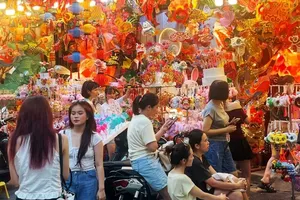
From around 4:00 p.m. each day, a small road cutting through the An Nhut fields gradually becomes lively and crowded. Visitors flock here to savor a wide variety of local offerings—from traditional cakes, fresh fruits, and rustic countryside dishes to grilled seafood specialties. Beyond the culinary appeal, what draws many is the opportunity to breathe in the fresh, breezy air of summer afternoons over expansive rice paddies.
At peak times, streams of visitors spill out onto freshly harvested fields, enjoying food right on the straw-covered ground. According to the People’s Committee of Long Dien Commune, by the end of May 1, the site had welcomed more than 40,000 visitors.
Rural tourism potential
As urban space continues to expand and land conversion pressures intensify, the key challenge is no longer merely to increase output but to generate higher value from the same land area. In this context, rural tourism in Ho Chi Minh City has emerged as a pragmatic and forward-looking solution.
Addressing this issue, Mr. Vo Thanh Giau, Deputy Director of the Department of Agriculture and Environment of Ho Chi Minh City, said that the city is entering a new phase of development. The adjustment of the urban agricultural development program for the 2026–2030 period carries strategic significance, ensuring alignment between agricultural restructuring, new rural development, and long-term urban planning.
Going forward, the city will reorganize production space in a manner closely linked with ecological sustainability, landscape preservation, and environmental quality—an approach tailored to the distinctive characteristics of a special-class urban center.
Amid the growing trend of ecotourism development, the Ho Chi Minh City Farmers’ Association is actively implementing training programs to equip farmers with essential tourism-related skills. These include guiding visitors, presenting product narratives, organizing experiential activities, and promoting and marketing OCOP (One Commune One Product) program offerings.
Meanwhile, according to Mr. Vu Ngoc Dang, Head of the Rural Development Division under the Ho Chi Minh City Department of Agriculture and Environment, ecotourism is no longer a supplementary activity but is increasingly evolving into a new livelihood and an effective channel for promoting the city’s agricultural products and rural culture.
For instance, Nong Trang Xanh Farm in An Nhon Tay Commune has become a familiar destination for students and visitor groups seeking hands-on experiences in clean agriculture. Likewise, in An Nhon Tay Commune, Huyen Thoai orchid garden serves not only as a production site but also as a learning space where visitors can gain insights into cultivation techniques.
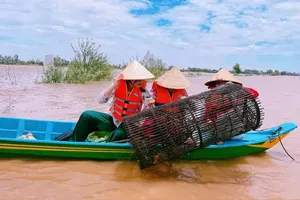
In communes such as Thanh An and Can Gio, experiential models centered on oyster farming and harvesting are creating distinctive marine eco-tourism products. Meanwhile, the traditional rice paper craft village in Phu Hoa Dong Commune and mango orchards in Can Gio Commune have opened their doors to visitors, forming a diverse chain of tourism activities.